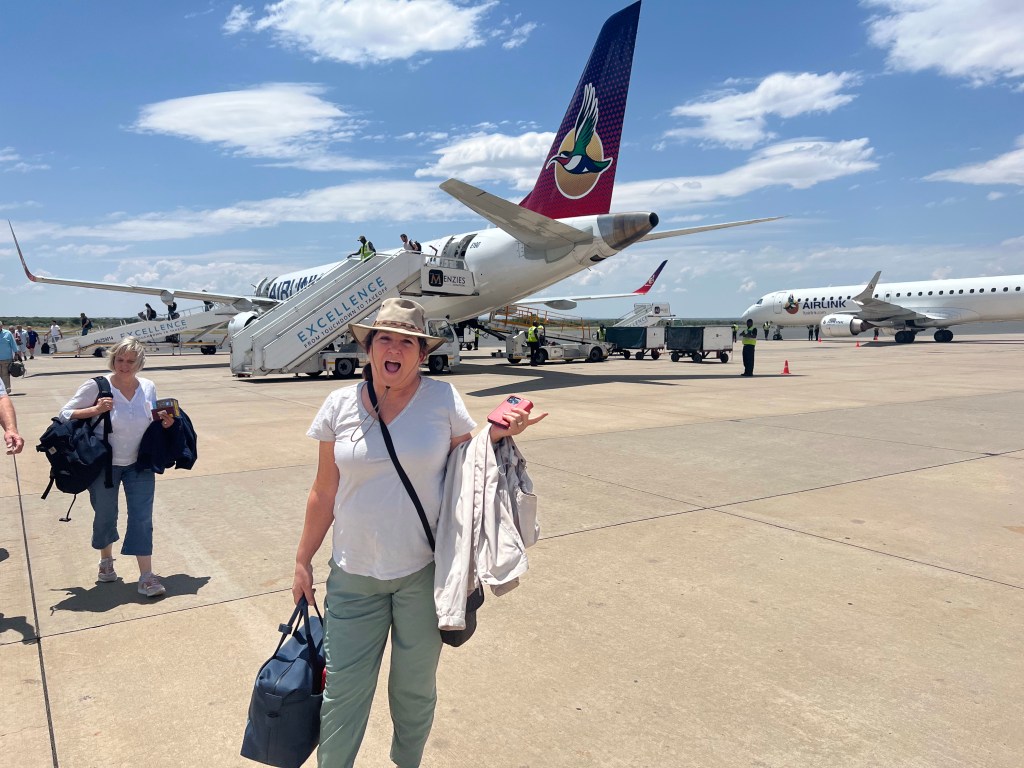
On October 26th, we traveled from Cape Town to Windhoek, the capital of Namibia.
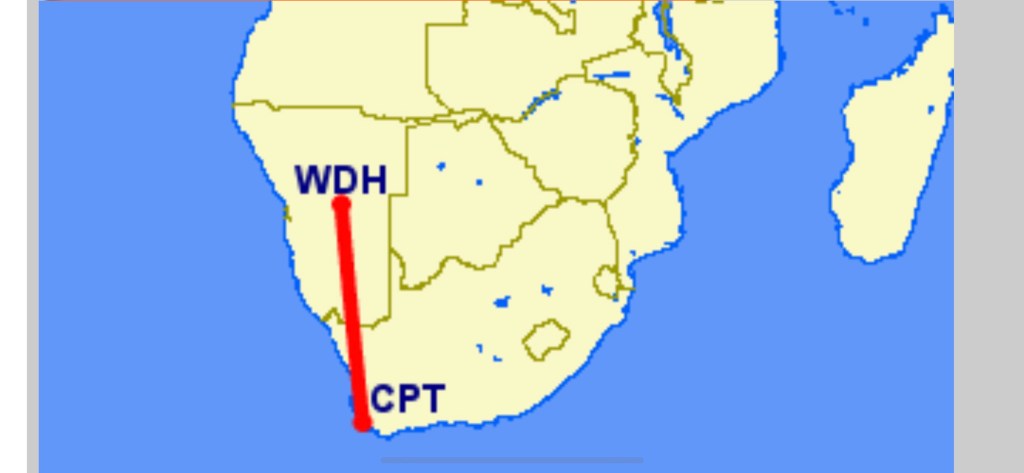
On the 27th, we continued by car/van/truck up to the Etosha Safari Lodge.

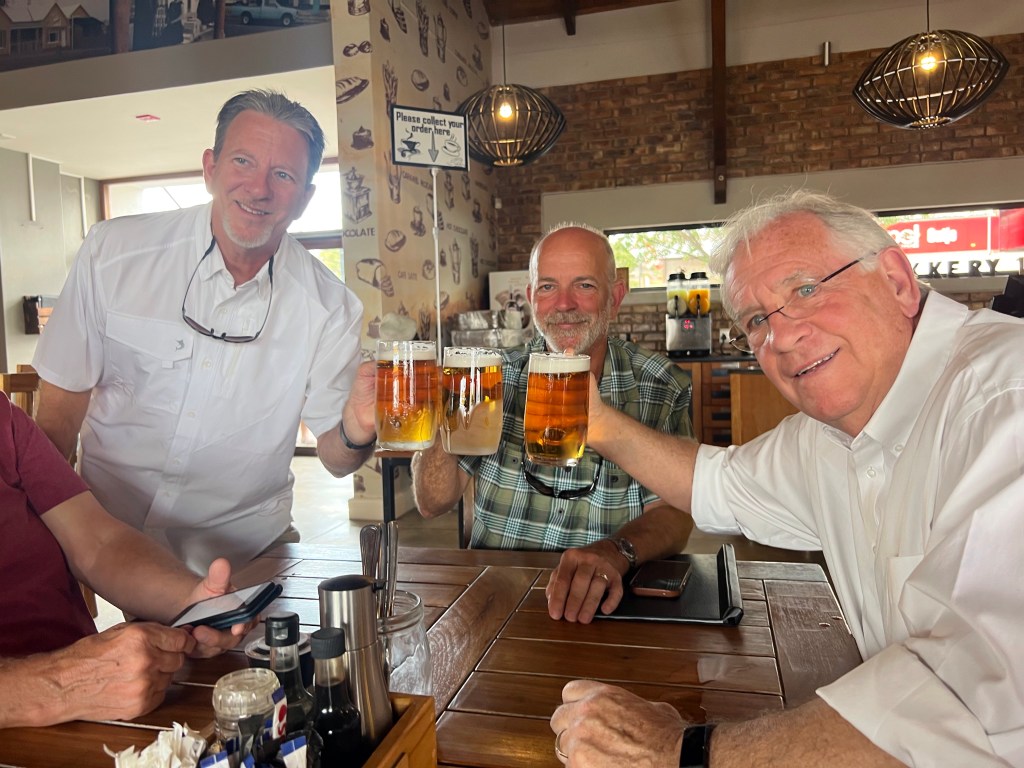
We traveled through some very interesting countryside and had lunch at a roadside restaurant and enjoyed a local beer.
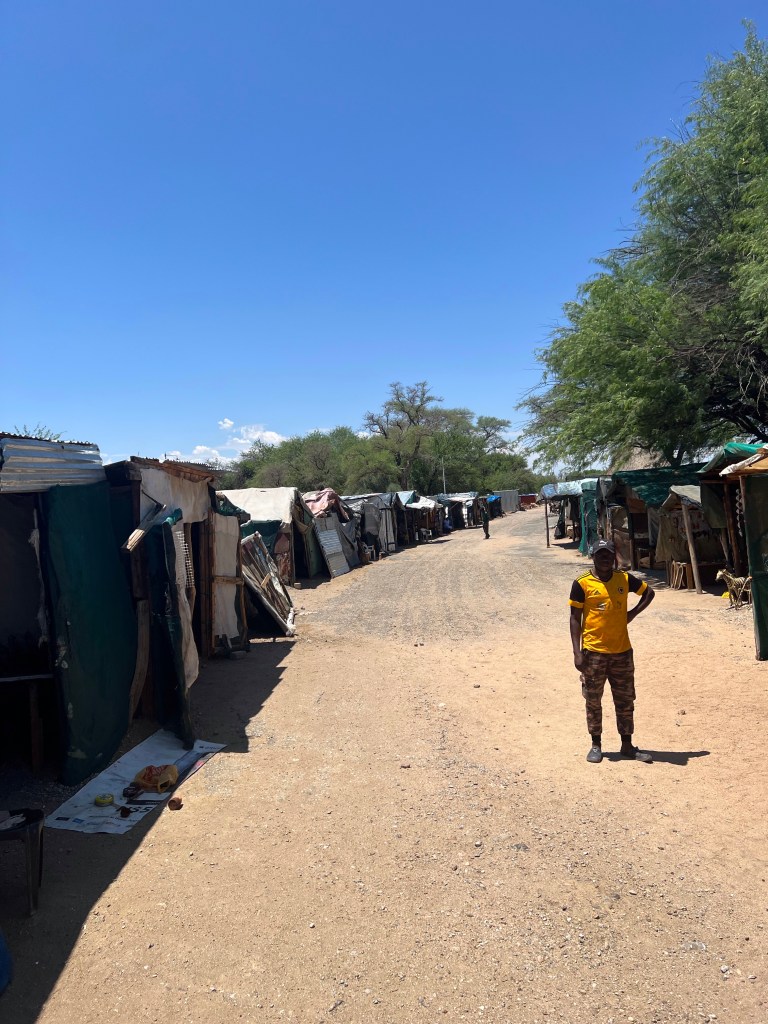
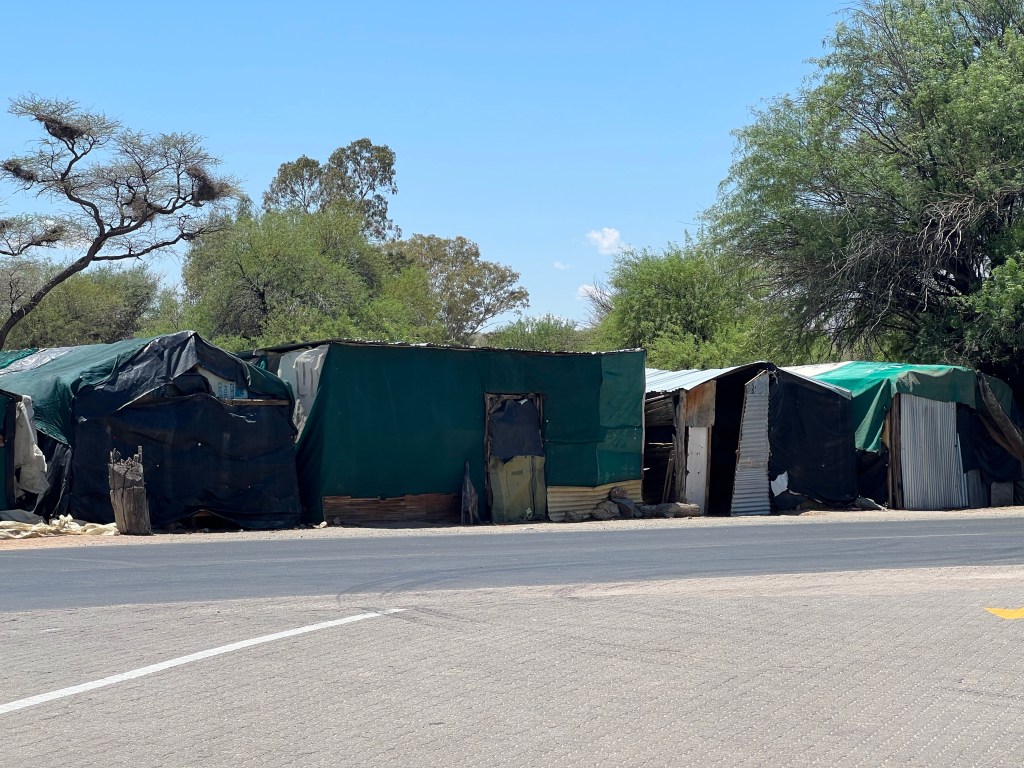
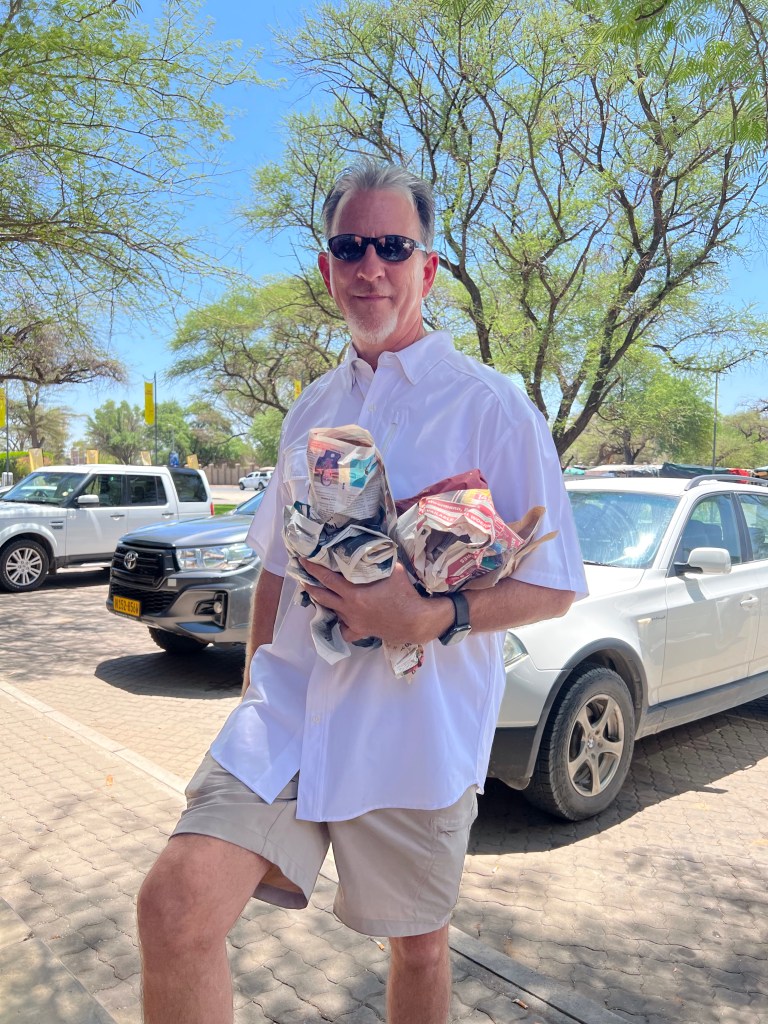
We stopped for some Biltong and to browse at a collection of wood carving craft tents. Probably 100 tents and the local artists and families would strongly beckon you in as you walked by. Many of the pieces were really stunning and the people would all tell you why you should buy from them: “I will give you a special price”. You are my first customer of the day”, my father carved this”, and if none of those worked, “buy this so I can feed my children”. I bought a rhino. All of the crafts were very reasonably priced and the bartered price ended up being about half of what the original price quoted. If we were not limited in space or weight, I would have loved to have purchased more. Nothing had a price tag and I am sure they were gauging how much you might pay based on how you were dressed. If you asked how much something cost, you were in for a 5 minute discussion before you could get away. “it is 350 Rand” “ok, thanks.” “How much do you wanna pay”. “no thank you”. “ I give you a special price, 300 Rand (about $20). “No thank you”. “275”. No thank you…. This is iron wood. Very strong, very hard to carve”. No thank you. My name is Thomas. What is your name? “i am sure it is a coincidence and he didn’t just hear Cathy call me by my name. “I will give you a special Thomas price”. I bought a rhino. It is iron wood and very hard to carve.
Bob bought more than a rhino.
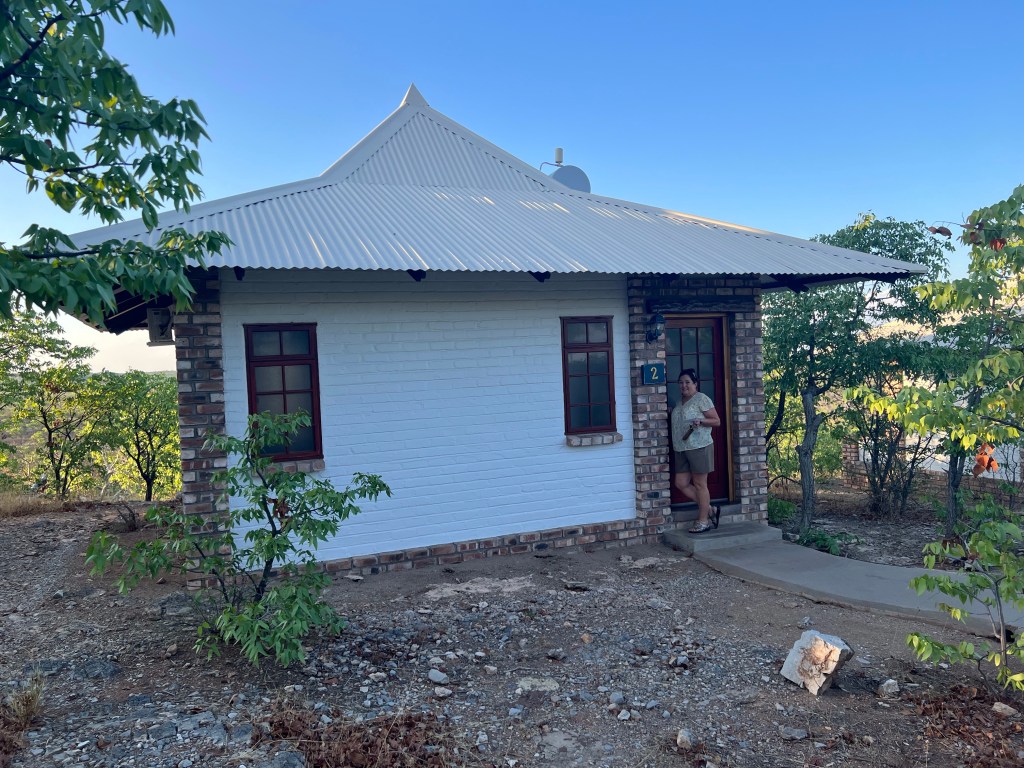
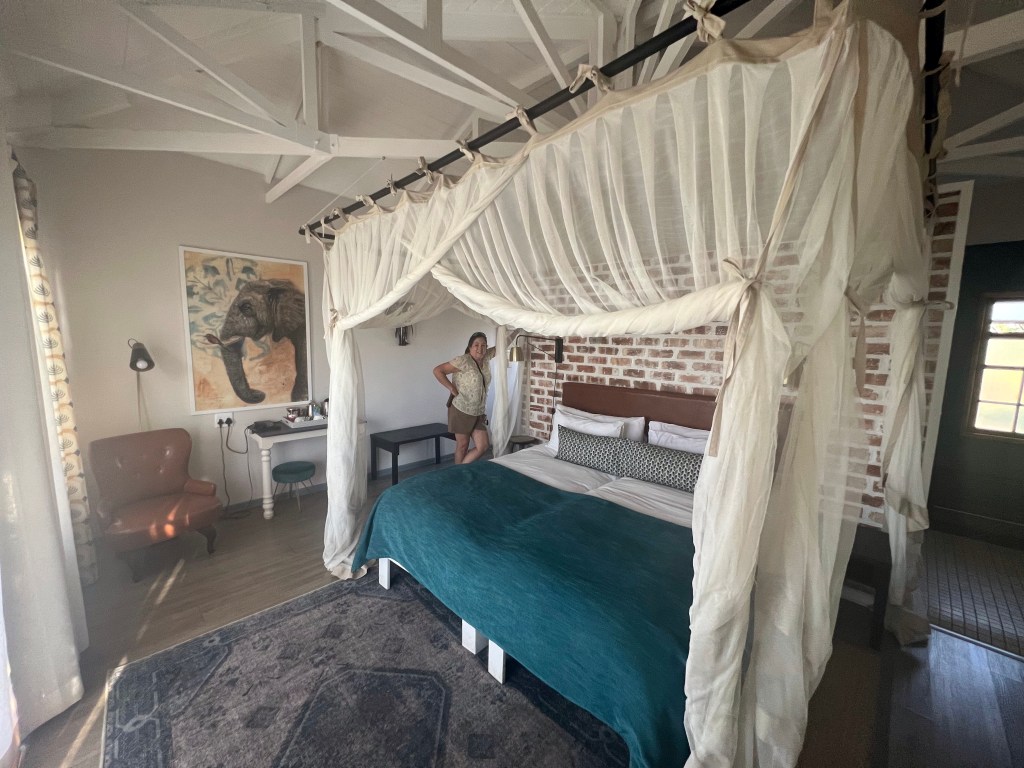
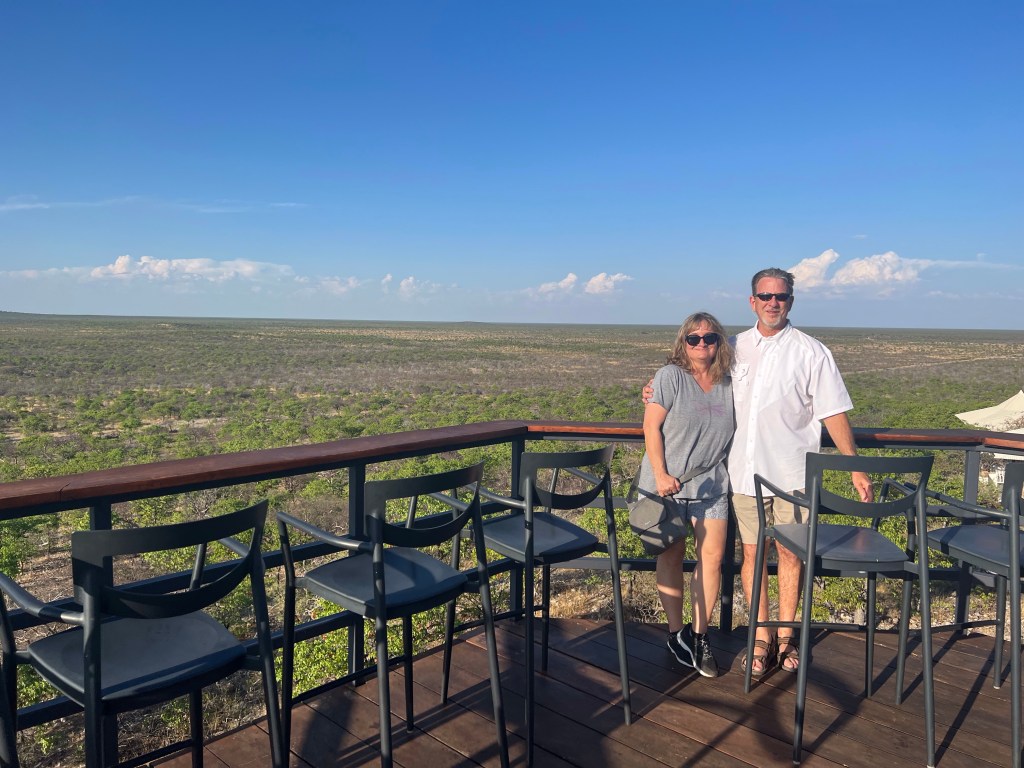
The Etosha Lodge has with a large deck looking over a water hole and the lodge is made up of individual cabins that also look over the savanah. It was a good sign of things to come when we drove past two giraffes on the driveway into the lodge.
Etosha National Park was the first conservation area in Namibia, established in 1907 and grew to 19,000 square miles! It is now about 1/3 of the peak size but still huge. Much of the land is dry Savanah and a large part of the park is made up of the Etosha Salt Pan, a flat saline desert that used to be covered in sea water years ago. Nothing grows there but the animals sometimes go to lick the salt. In the rainy season, much of the pan is covered with water and attracts flamingos and white pelicans.
October 28th was our first Safari day and it did not disappoint.
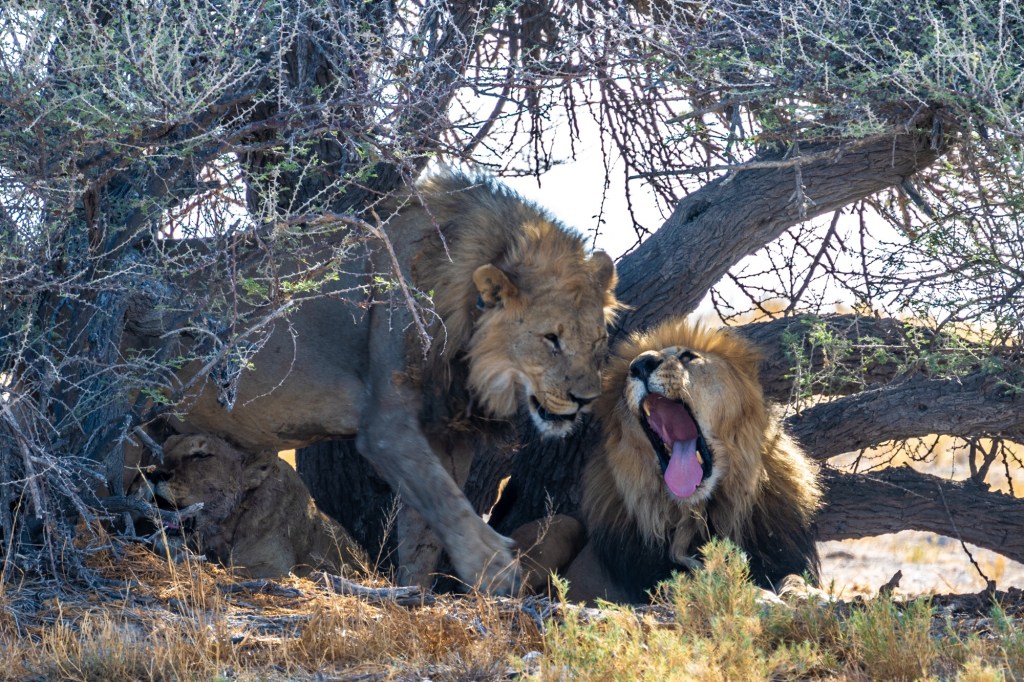
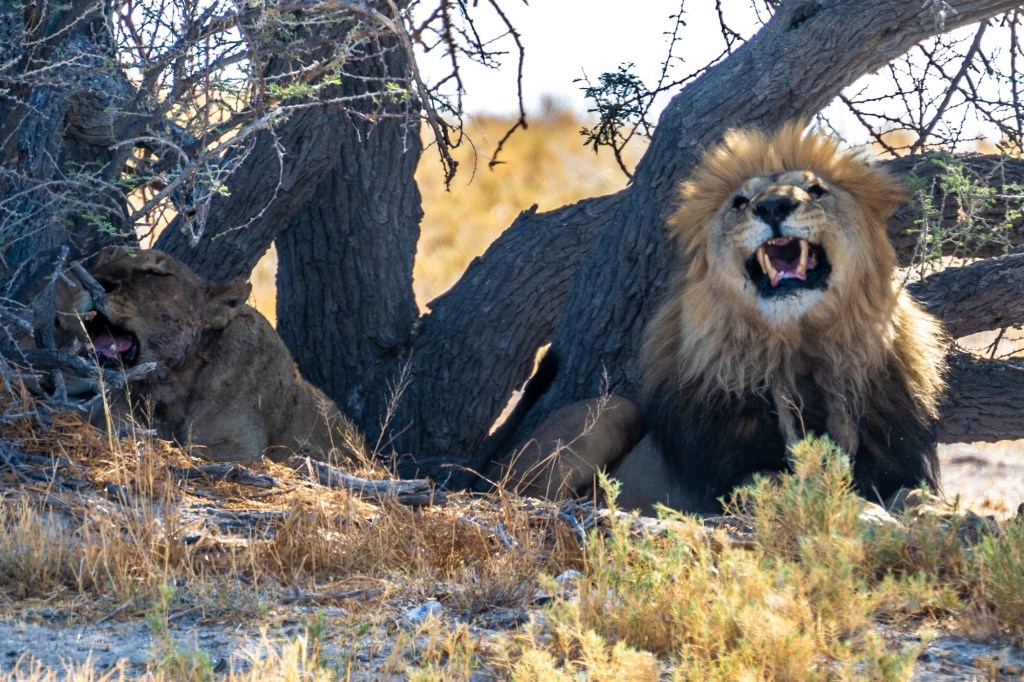
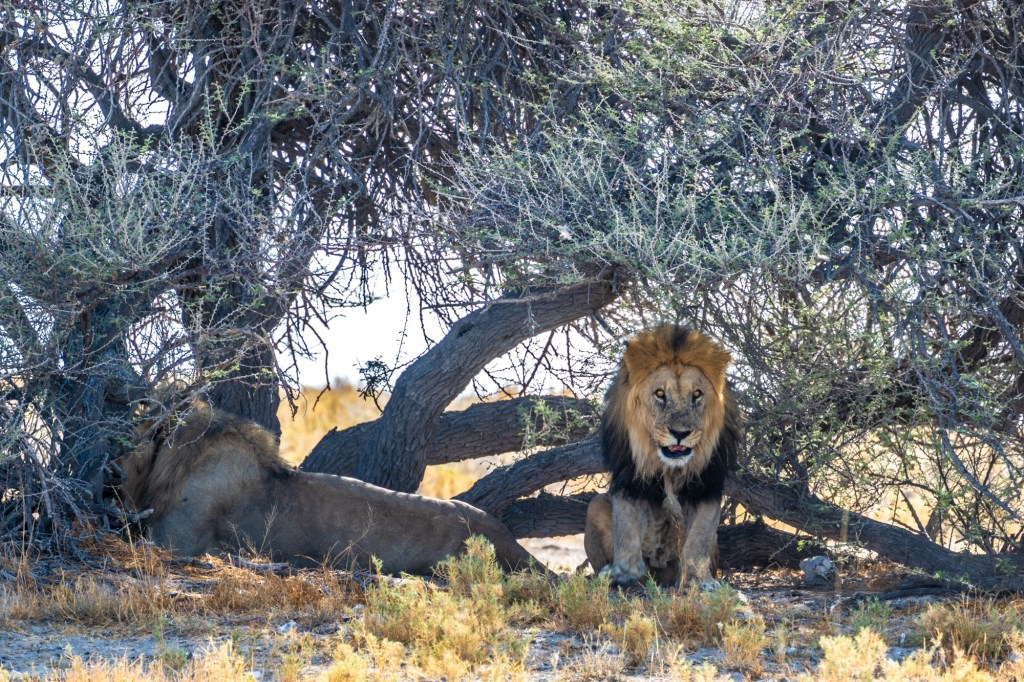
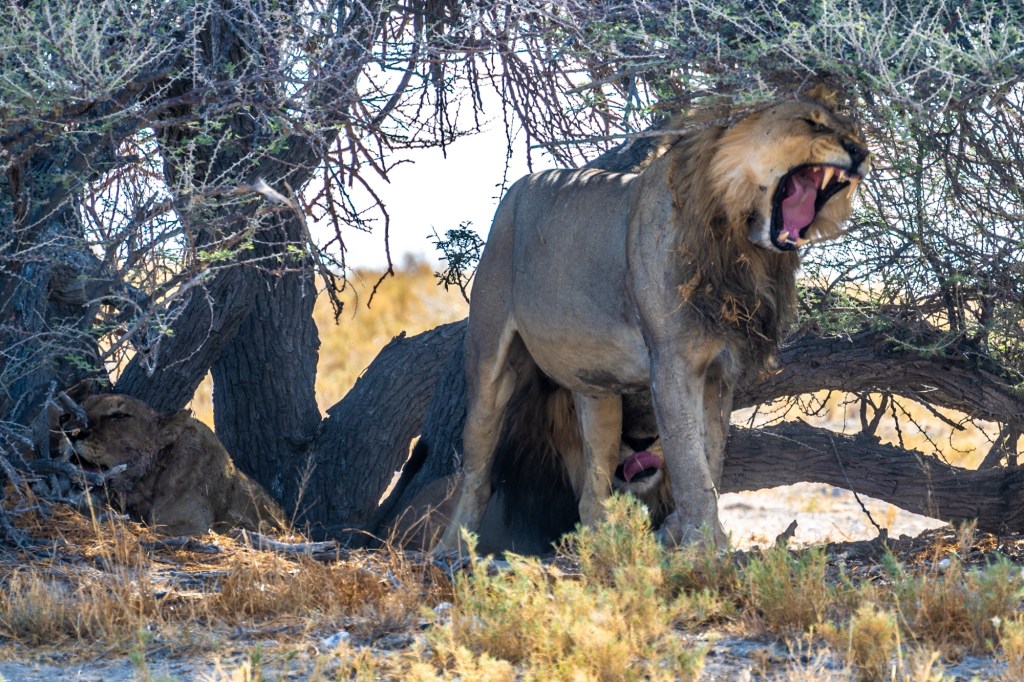
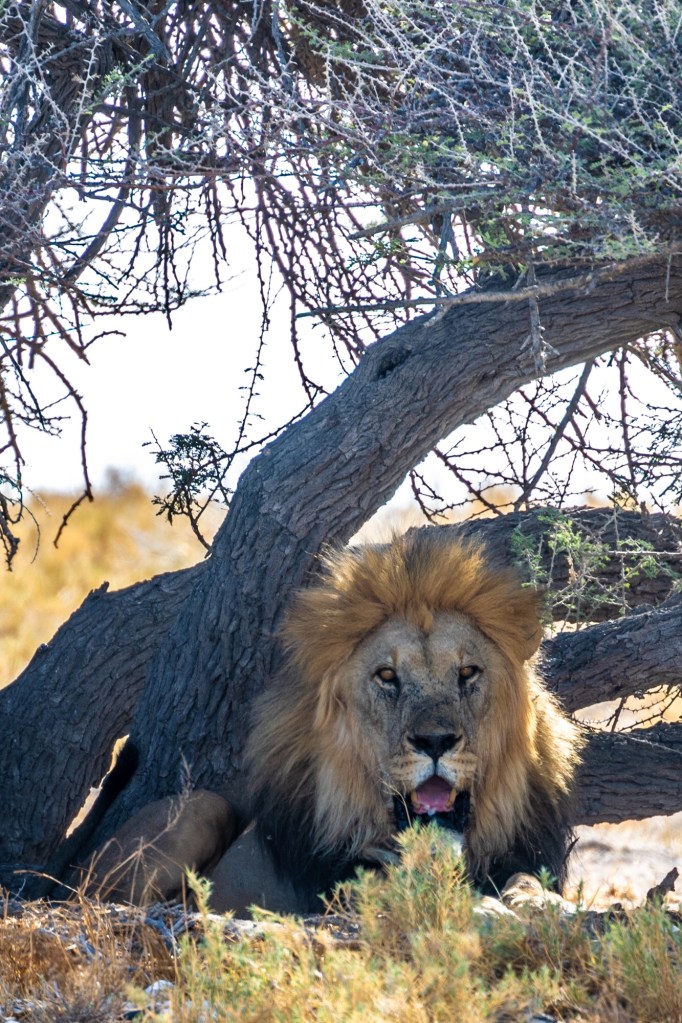
We spotted 12 different species of mammals and a large variety of birds. several of the highlights were elephants, lions, hyaena, and giraffes. Here are some pictures taken from our Safari vehicle. Many of our best shots are curtesy of one of our travel companions (but some are pics we took)
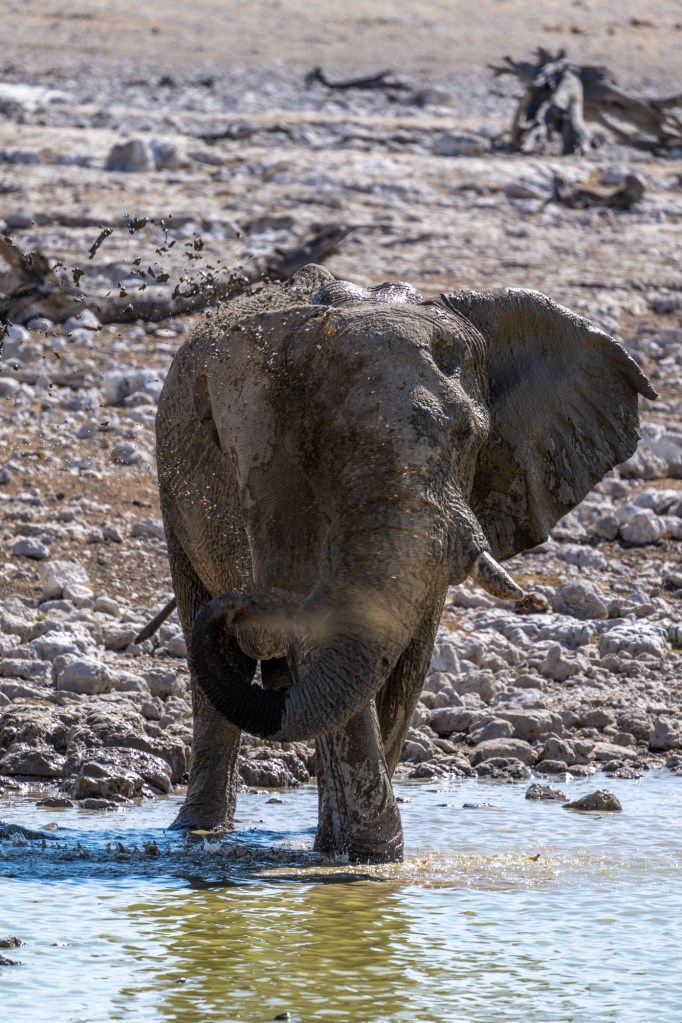
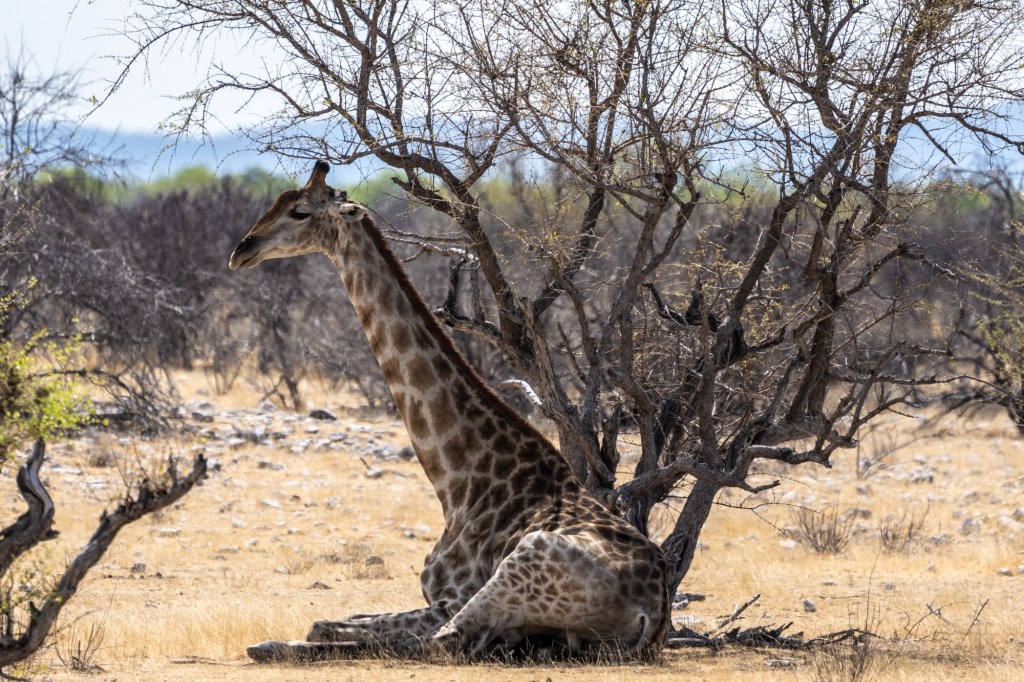
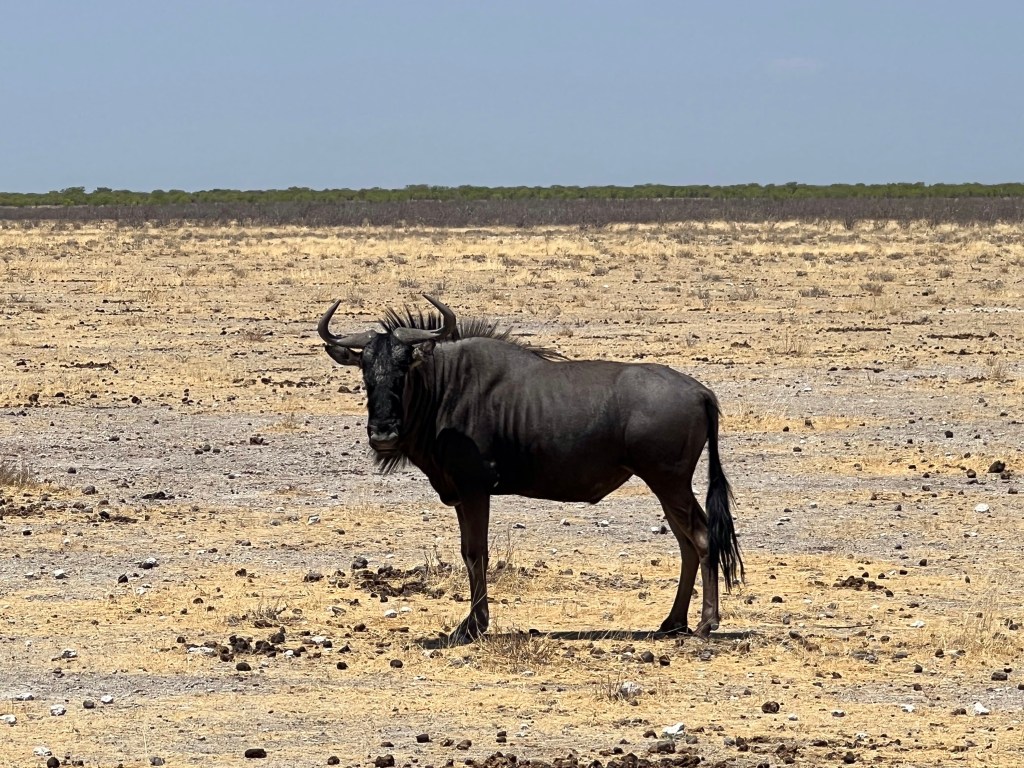
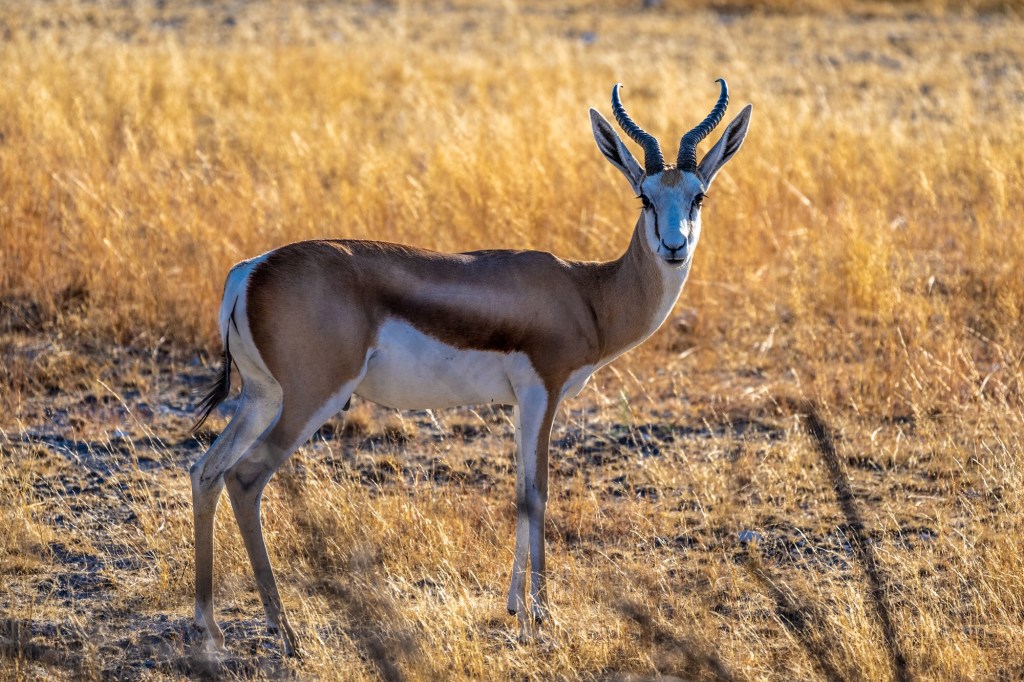
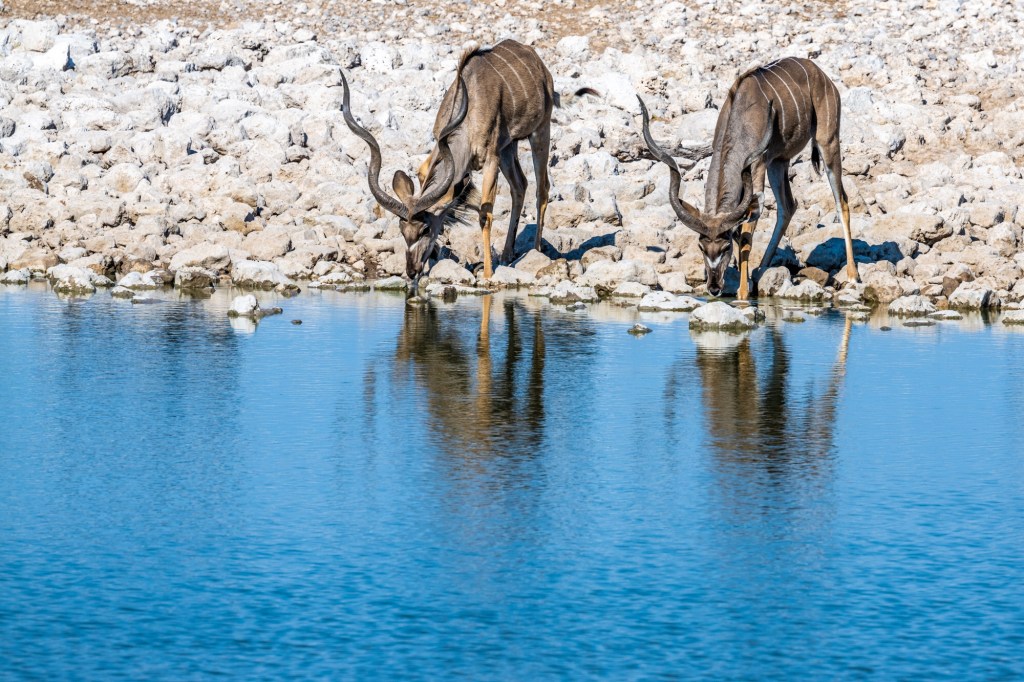
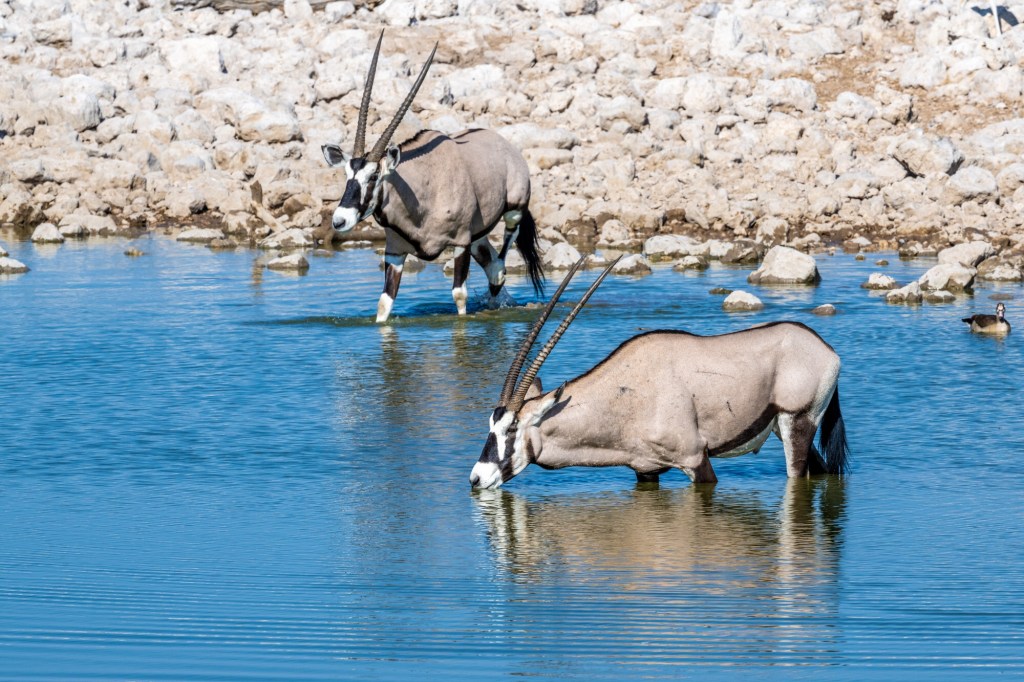
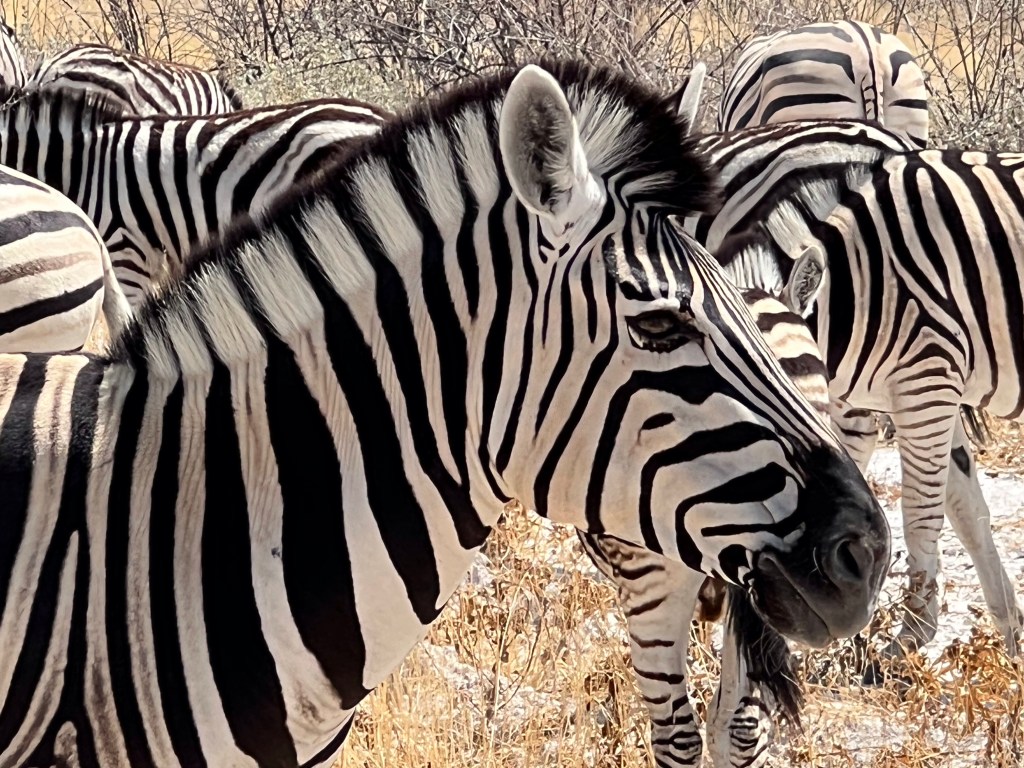
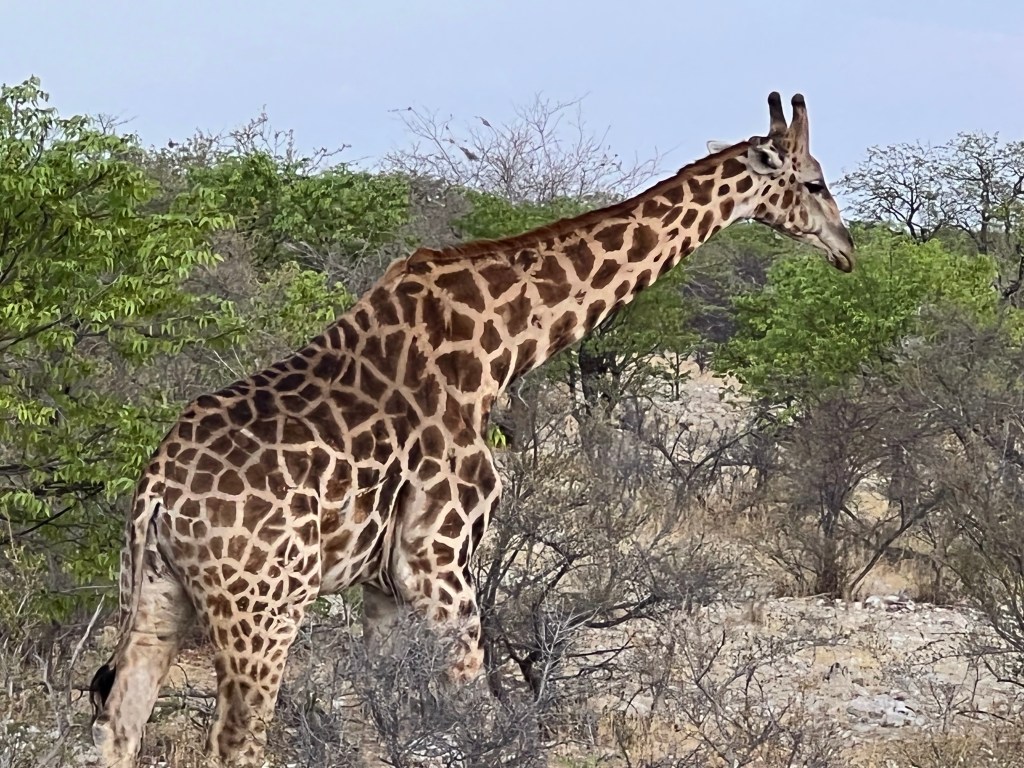
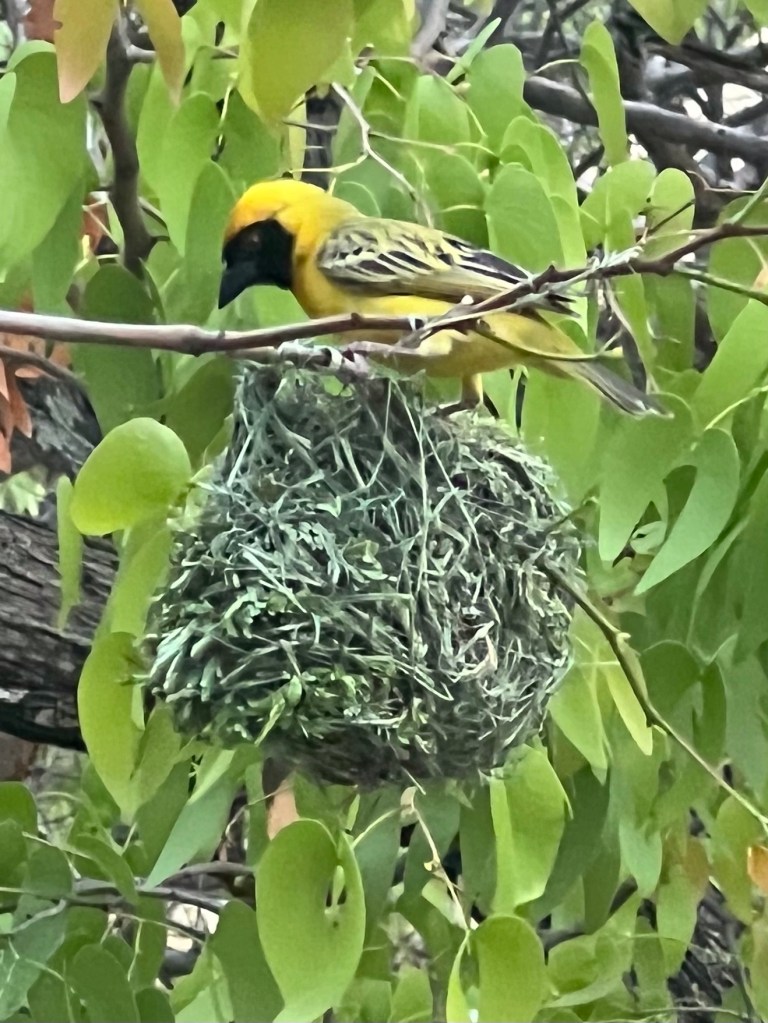
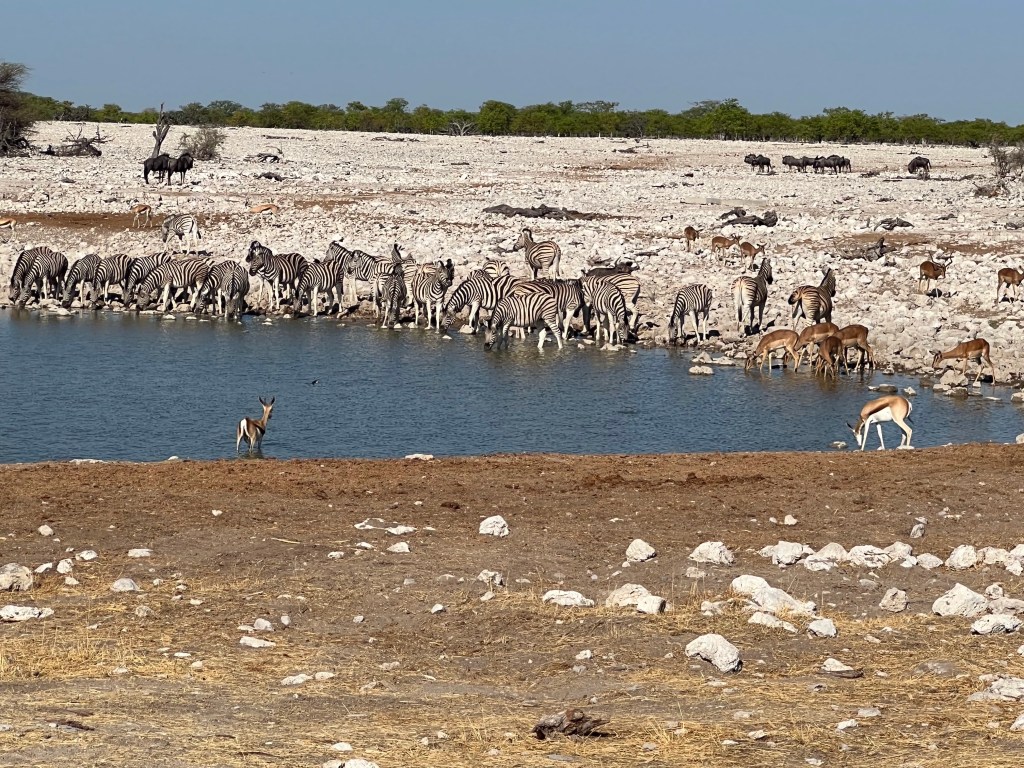
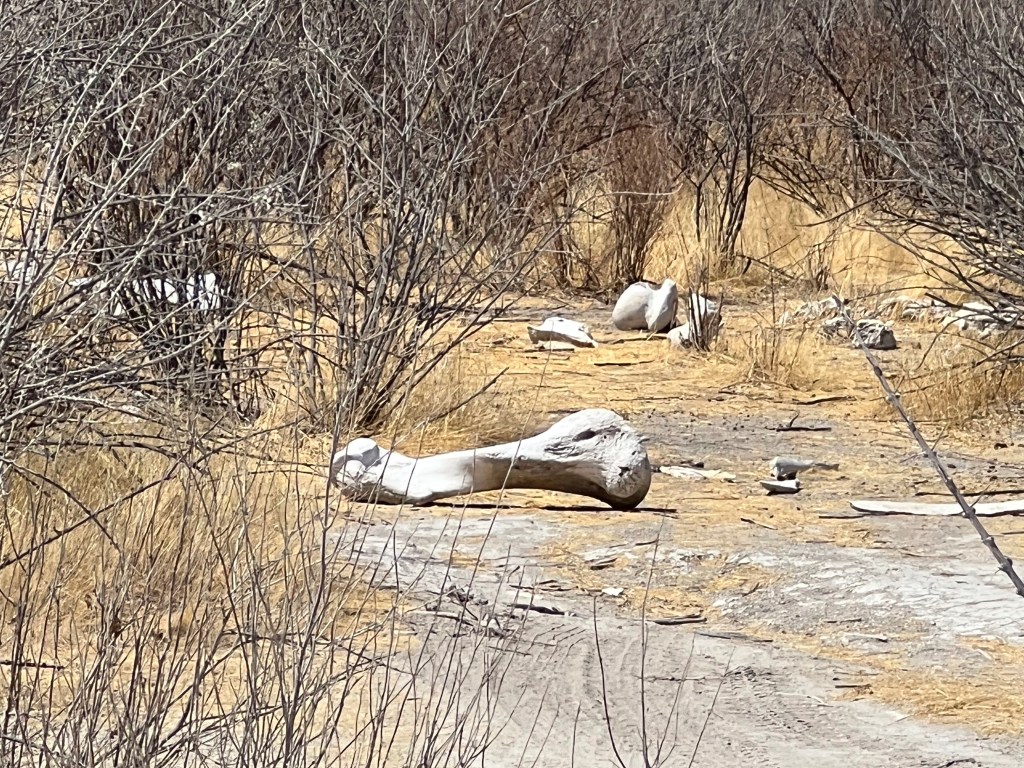
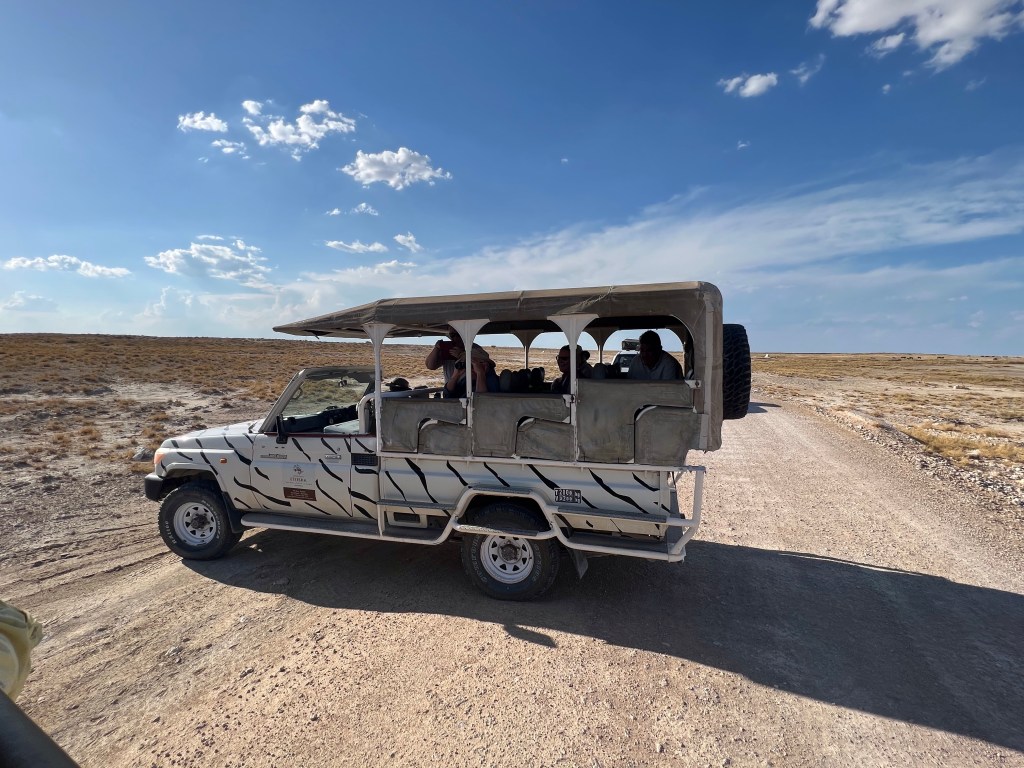
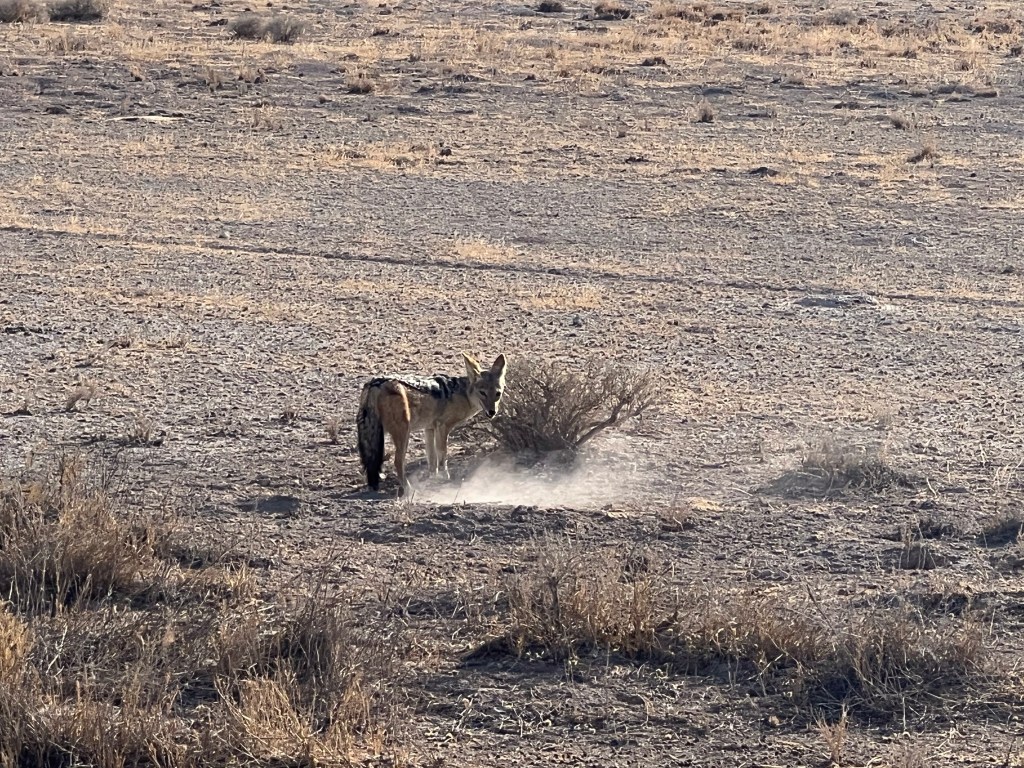
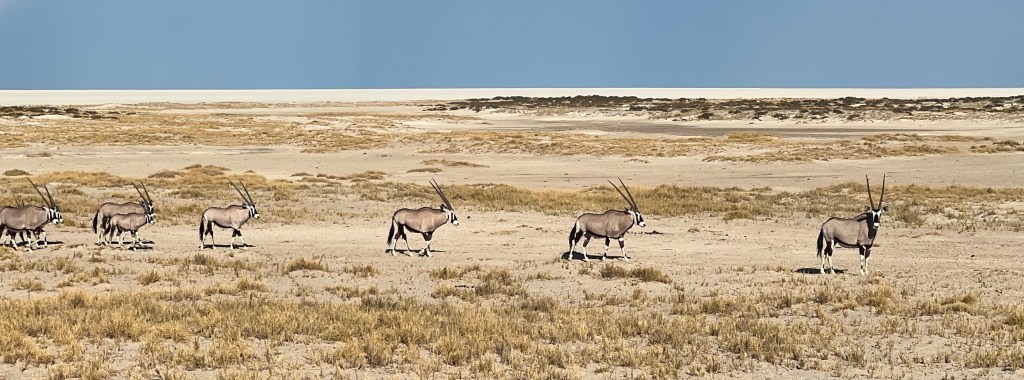
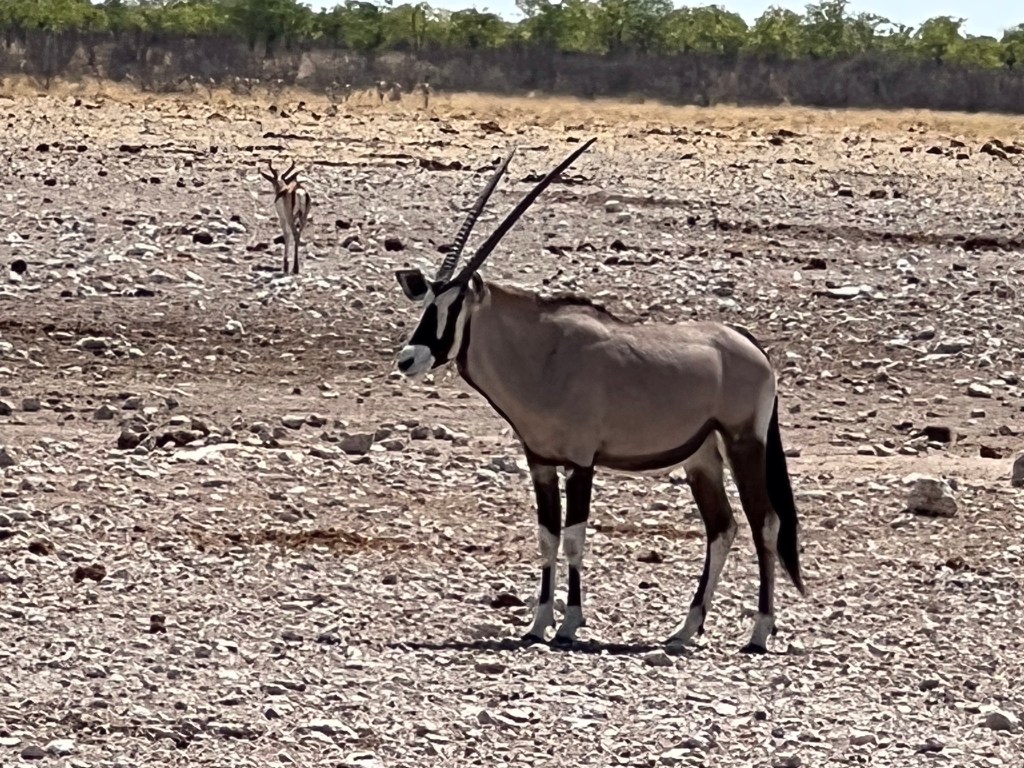
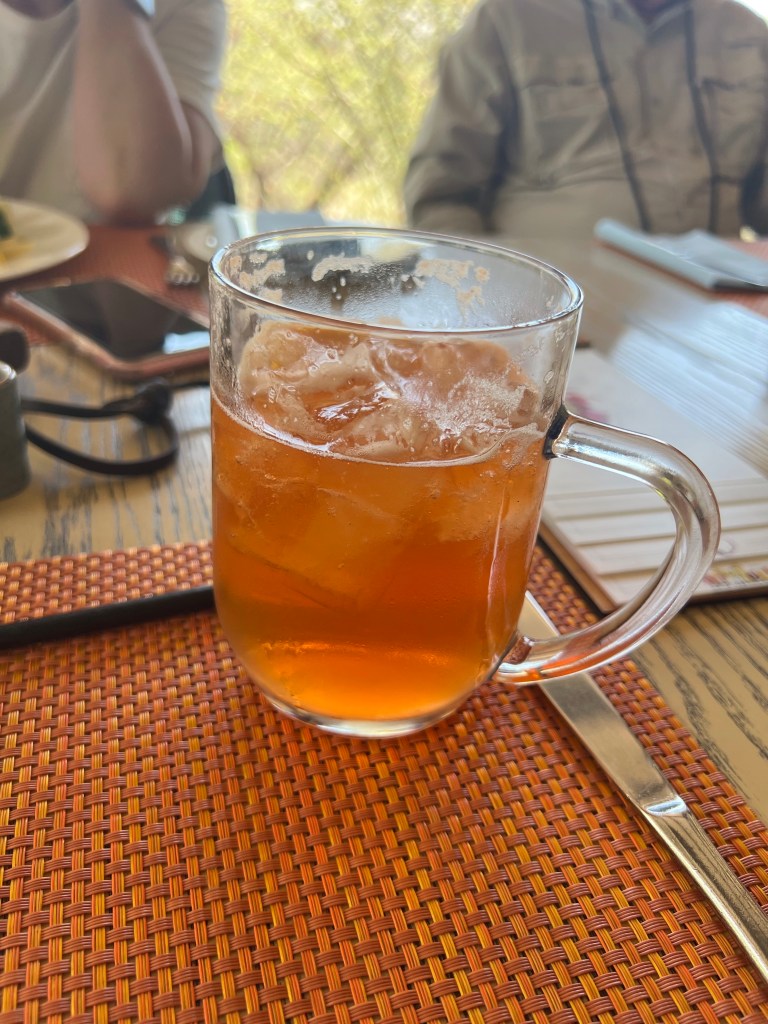
After our morning Safari drive, we came back to the lodge for lunch and a very brief rest before heading back out. enjoyed a(nother) Rock Shandy. Recipe can be found here.
We saw several lion prides during the day, all resting in the shade. and our travel mate Chris was able to get some great shots.
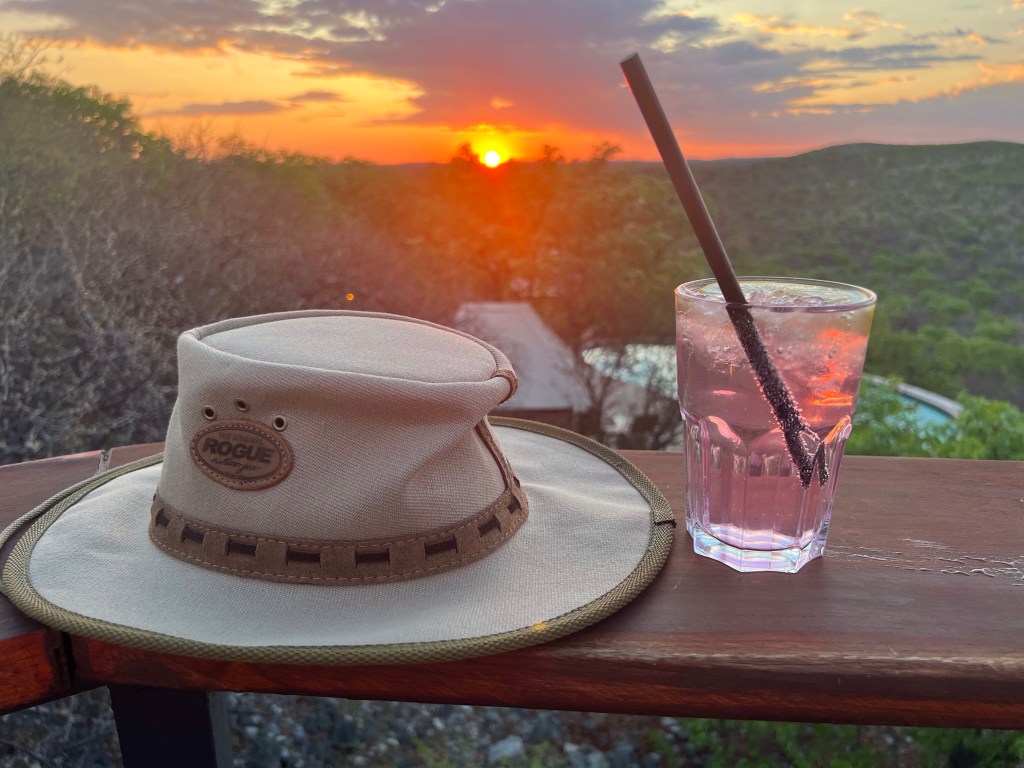
We finished the day with Sundowners on the observation deck watching the sunset before our final meal before heading off across the park tomorrow to our next lodge. All meals have all been tasty local dishes such as springbok steak, Kudu, roasted Eland, Oryx Goulosh and antelope. It is all served buffet style so you can try them all.

 Tampaskis Travel
Have you tried the Kilimanjaro oysters?
LikeLike
No, but I ate mopani worms.
LikeLike
I hope you don’t mean Mopane worms!
LikeLike
I do.
LikeLike
Yikes! They’re riddled with parasites they don’t get killed by cooking,
and then make their way to your brain, liver, and testicles.
But don’t worry …
LikeLike