Patagonia and Argentina

Cathy and I are headed to Patagonia in southern Argentina for a week of fly fishing and a week of seeing some of the other parts of Argentina. My retirement gift from my dear wife. ❤️

March 1st: off to Buenos Aries (via Houston)

We flew to Buenos Aries leaving Tampa in the late afternoon and after switching planes in Houston we boarded a 10 hour overnight flight down to Buenos Aries. It was a long flight but since there is only a two hour time difference from Tampa, the jet lag was minimal.

We arrived in BA mid morning on the 2nd. All the planes into the country seem to land around the same time and we opted for an expedited arrival service through our BA travel agent and it saved us some very long lines at the airport and immigration.

Buenos Aries is a big city that has approximately 1/3 of the 45 million population of the entire country. For a country that is a third of the size of the US, that means the rest of the country is very sparsely populated.

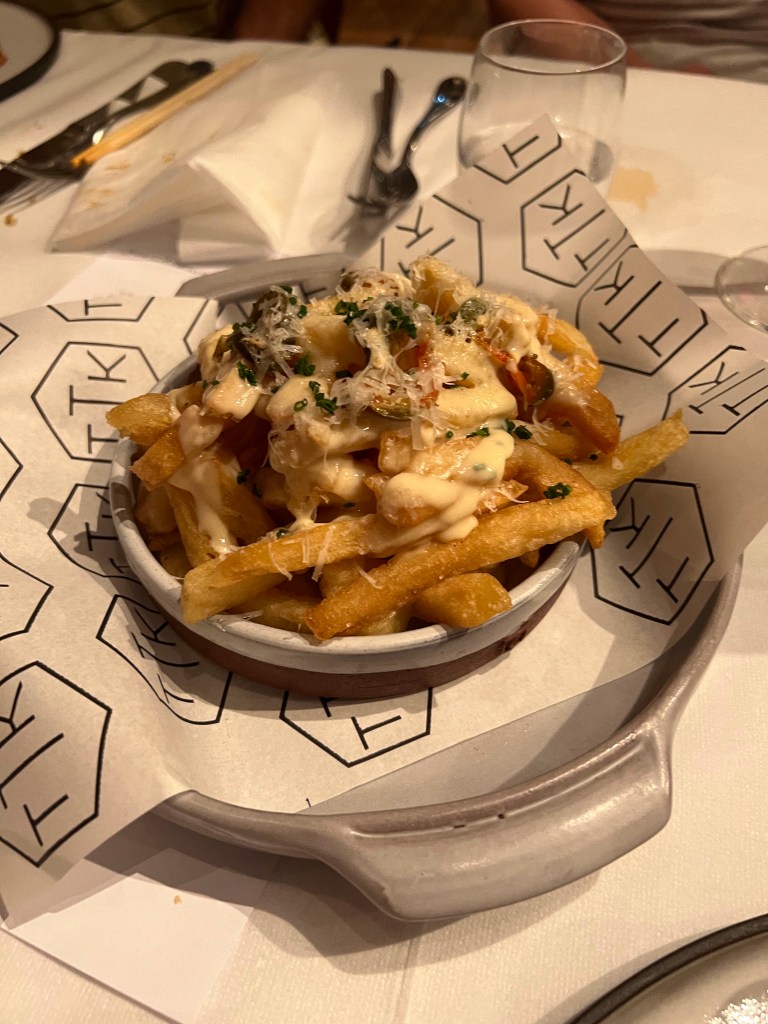
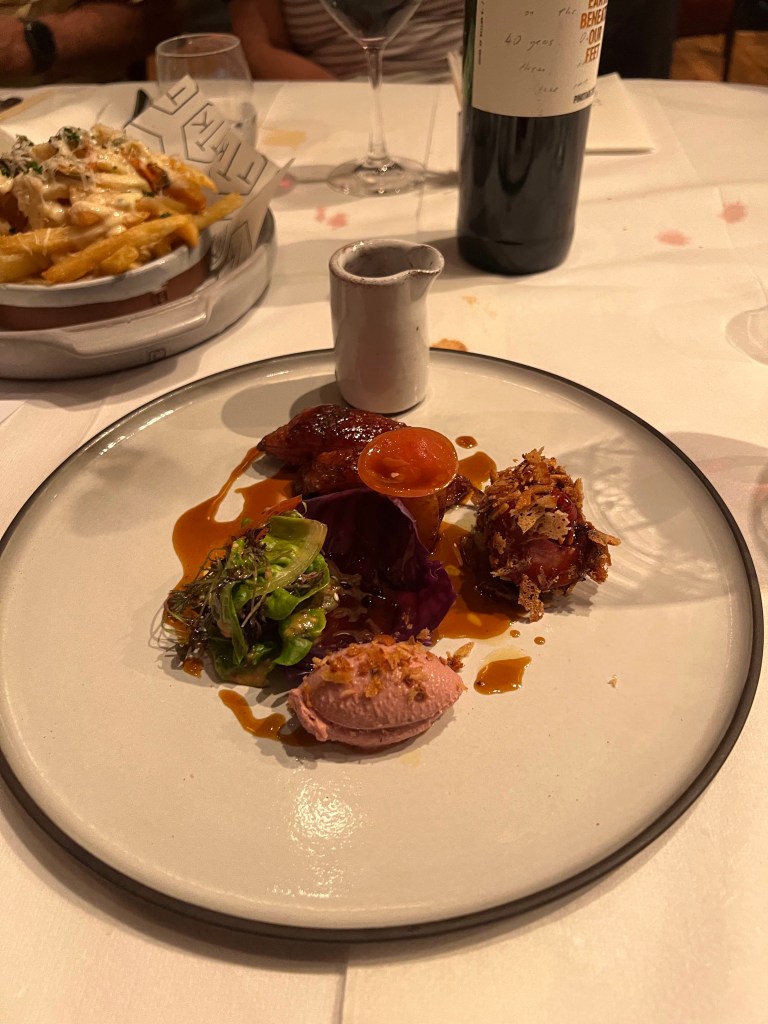
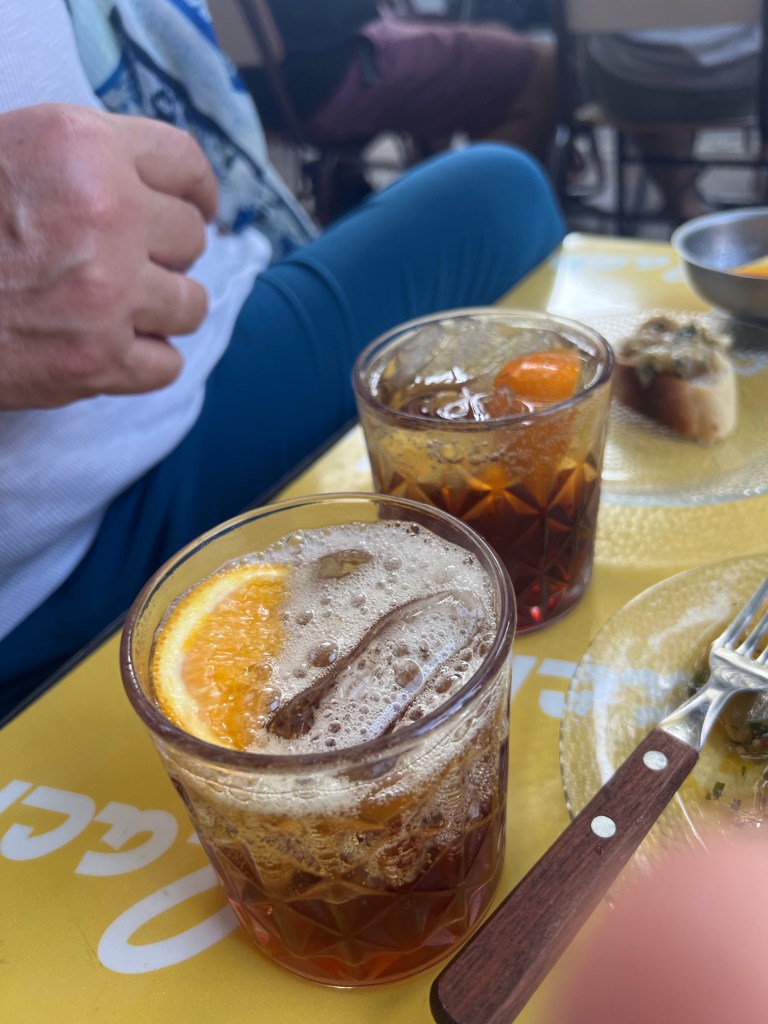
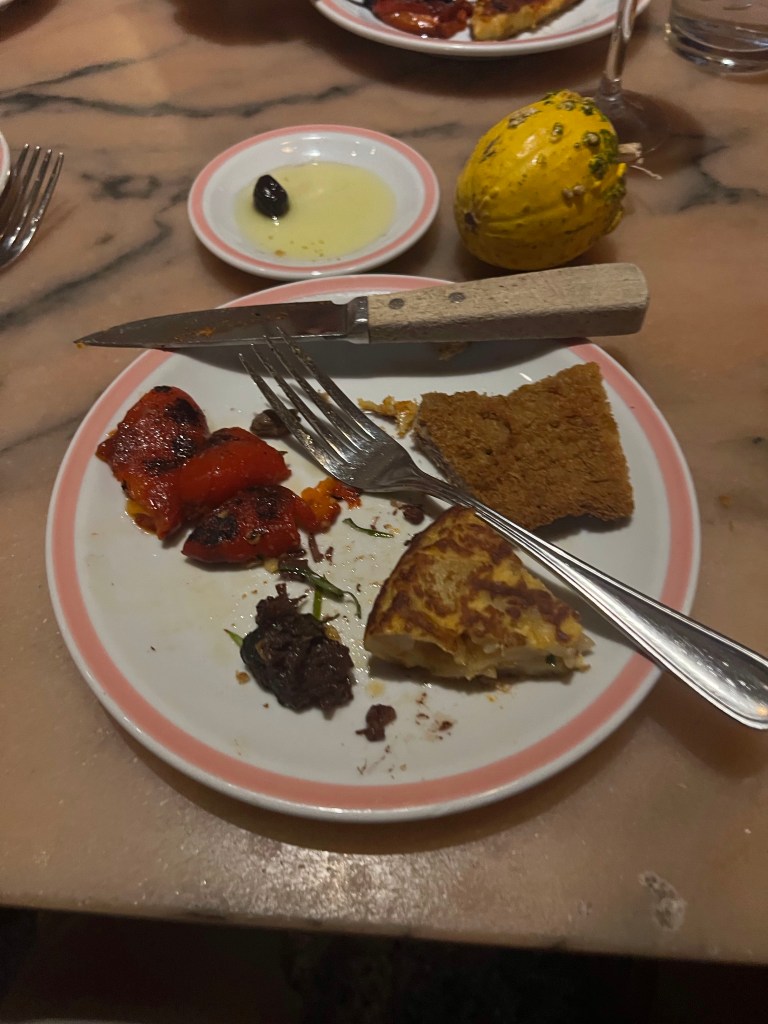
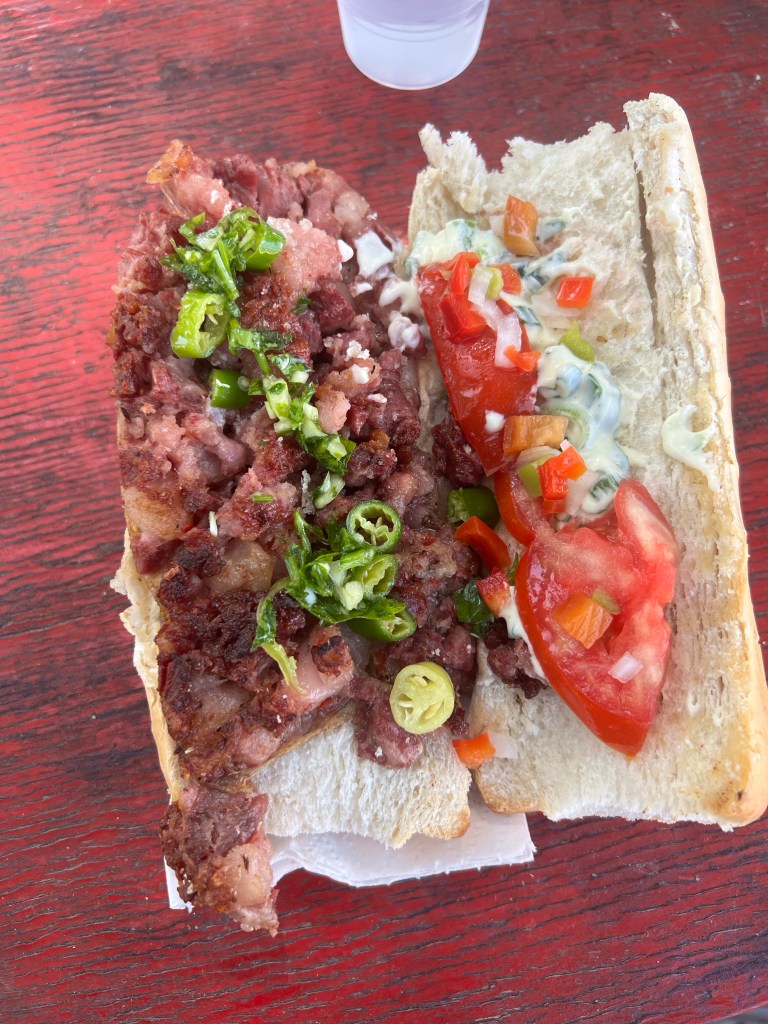
We spent March 2 and 3rd in Buenos Aires and were able to sample a bit of the City. We did a food tour in the evening of the 2nd with two other couples and visited 4 different establishments for drinks, appetizers and dinners. All of the servings are quite large in all the restaurants and we will have to pace ourselves with the food and beverages.
On the 3rd, we did an all-day city bike tour of about 20 miles and were able to get a good feel of the city.
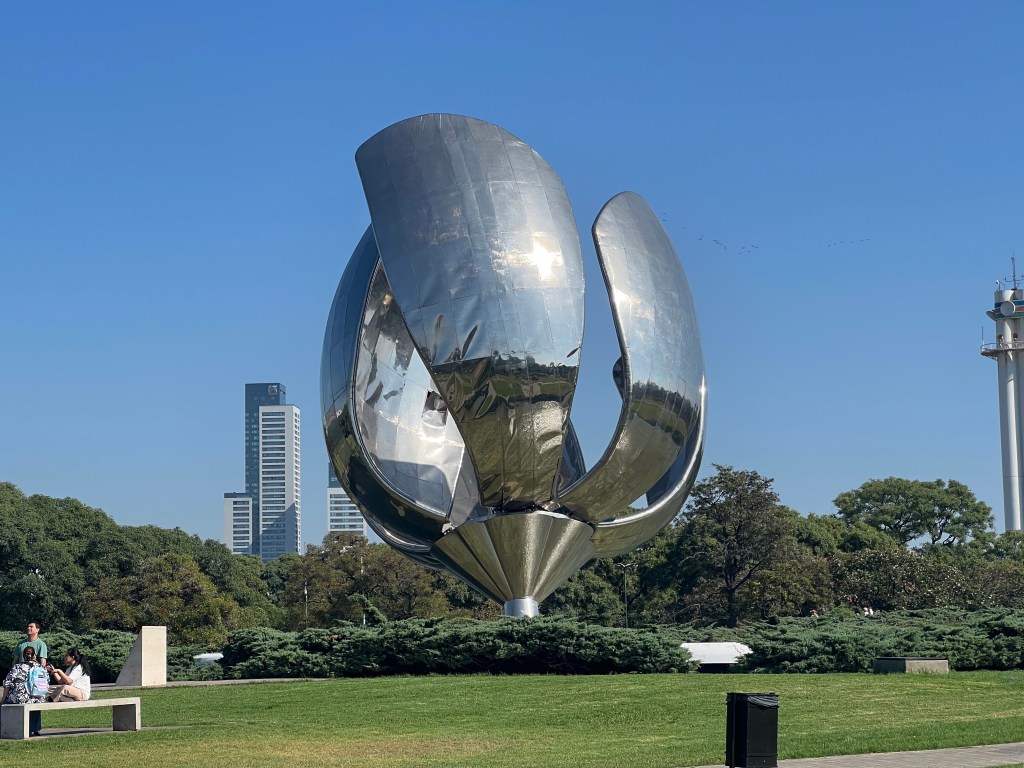
A beautiful flower sculpture that opens up in the morning and closes up at night. Until it broke.
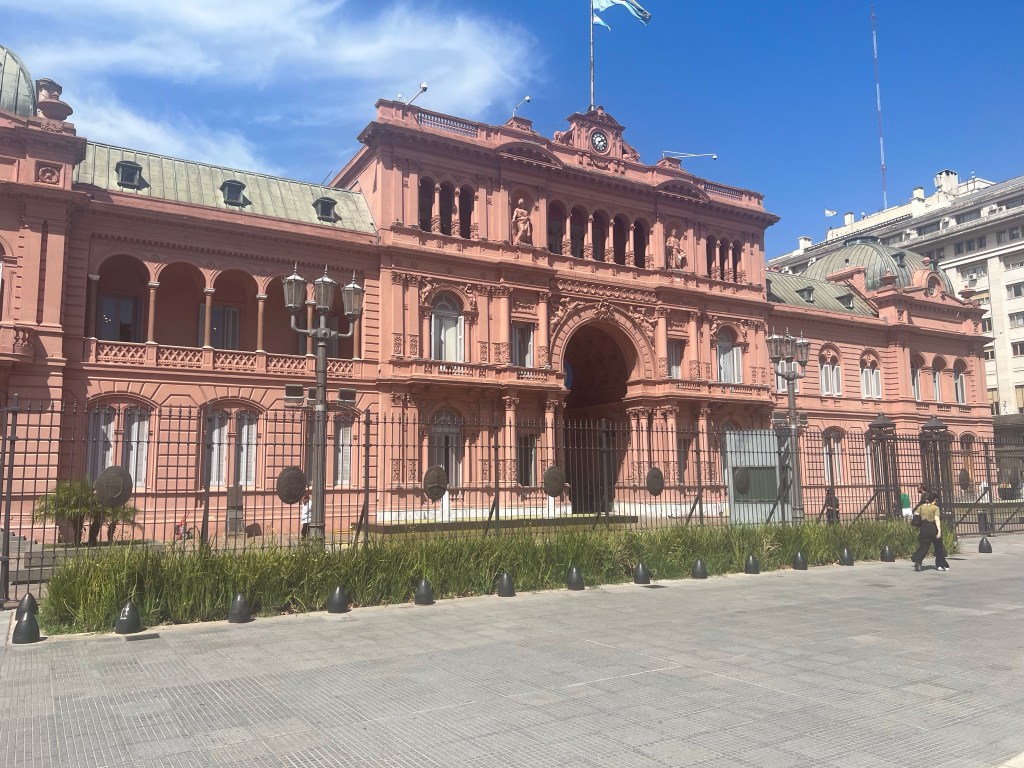
The “Pink House”. The Argentinian version of the White House except the president doesn’t live there -he flies in by helicopter on days that he works. Big park plaza right in front where there are constant protests about everything you can imagine.

In the evening we attended a combination dinner and cultural/Tango show. it was a bit touristy but the dancing and music were interesting.

The weather in BA has been hot and humid. Lower 90s. Think Florida in July. We will be flying several hours south to Patagonia so it will be much cooler there.

Inflation and exchange rates

The Economy in Argentina is a mess. The inflation rate is about 90% a year so no one holds Argentinian dollars. Our bike tour guide said they would all be happy with 20-30% inflation. They all want American dollars. Because the US dollar exchange rates fluctuates related to inflation the cost of things in US dollars stays very stable.

There are at least 5 different exchange rates to US dollars including the “official” government exchange rate, the “blue rate” which gives you about twice the Pesos for each American dollar, the credit card exchange rate witch is what you MAY get if you charge something – but only on visa or Mastercard, the exchange rate for Argentinians who use their credit card for purchases outside the country and several others. if you use an ATM to get cash, as is the best way in most countries, you get the official rate so it’s a bad idea. People suggest bring American dollars and exchanging one you arrive. Currently, the blue rate, which you can get at technically illegal exchange houses is about 370 peso per dollar (compared with 200 for the official rate. They want you to exchange $50 and $100 us bills because they are harder to counterfeit and you get a better exchange rate than with smaller bills. So $100 will get you 37,000 pesos. Oh yeah – the largest demonization bill is 1000 peso (about $3). They are set to “fix” that problem with a new bill – 2,000 peso. So the largest bill printed will be worth about $6 but in a year will only be worth $3. When you exchange $100 for your 37 1000 peso bills you can’t even fit it in a wallet.

No one trusts banks and there are no mortgages. All property is purchased with US dollars and all cash.

Using the blue rate (or even the official rate), many things are quite affordable. Meals, Taxis are very cheap (a 20 minute across town taxi ride was 950 peso (with no tipping so about $2.80). It’s strange – Hotels tend to be what you would expect other places – $ 100 and up. Businesses tend to be very cash based and apparently very little income gets reported as taxes are high.

Unemployment is high and about 50% of the population is poor. government handouts are very high and several people we talked to about politics all believe the government is very corrupt. They stay in power by giving huge handouts and catering to organized crime, the very strong unions and the soccer clubs.

One tradition is on the 29th of every month people eat gnocchi. and the tradition is that money is placed under the dinner plates of the children to reward them if they finish their plates. People with jobs call the people on government assistance gnocchi’s since they are given money every month as well.

More later from the fishing ranch
November 4-6: The Final Days!

Well, we thought when we finished up at Erindi, we were done with our wildlife viewing. But as it turns out there was a final opportunity.

On November 4th, we headed off to Gocheganas resort near Windhoek. It was a 5 hour drive over the mountains from Sossusvlei over the mountains with 4 of the hours on a gravel road. Not exactly relaxed traveling but we were able to see some very beautiful scenery along the way.

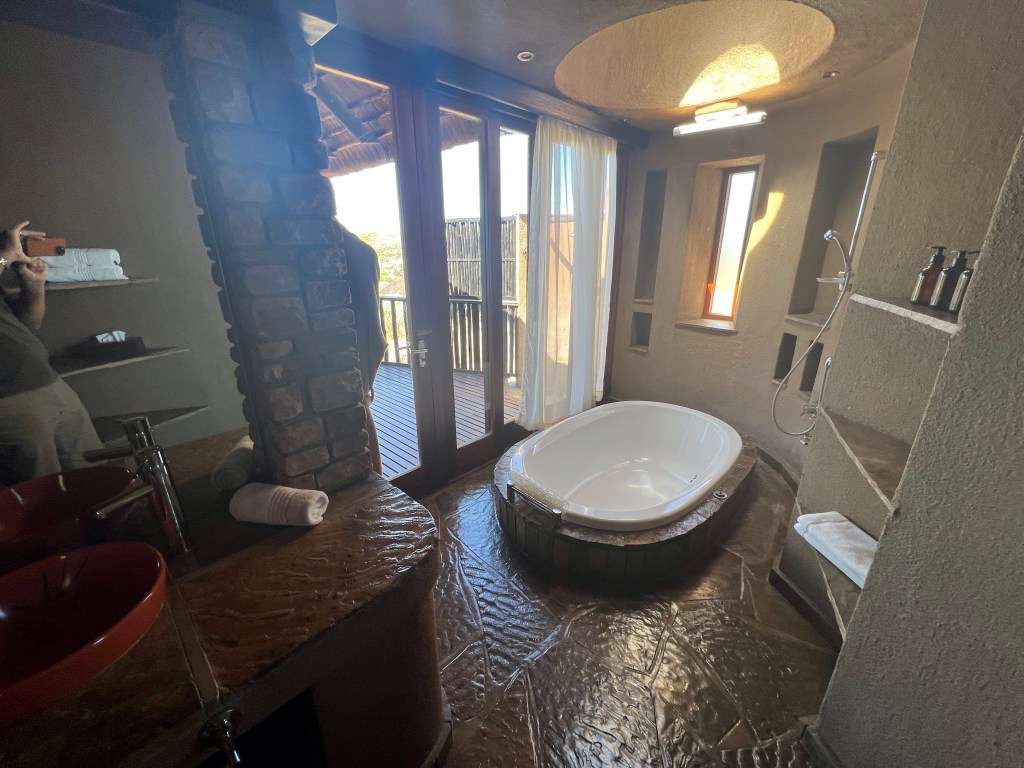
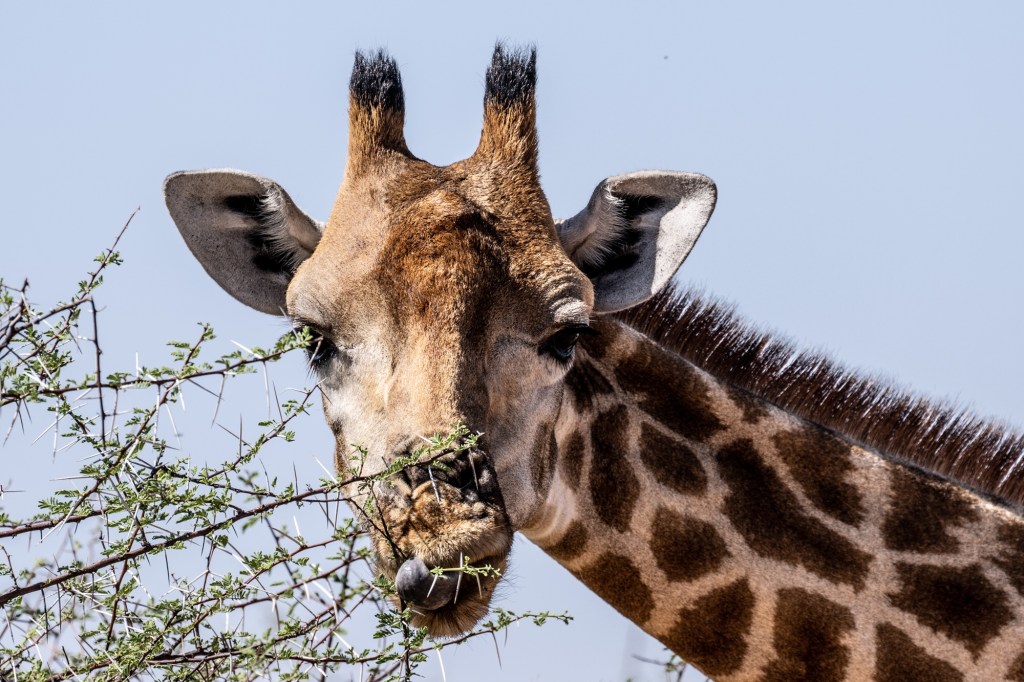
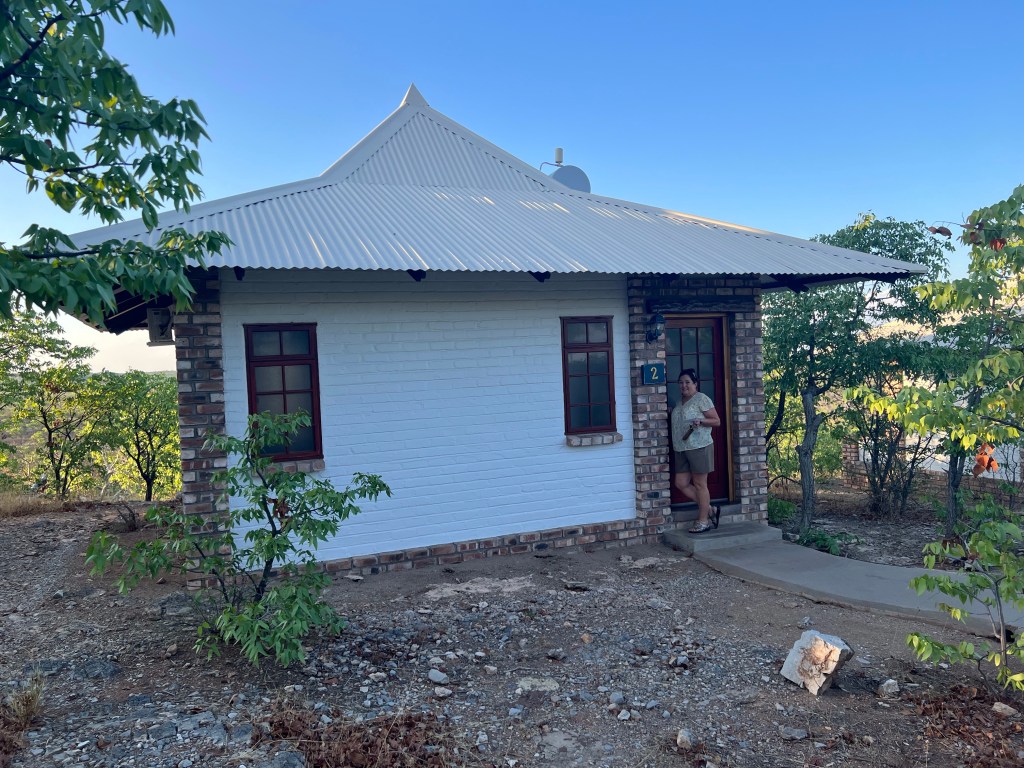
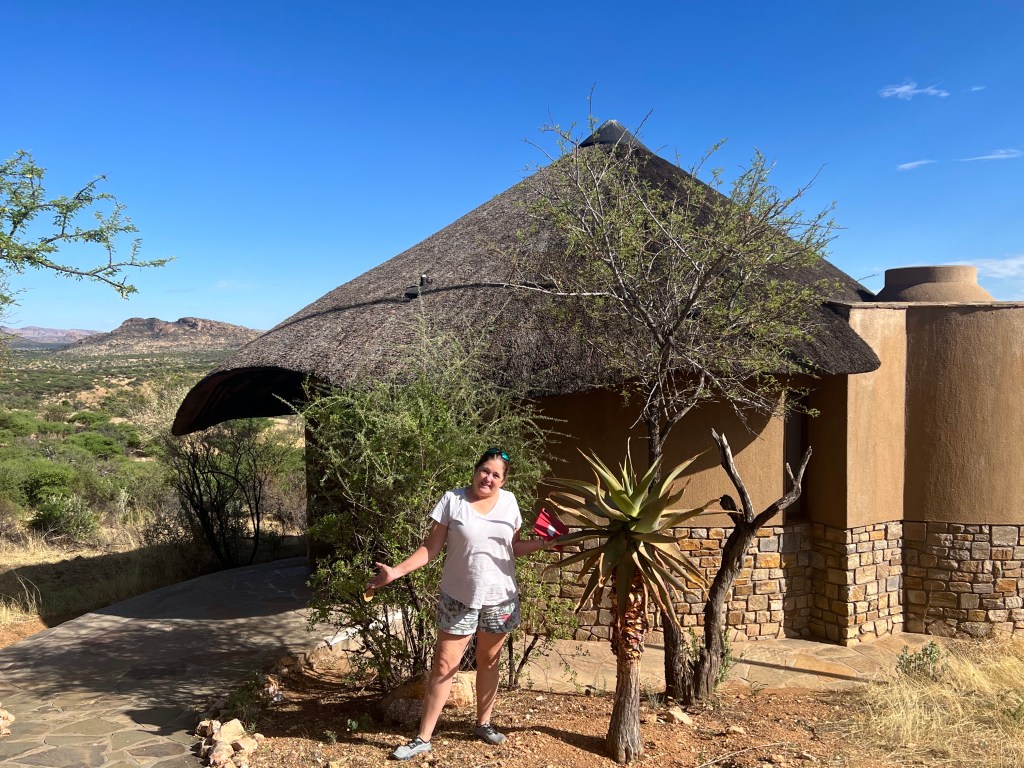
When we arrived at Gocheganas, we were amazed there was such a nice resort so far back off the road. Similar to Erindi, it is a private reserve and after entering the gate, you drive about 20 minutes back into the bush on gravel roads before arriving at the facility. Each accommodation was a separate building with a private observation deck with an outside shower. We drove past several varieties of wildlife as we came in including giraffes.

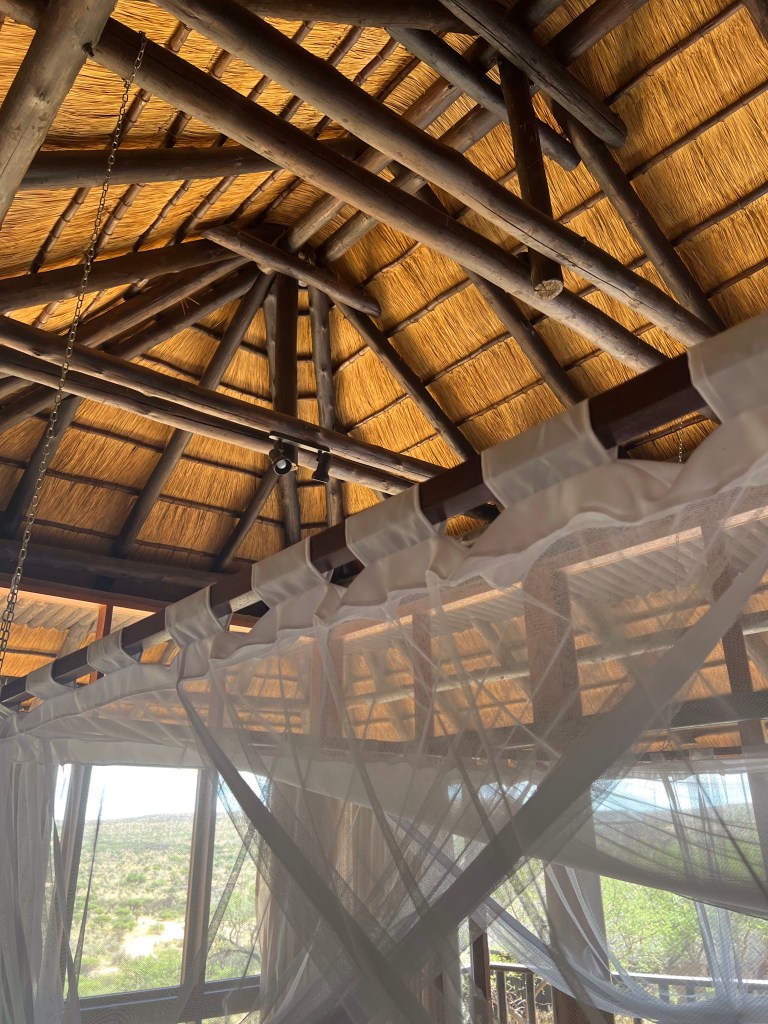
The thatched roof was really cool.
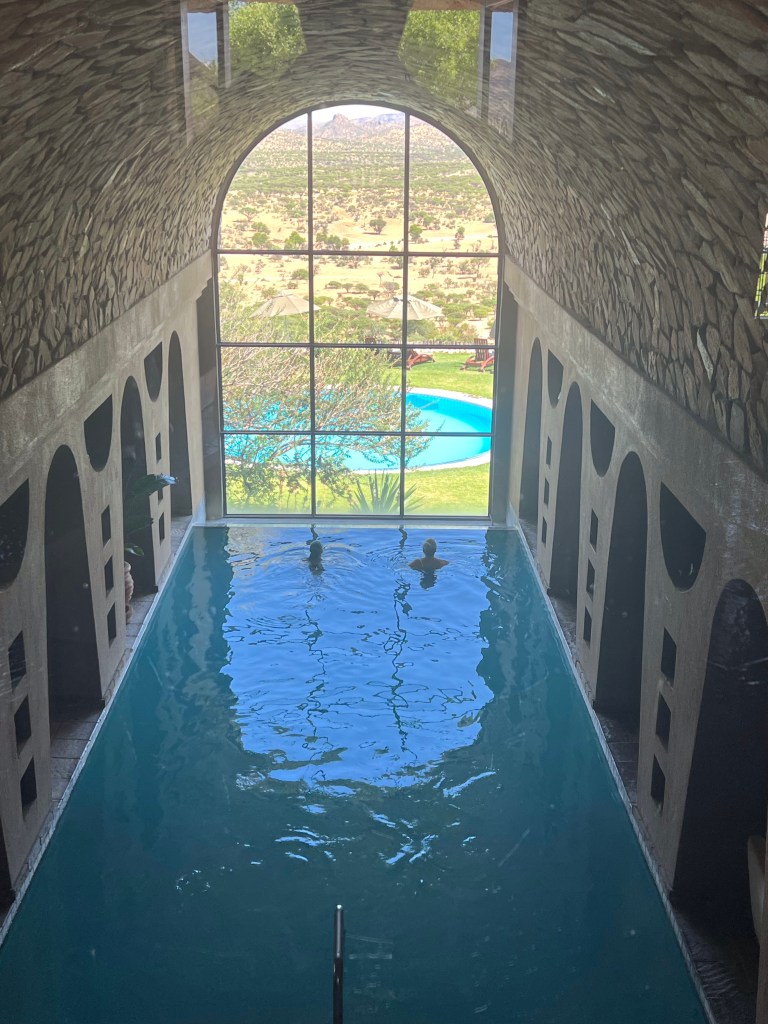
The property had a wonderful spa facility and due to the very favorable exchange rate, everything was extremely reasonable. $30 for an hour long massage for example. Unfortunately, we were not there long enough to take advantage.

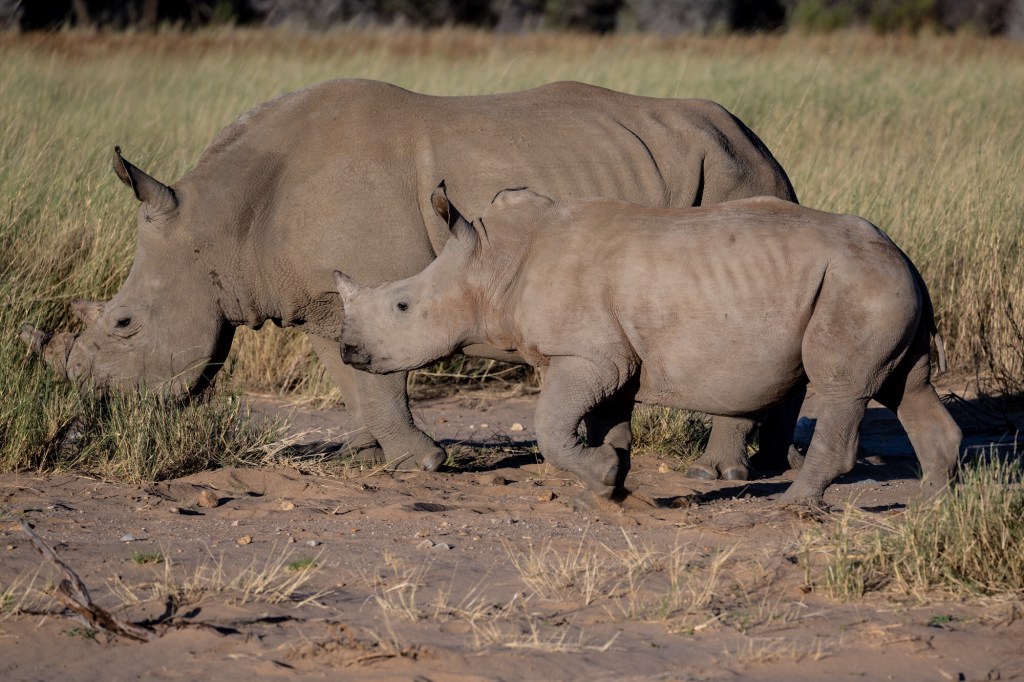
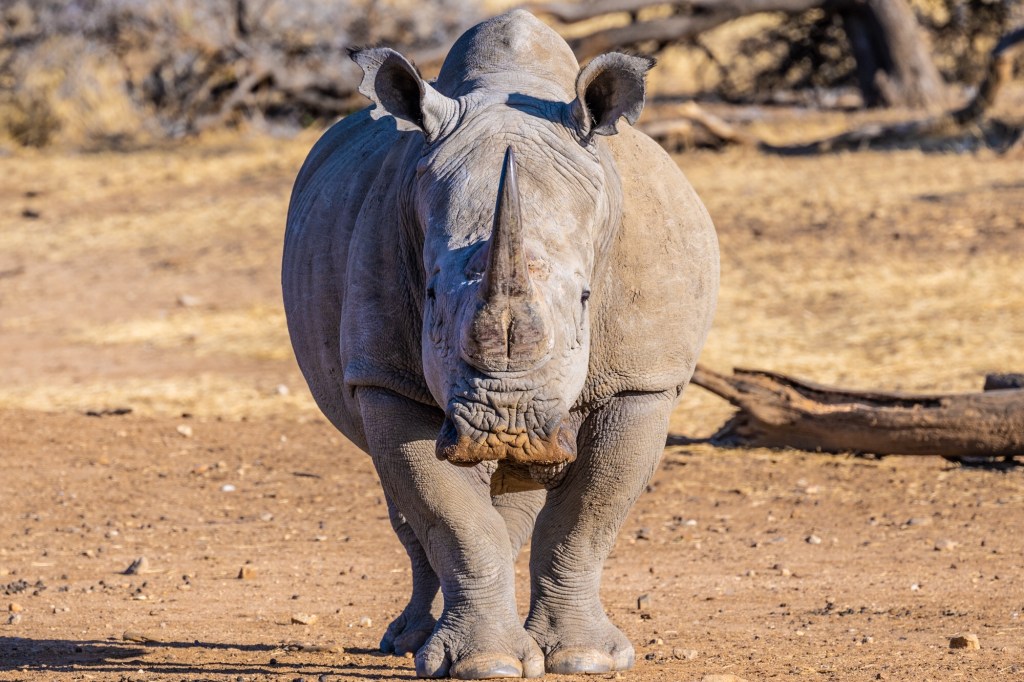
After getting settled, we went for a wildlife viewing drive. We again saw a variety of wildlife with the highlight being two adult white rhinos with a juvenile. We set up our last sundowner table and enjoyed cocktails as we watched the rhinos grazing a stone’s throw away. Apparently white rhinos are much less aggressive than black rhinos.

We returned to the lodge and we taken to a private garden area with a fire pit and cooking grills and a table set for our group of 11. The Springbok steak was great as was everything else. It was a wonderful last bush dinner.

On November 5th, we slept in and then headed to the airport for our flight back to Cape Town.

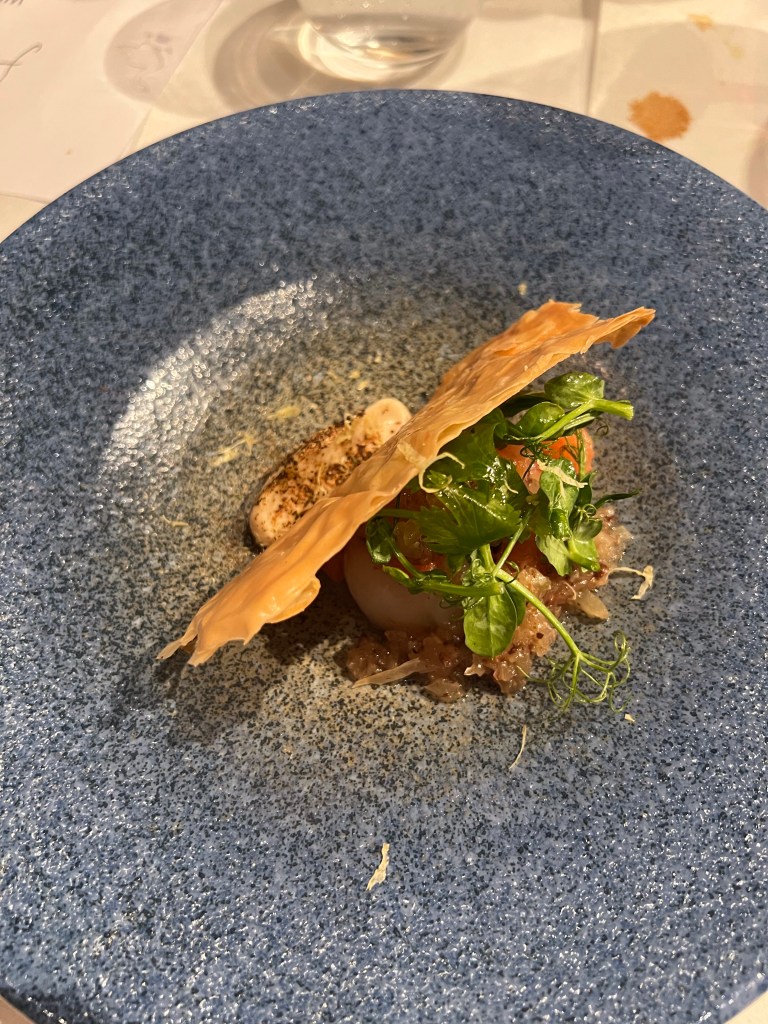
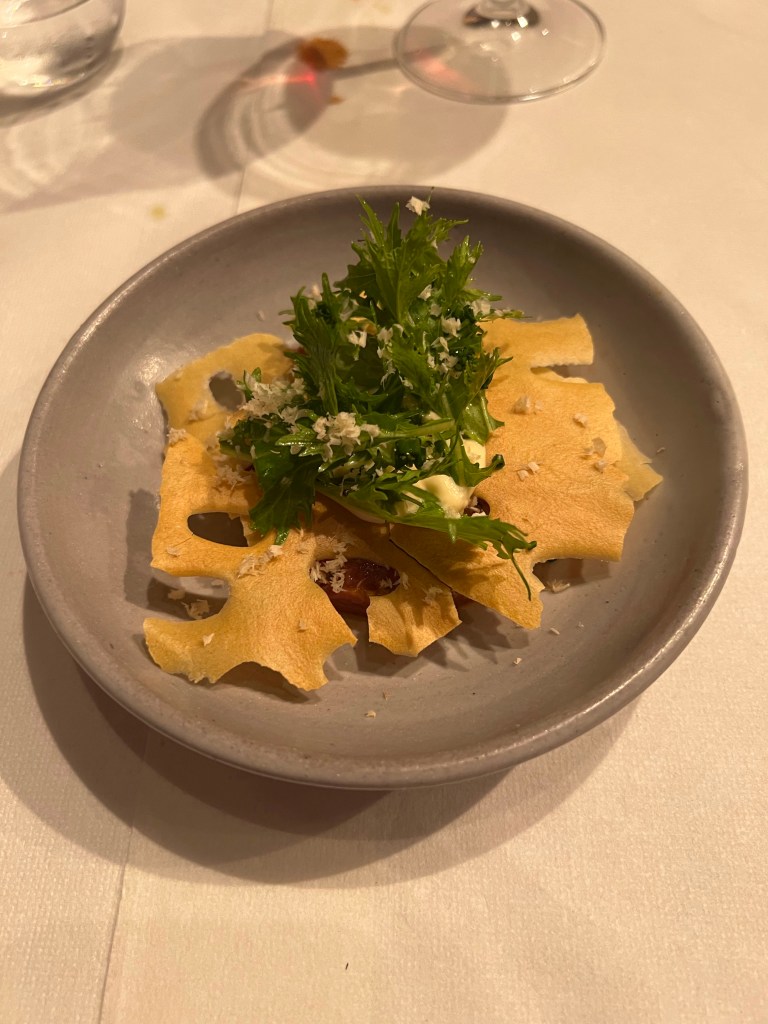
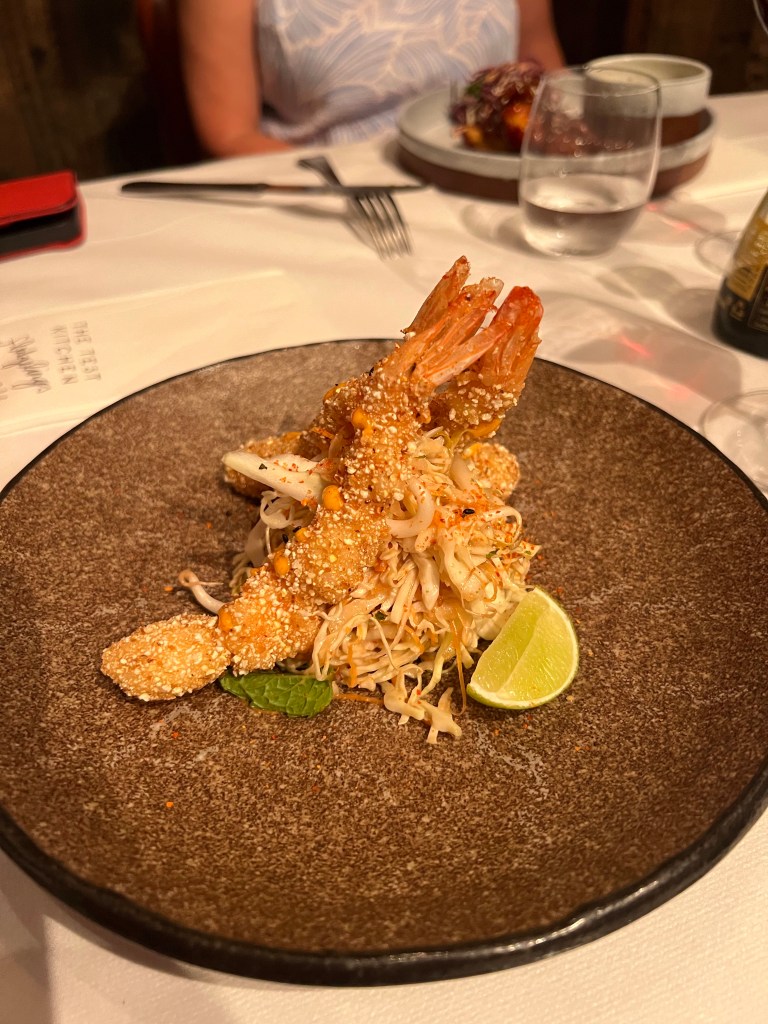
Upon arriving in Cape Town, we headed back to the Zevenwacht Wine Estate and then headed back in to downtown Cape Town for our last dinner. It was quite different than all our other meals – much more high-end culinary dishes. It was called the Test Kitchen – Fledglings. The concept is to bring in mentees and have them learn under the guidance of top end chefs. Here is a partial listing of the menu:

  • KFC – KOREAN FRIED CHICKEN / PONZU EMULSION / ASIAN SALAD
  • SWEET POTATO SSAM – SWEET POTATO/ CHARRED BROCCOLI & SHIITAKE / TOFU PUREE/ CABBAGE / FETA
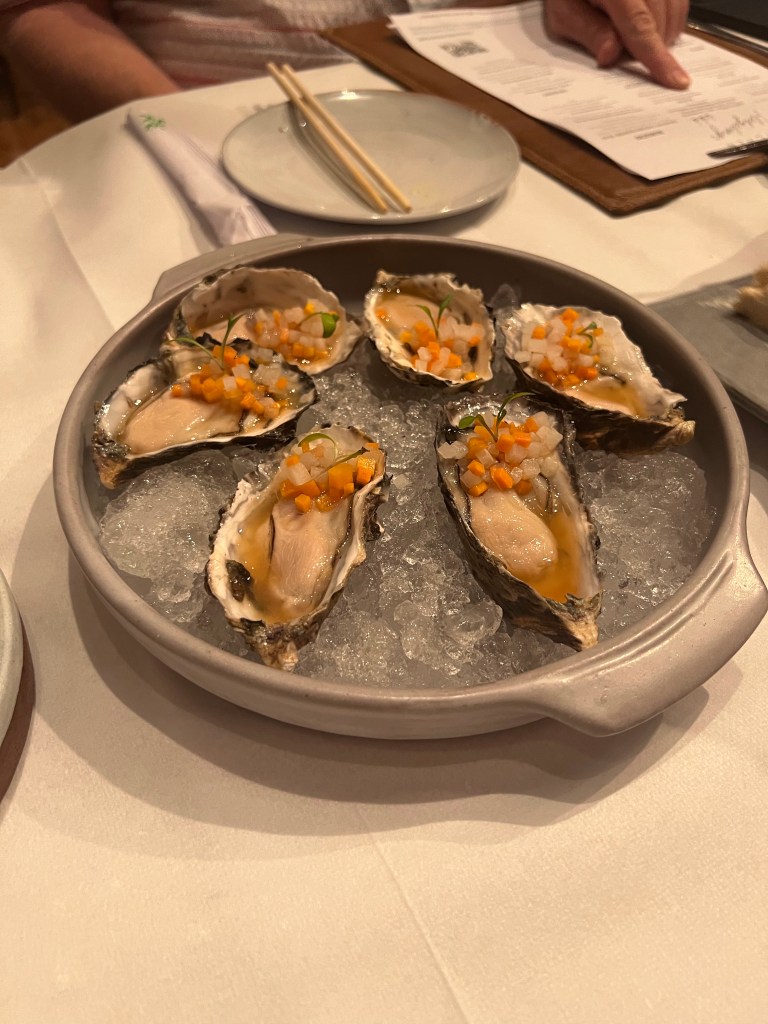
  • OYSTERS – PICKLED DAIKON & CARROT WITH NAM JIM DRESSING OR LEMON & BLACK PEPPER WITH TABASCO
  • POPCORN PRAWNS – GOCHUJANG MAYO
  • BEEF TARTARE – LUKE’S BLOODY MARY DRESSING / HORSERADISH MAYO / YORKSHIRE TUILE
  • MUSHROOM RISOTTO – EXOTIC MUSHROOM RISOTTO / GOATS CHEESE / FRIED MUSHROOMS
  • FISH OF THE DAY – KINGKLIP / TOMATO / FENNEL FONDANT / BOUILLABAISSE EXTRACTION / FISH VELOUTÉ
  • BEEF FILLET – HOLLANDAISE / OX TONGUE / JUS / CARROT FONDANT / PICKLED MUSHROOMS / ROSTI / CAPERS & GHERKINS
  • PORK BELLY – COCONUT BROTH / PAPAYA SALAD / COCONUT FLAKES

We had many of the items. Several of us chose the tasting menu and the chef brought out a variety of additional things for us to share. Again, nice to travel with a well-known and well-connected chef. it was a wonderful meal.

On our last day in Cape Town, we tried again to get to Robben Island. Our plane left at 6 pm so we got up early and went to the waterfront of Cape Town and with calm seas, we were able to take the ferry to the island for the tour. It was a moving experience. Nelson Mandela spent over 17 years at this prison (out of a total of 27 years in prison altogether.). Our tour guide was an ex-political prisoner who spent 7 years incarcerated on the Island. He, like Mandela, was unconditionally released as apartied collapsed. He actually lives on the island. After being released, he, like many other prisoners had trouble finding employment and came back to the island to serve as a tour guide once the museum-island opened.

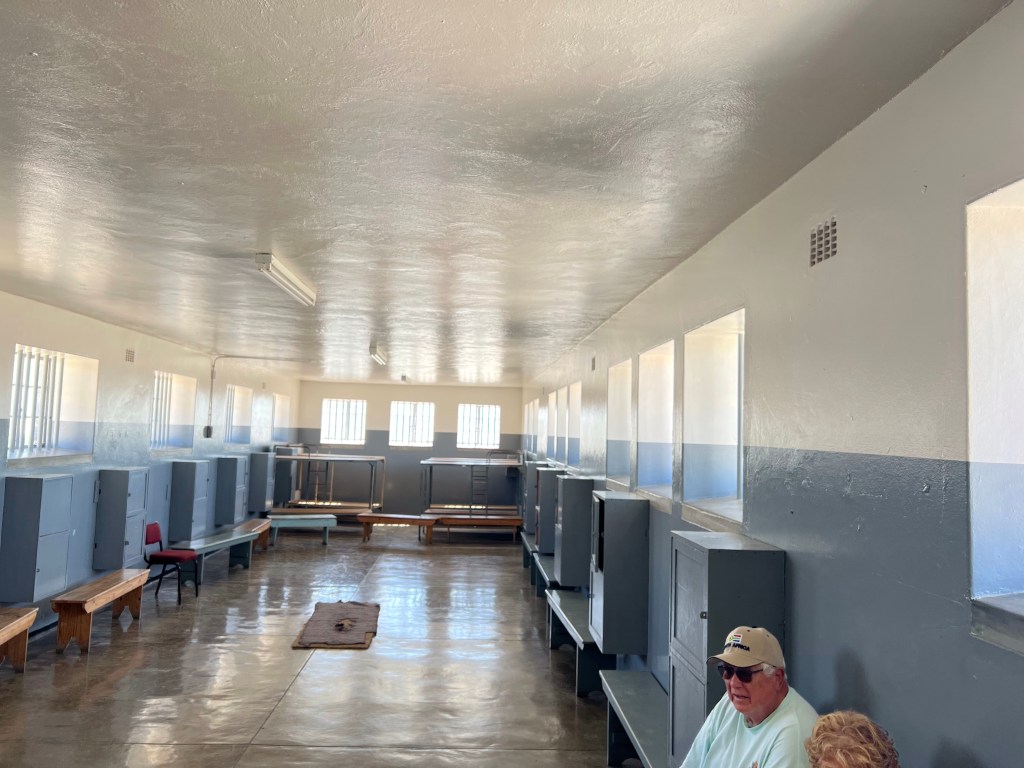
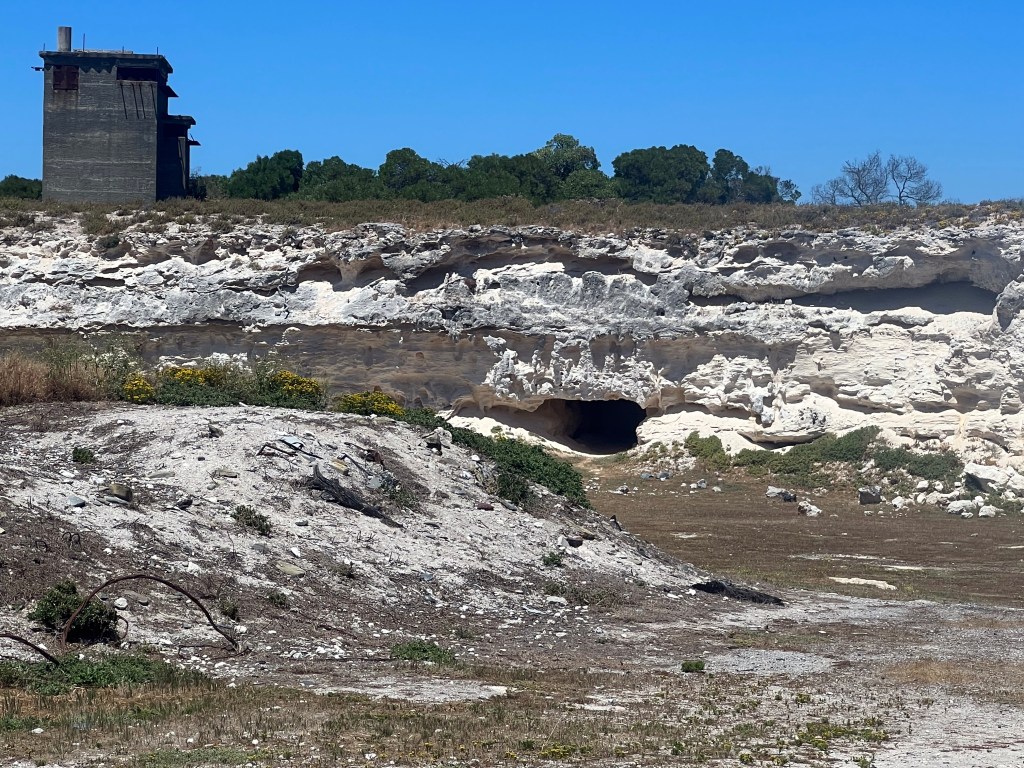
We were able to view the communal cells that housed 60 prisoners each, Nelson Mandellas cell, and the stone quarry where the prisoners were forced to work 5 days a week regardless of weather. Black prisoners were not allowed long pants, long shirts, jackets, socks or shoes and were given muched- reduced food 1rations.

This room housed 60 black political prisoners -including our tour guide. They slept on the floor with three blankets; one under them, one over them and one as a pillow. the windows had no glass. Just bars.
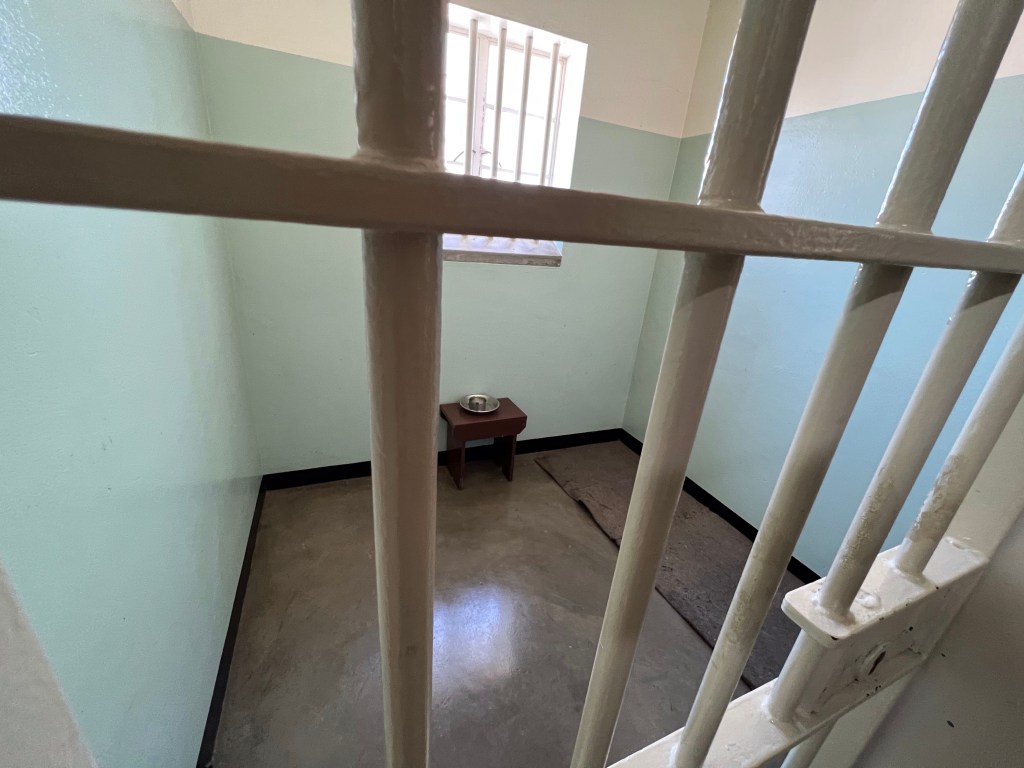
Mandela’s Cell where he spent 17 years. 2 by 3 meters. No bed. Bucket for a
toilet.
The quarry

Boarding our flight home now….. will post once more with final thoughts on the trip.

November 2- 3: The desert

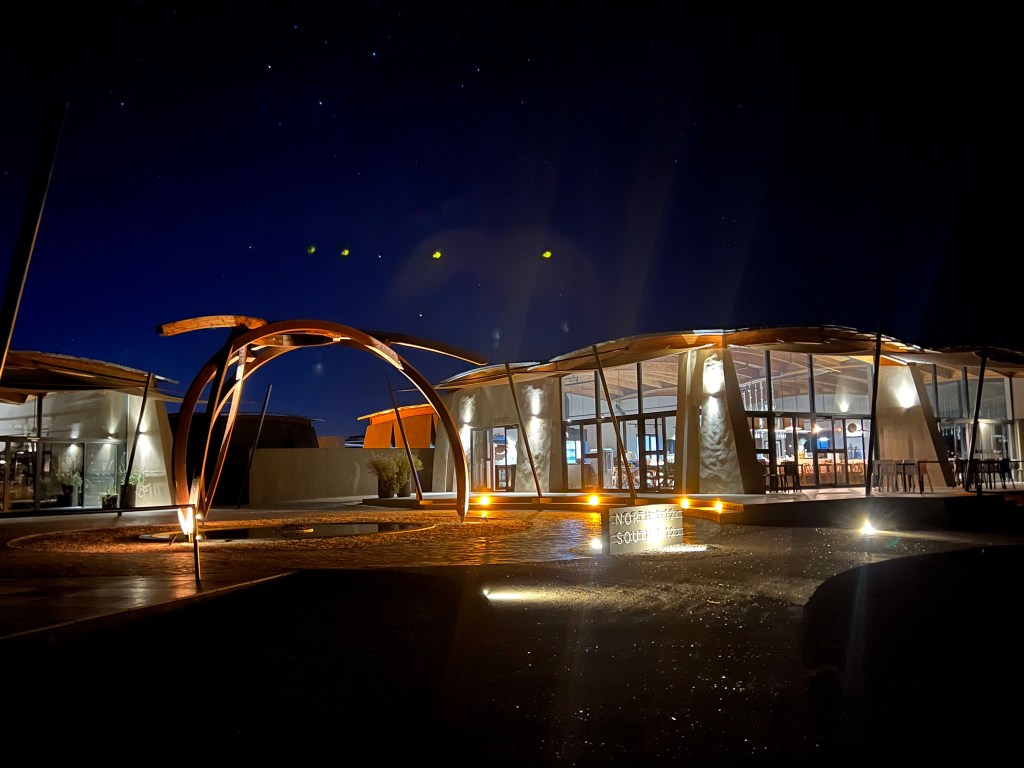
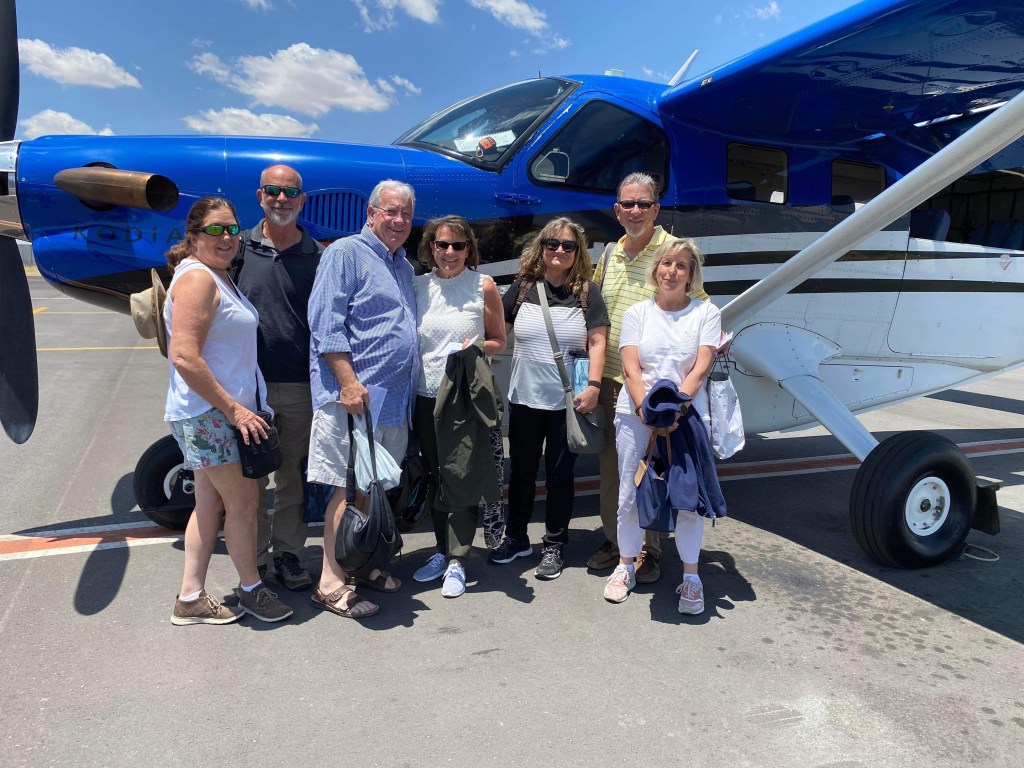
November 2nd was mainly a travel day. We left the Erindi Reserve and headed to a small airport near Windhoek. From there, we traveled by small plane to Sossusvlei where we landed on a sand runway. We are staying at Desert Grace Lodge in the Namib Desert for the next two nights

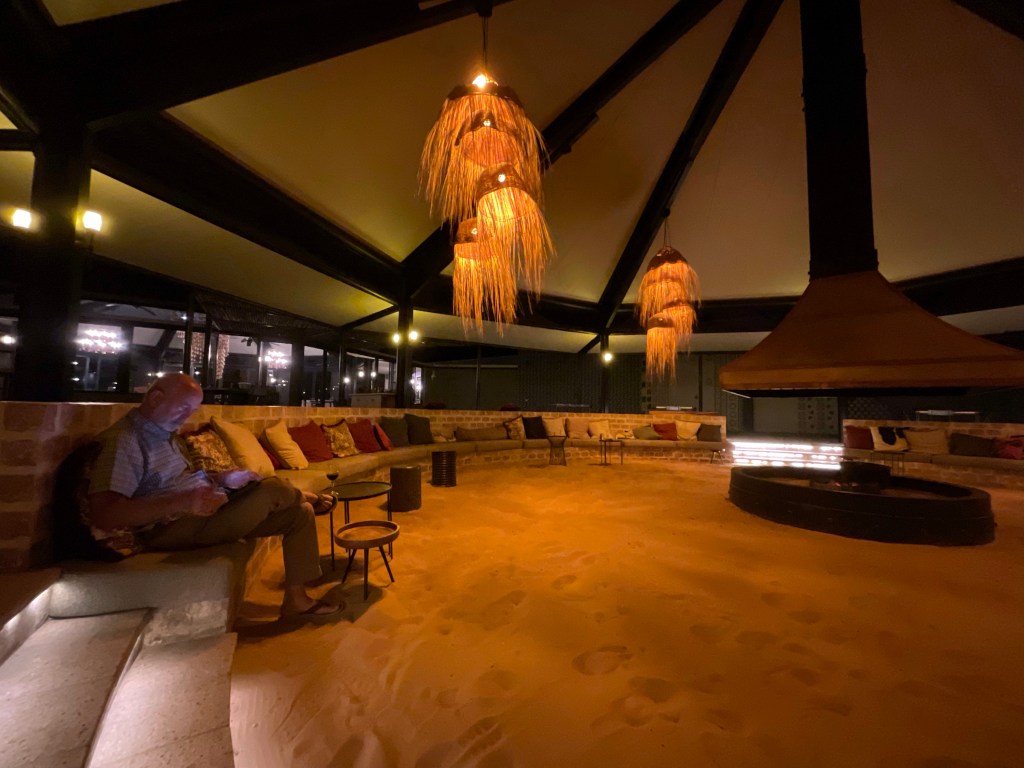
Desert Grace Lodge
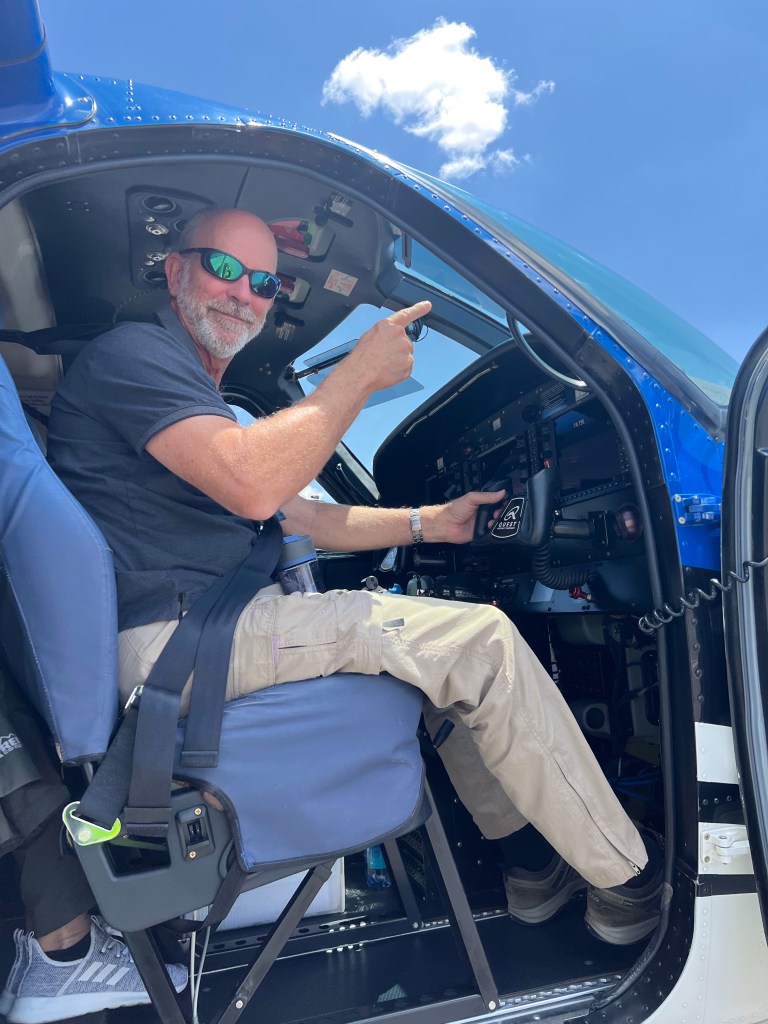
The pilot did just fine; I did not need to jump in to assist.

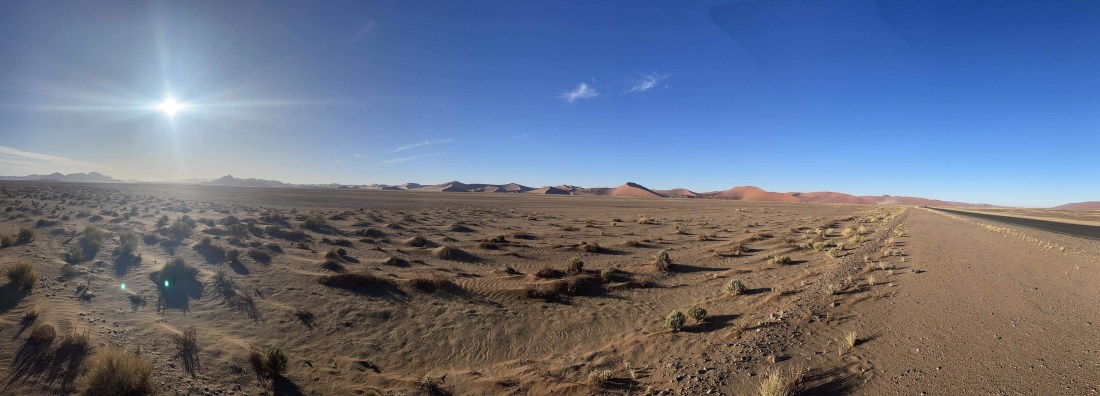
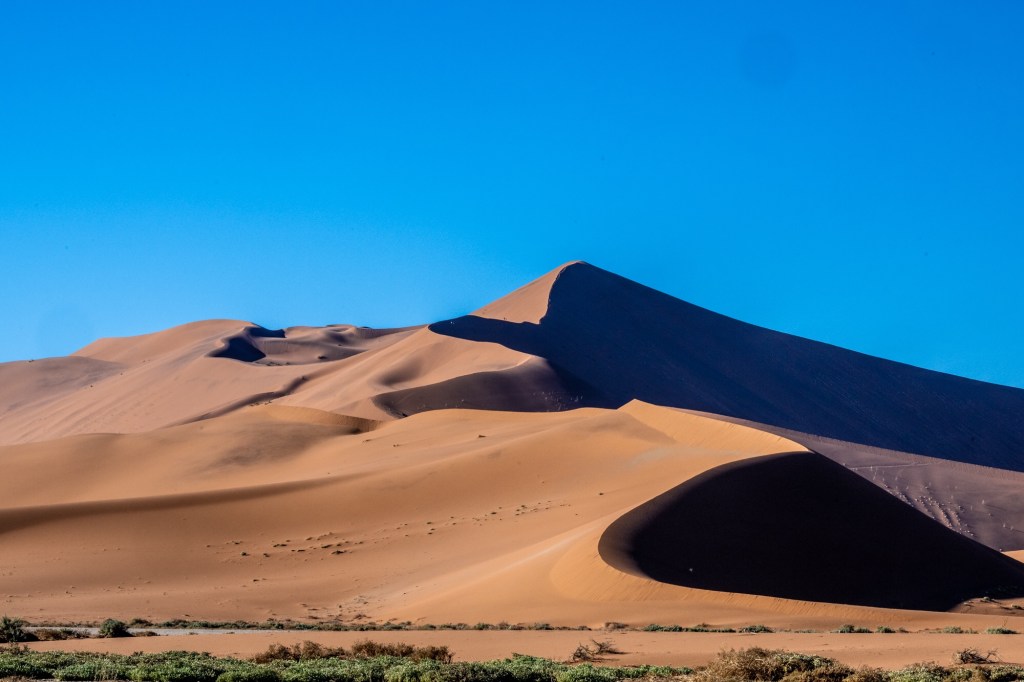
Sossusvlei is the oldest desert in the world and home to some of the highest sand dunes.

Photo credit to Bob

We arrived in time for a late lunch and after settling in, we enjoyed a nature drive in the lodge’s reserve. We stopped and enjoyed sundowner drinks as the sun set over the desert mountains.

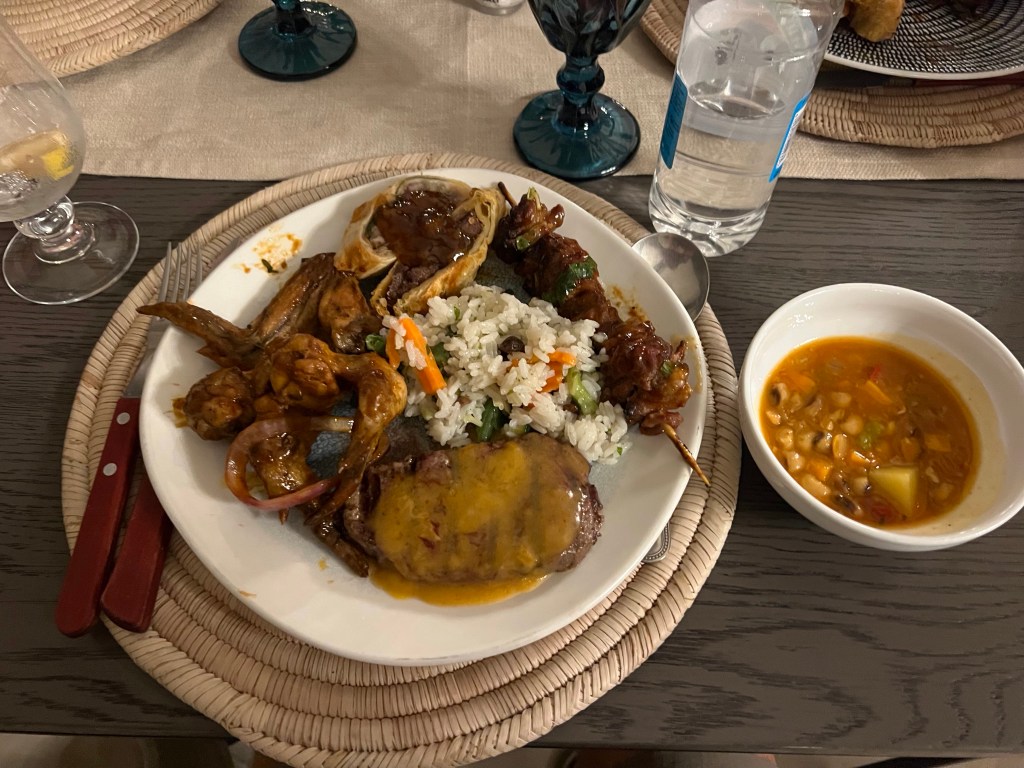
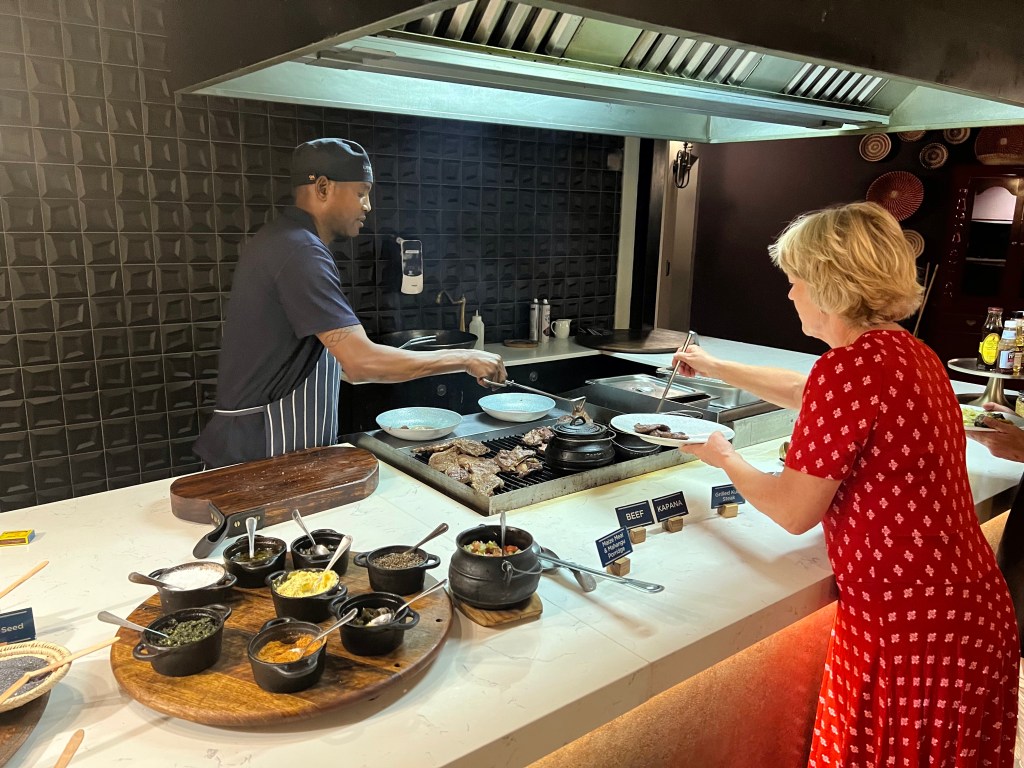
Dinner was at the lodge and we enjoyed oryx steak on the buffet along with a variety of other items.

We had a very early start in the morning, leaving at 5:30 in order to get to the Namib Naukluft Park early in the day. It is preferable to do the dune hikes in the morning before the temperature gets too hot. One nice thing about getting up early was we were able to enjoy the stars before heading out. The combination of low humidity and very little light made the viewing spectacular. We were able to clearly see the Milky Way and being in the Southern Hemisphere, we got to see the Southern Cross.

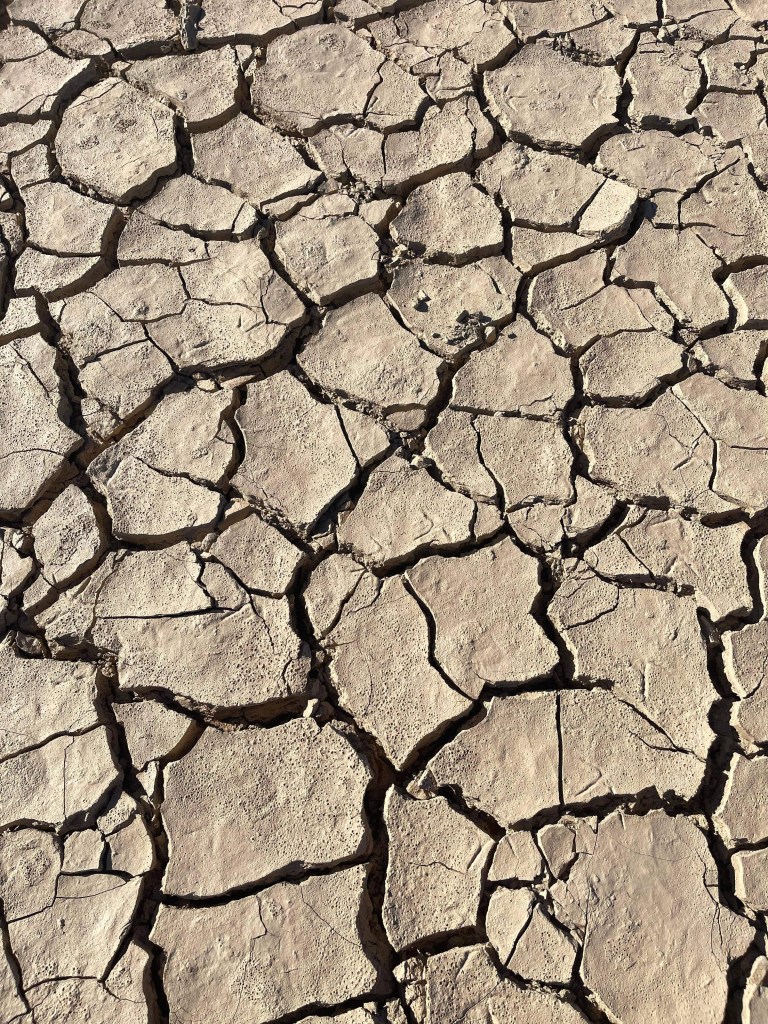
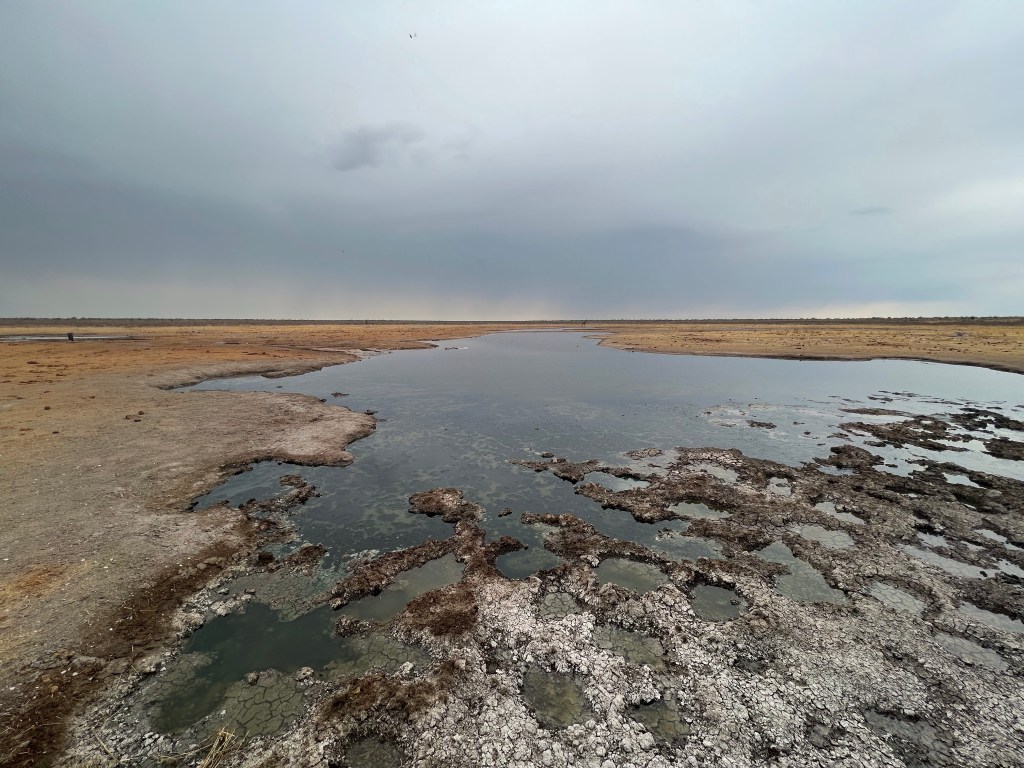
There are clay pans at the bottom of many of the dunes. The main pan occasionally fills with water when the rains are enough that the Tsauchab River brings water to the area. The pans then attract flamingos and other birds.

But not today

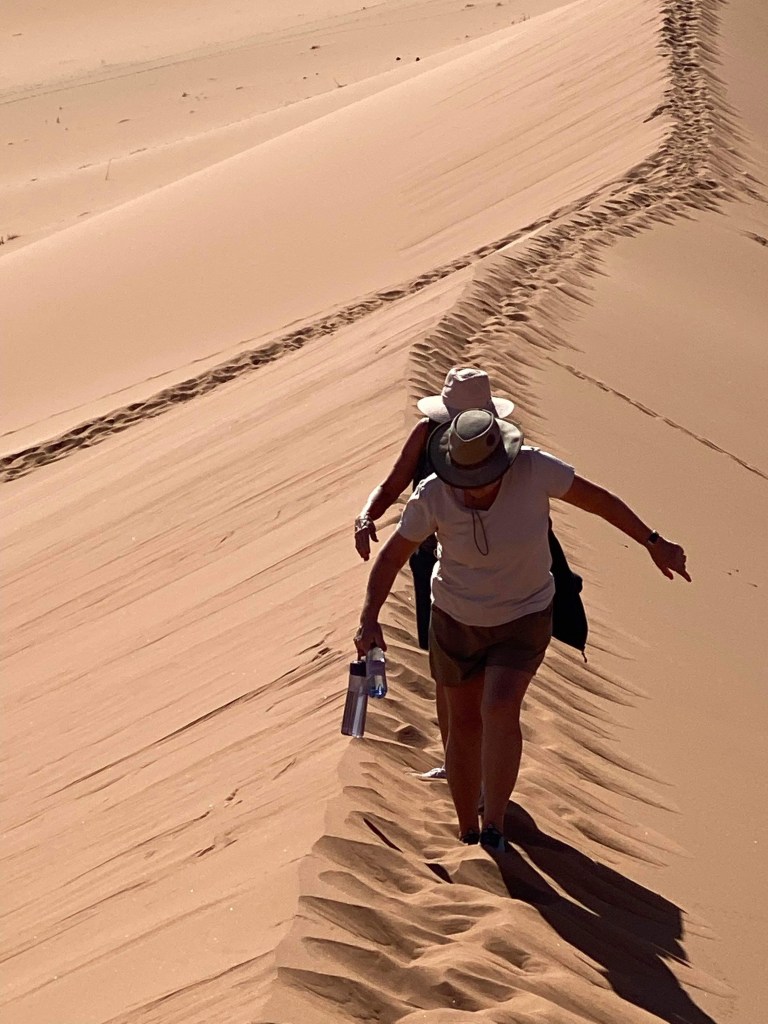
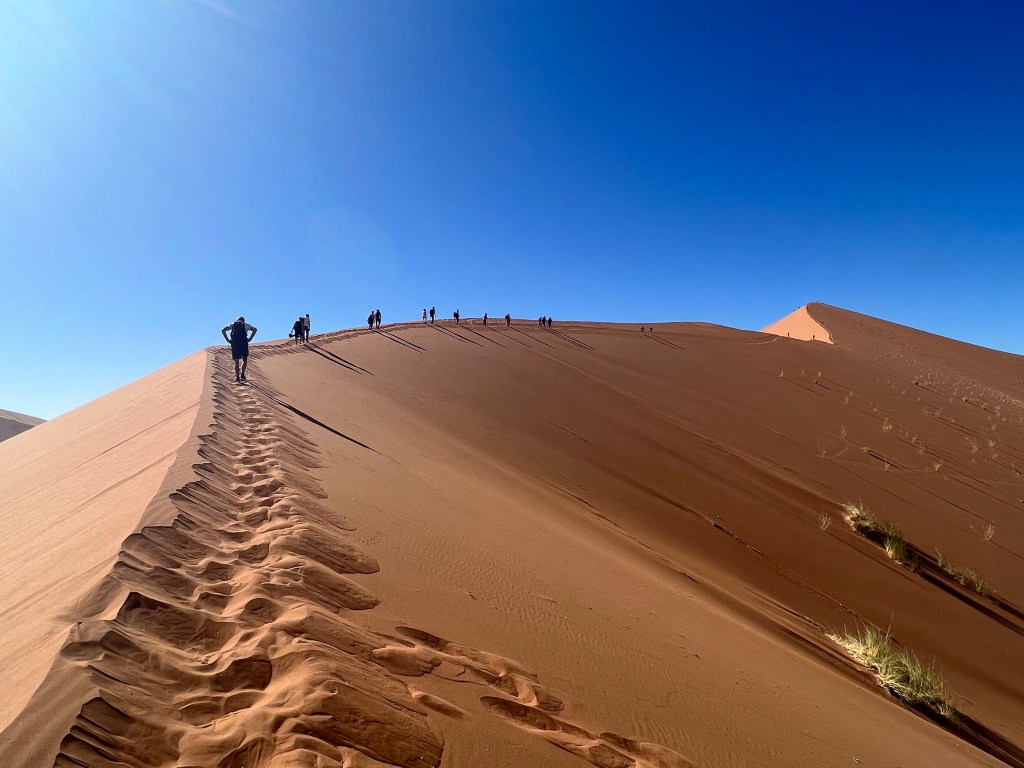
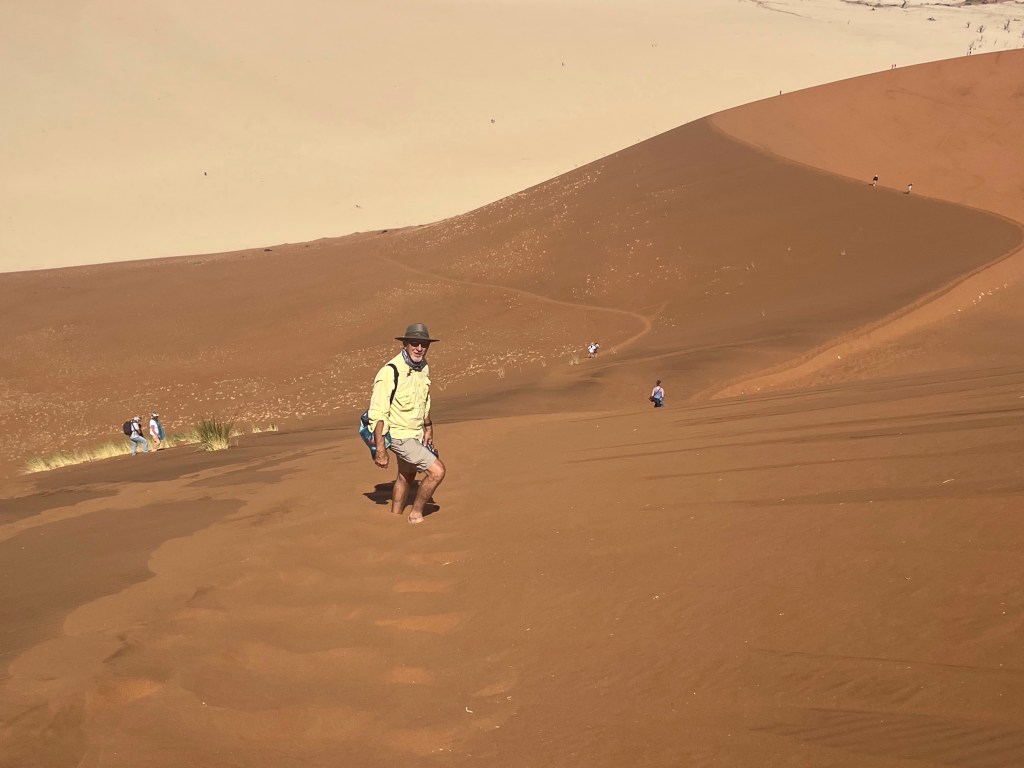
We hiked the dunes and it was a very unique experience. The edges were often very steep and the sand was very soft. While that meant that you would not likely get hurt if you fell and also meant you would not easily get back up if you tumbled down. If at all.

The highest dune was called Big Daddy and Bob and I climbed to the top. I only had to carry him part of the way. Big daddy is over 3000 feet high and while climbing it wasn’t exactly relaxing, we enjoyed the challenge.

The way down was much easier but with each step your feet sank in to your ankles or a bit deeper. The sand was surprisingly cool and Bob walked/ran down without his shoes.
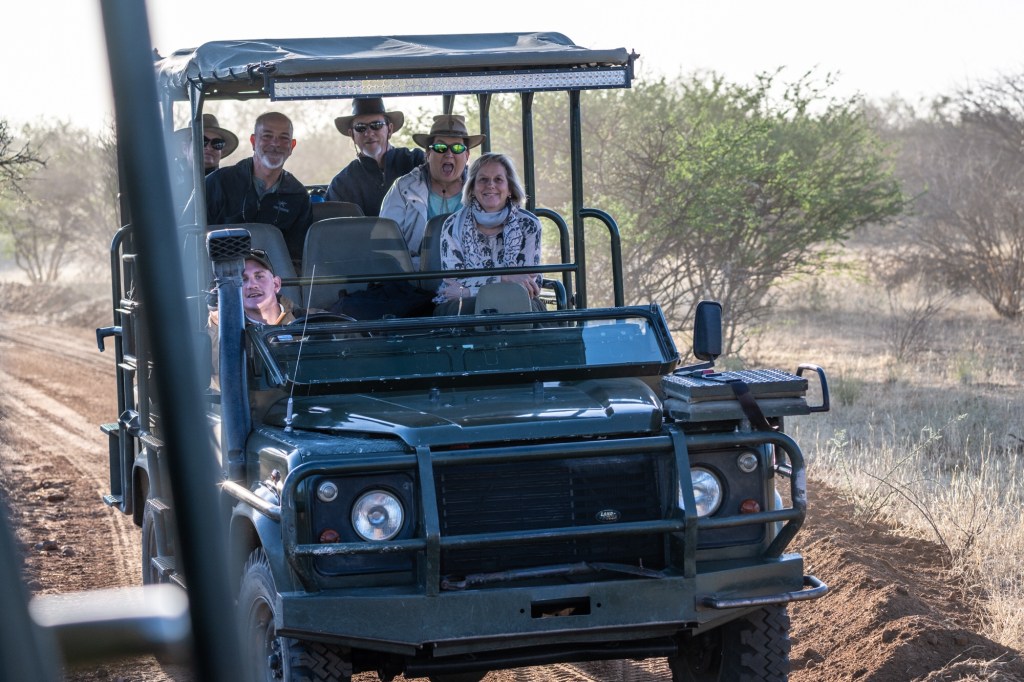
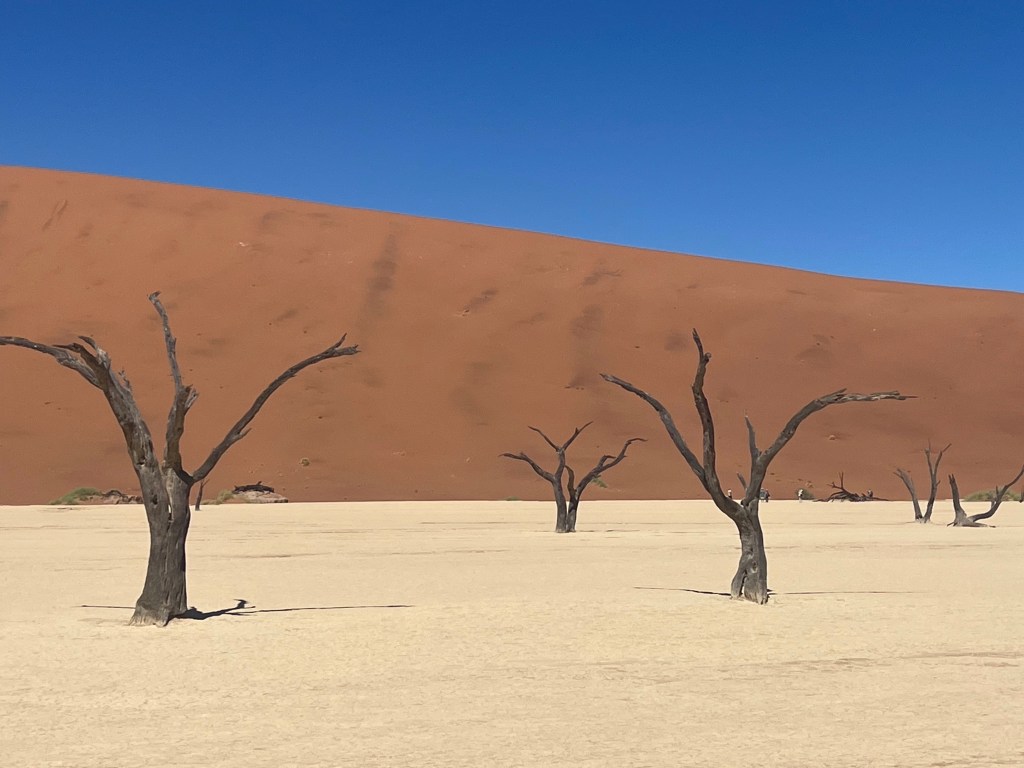
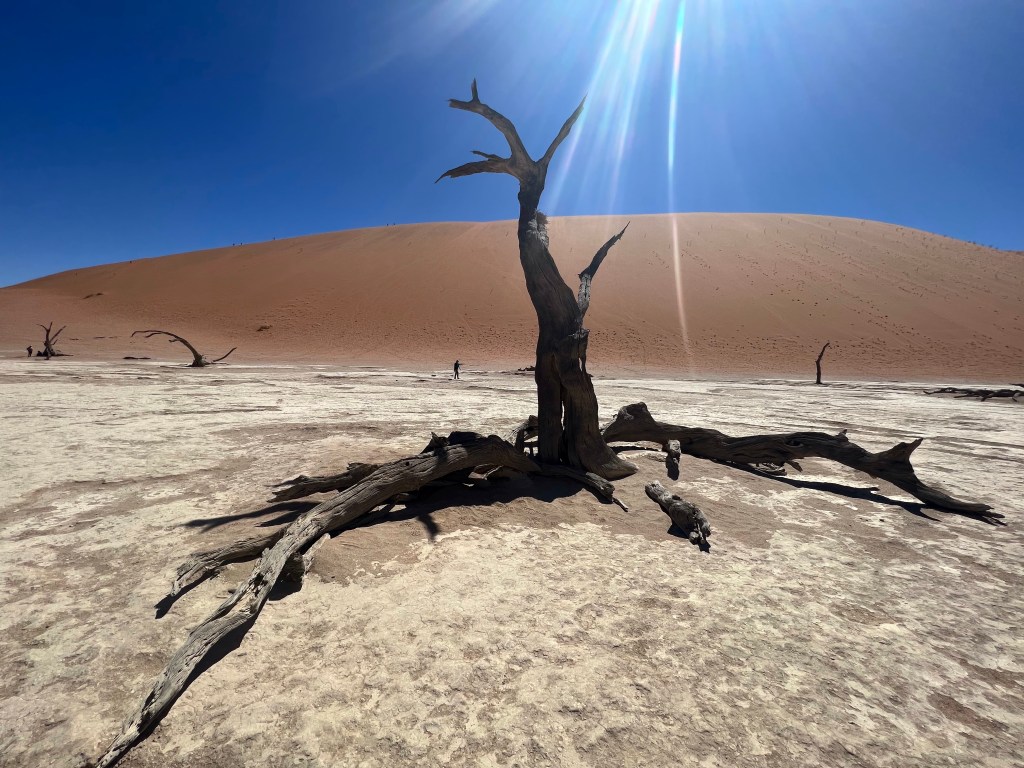
After walking down, we crossed Deadvlei, a clay pan characterized by dark, dead camel thorn trees that contrast against the white clay and rust covered dunes.

The great adventurers.

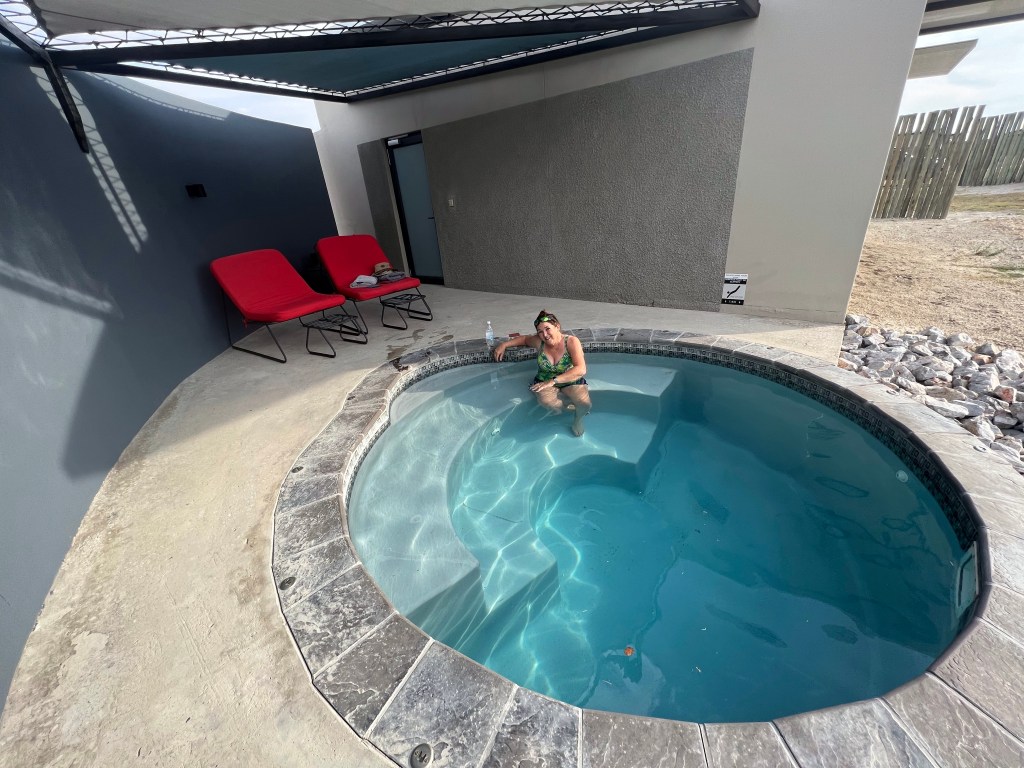
Thoroughly exhausted, we enjoyed a leisurely lunch under the trees before heading back to the Desert Grace Lodge. The plunge pool felt great and we relaxed until dinner.
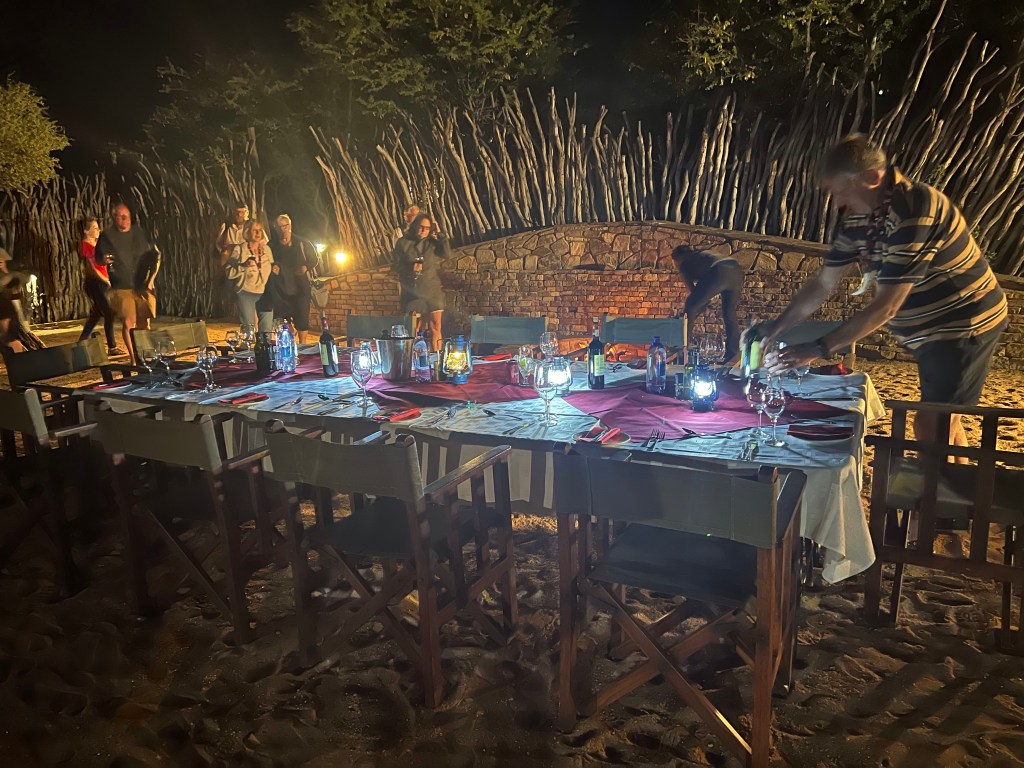
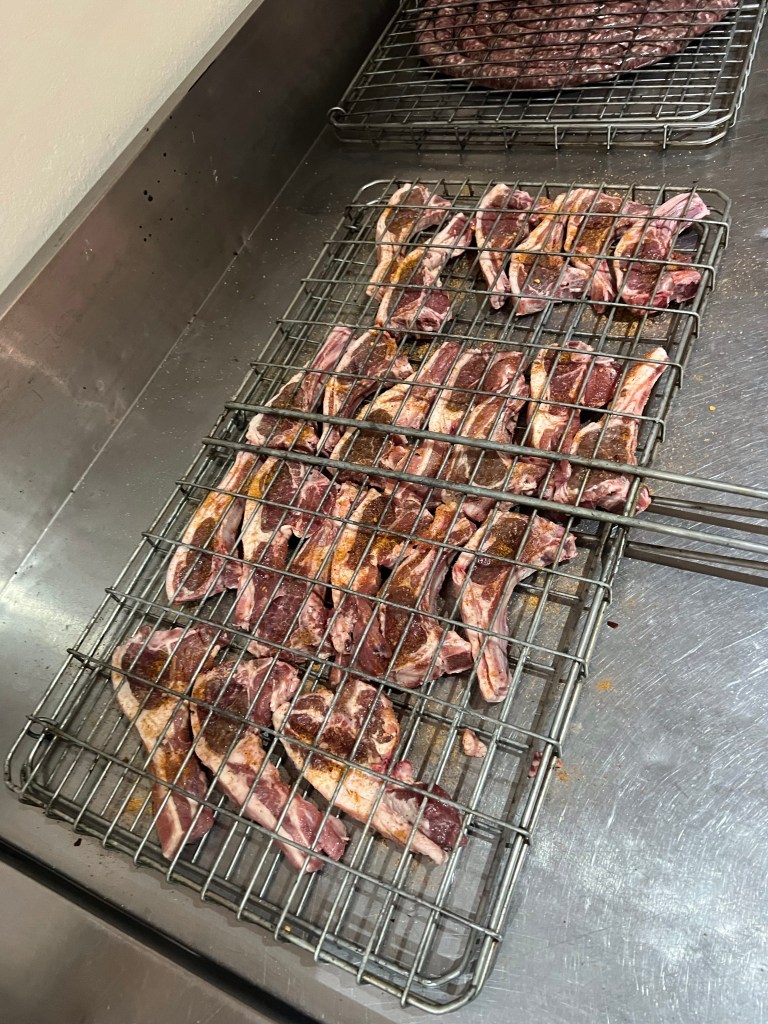
As our final dinner in the desert, we were driven out to a beautiful location. The staff had set a lovely table with lanterns lighting the area. We enjoyed sundowners (surprise) before sitting down to a great meal of grilled lamb chops, Springbok steak and many other delicious dishes. It was a grand way to end our time in the desert and was so much nicer than just eating in the lodge. There are some advantages to traveling with a renowned chef who is friends with all the people who run the lodges and kitchens.
Tomorrow we head back to Windhoek for a last night in Namibia before flying back to Cape Town

October 31-November 1st: Erindi Game Reserve

Today was a travel day. We drove from our lodge on the north side of Etosha down toward Winhoek in central Namibia. We arrived at the Erindi Game Reserve in time for a late lunch and a little down time before sundowners and dinner. Erindi is a very large private game reserve – one of the larger ones in Africa. It is a much different terrain than Etosha, with much greener vegetation and some mountainous areas inside the reserve. The lodge also felt more polished with manicured grounds and a pool.

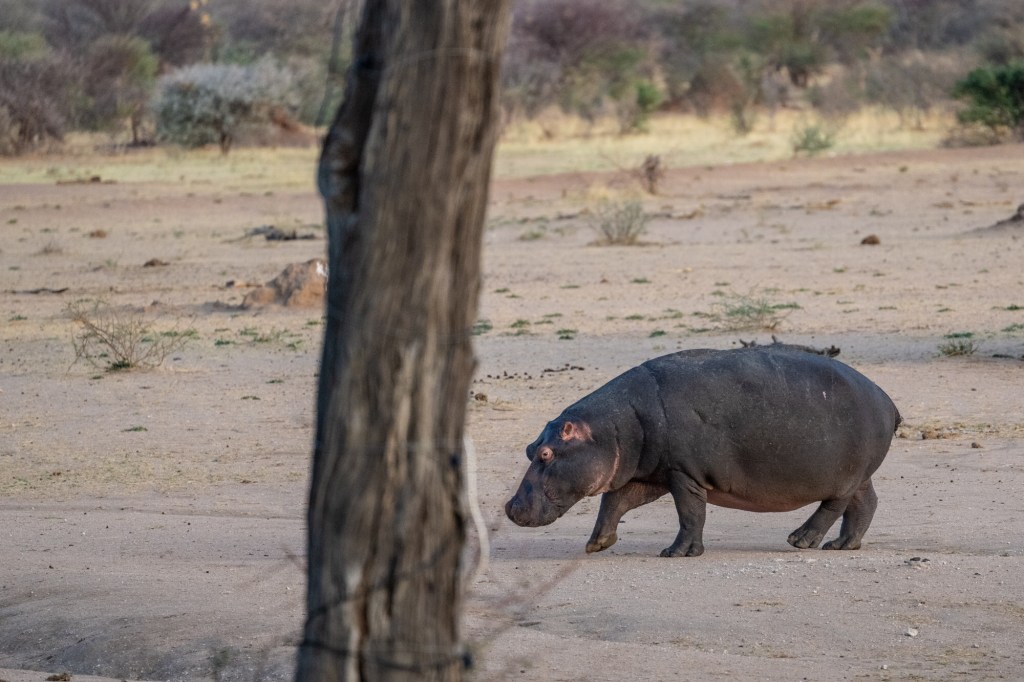
One nice thing about the lodge was it was inside the reserve rather than outside the park as we had at Etosha. The dining and bar area overlooks a large watering hole and our rooms backed up to another watering hole and both were lit up a night so you could see the animals come and go either from your room or the open air dinner table. Even though it was hot in the middle of the day, the humidity is low and the evenings are very comfortable. They also had some nice couches right up against the railing on the observation deck so you could watch hippos, giraffes, and crocodiles while enjoying your sundowner.

View from the dining and bar area

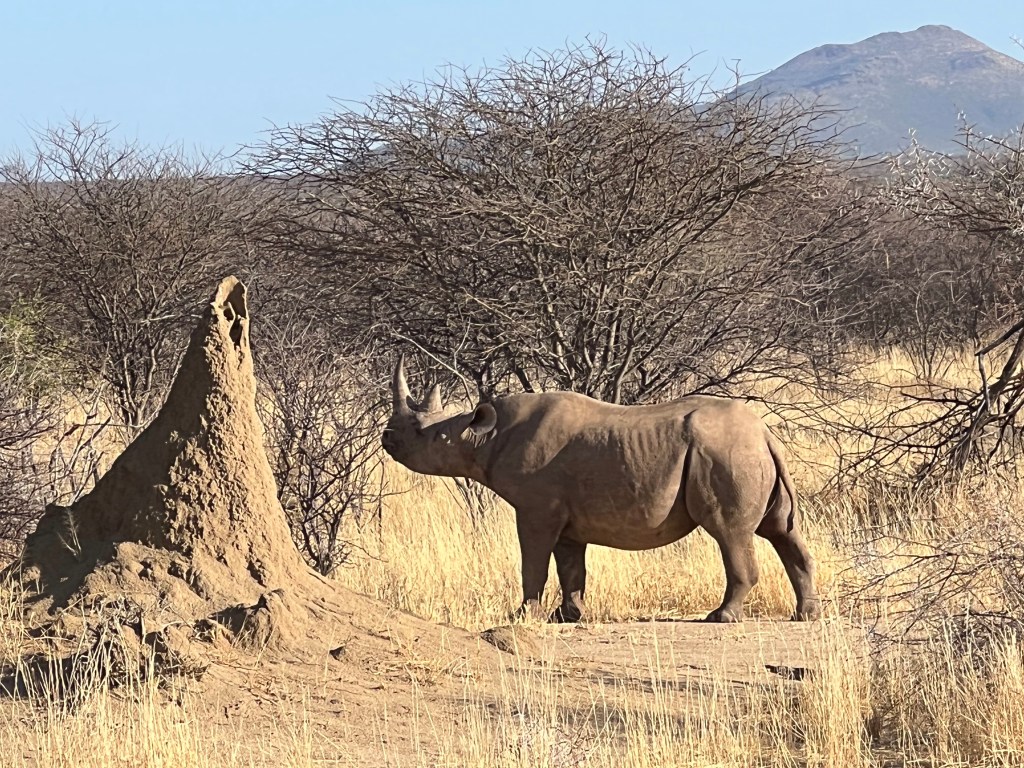
The next morning, we got up early for a game drive with wildlife sitings of elephants, giraffes, ostrich and a black rhino (good spot Bob).

Note the termite mound. They were very common to see and could hold up to a million termites each. Some were three times the size of this one.

Several great photos below were taken by one of our travel mates, Chris Stewart.

Back at the lodge for lunch and a bit of rest….

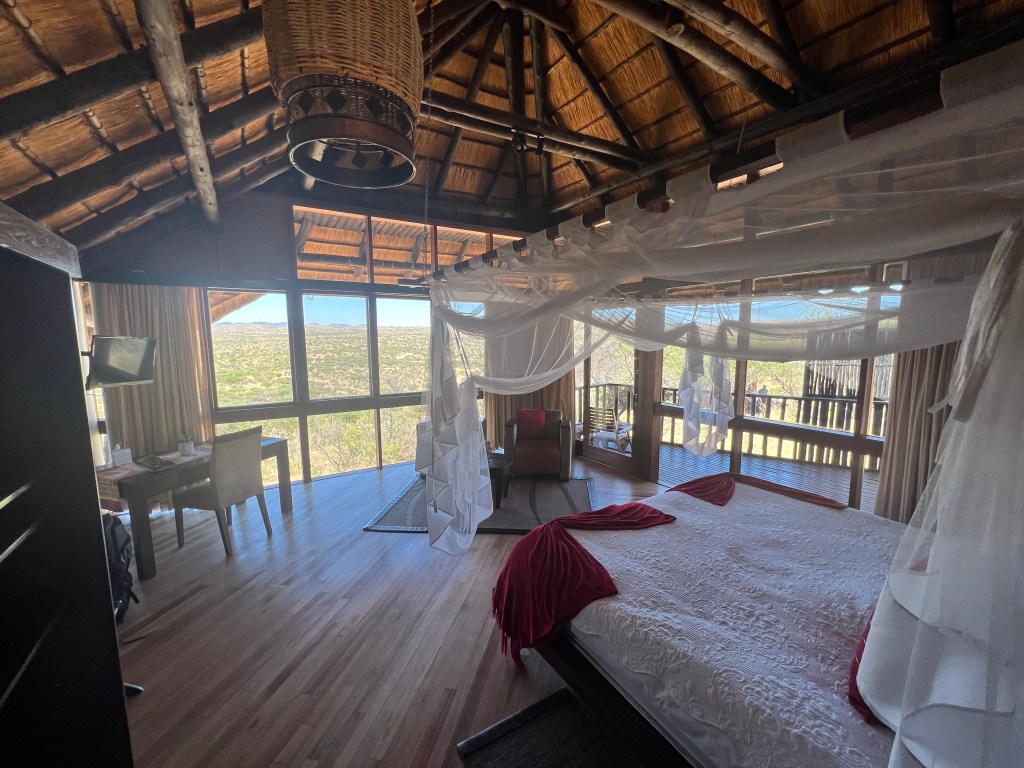
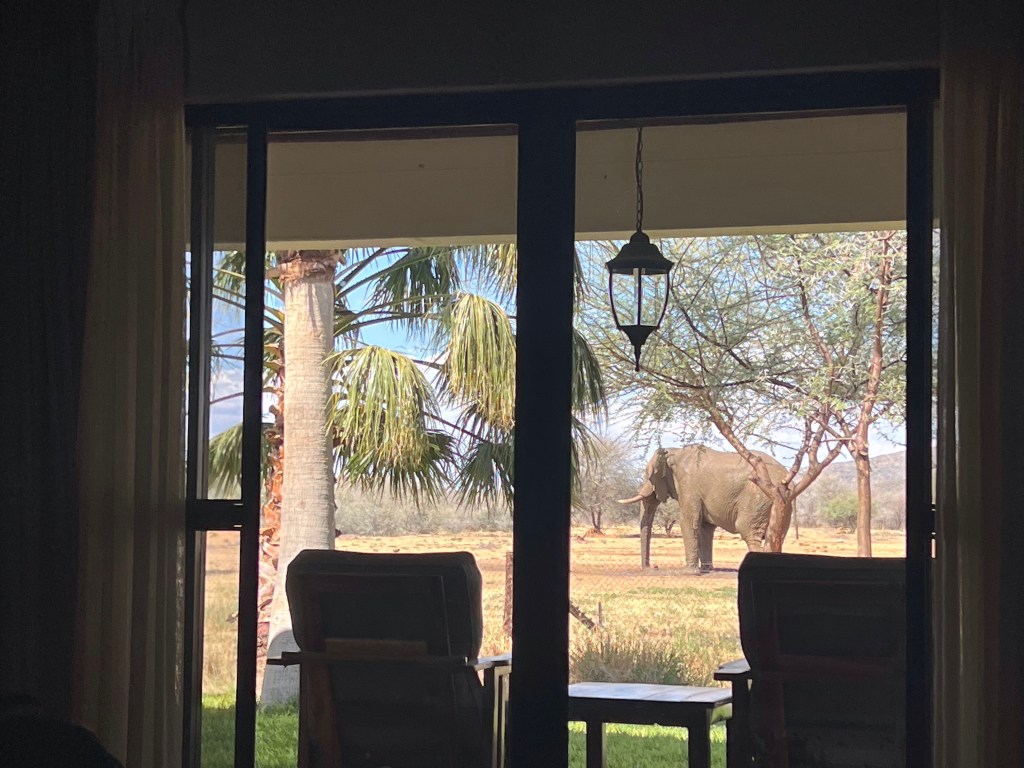
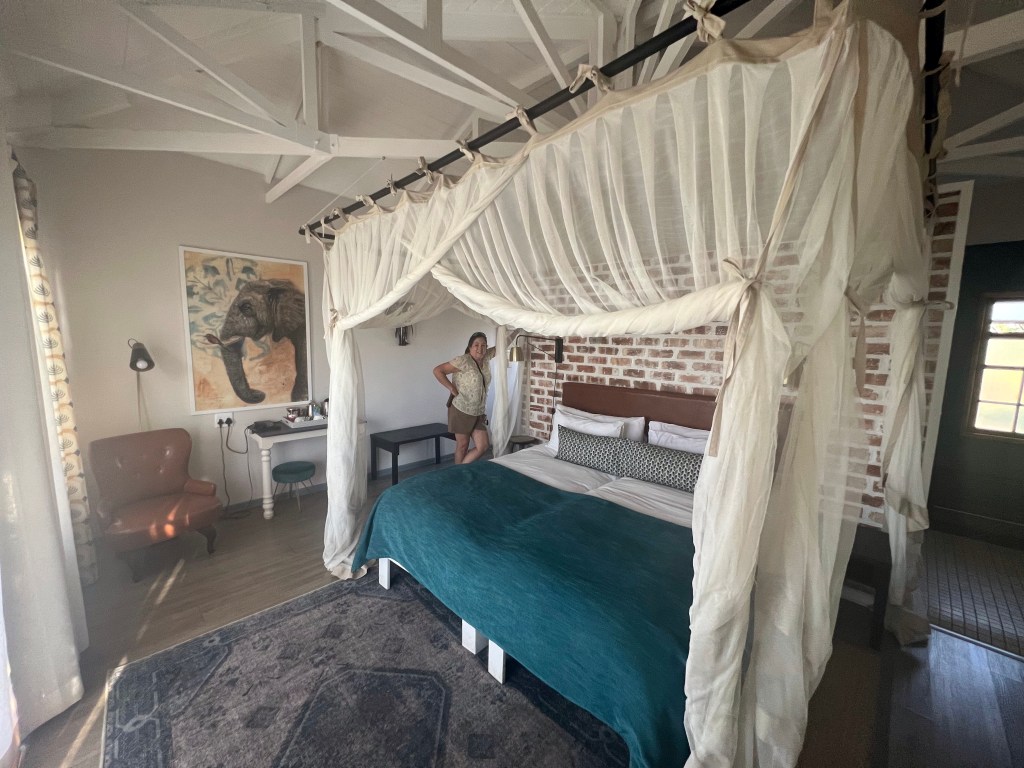
View from our bed
And from our room terrace

On our afternoon game drive, the last of the trip, we were focused on trying to see a large cat (other than a lion since we saw lots of those in Etosha)

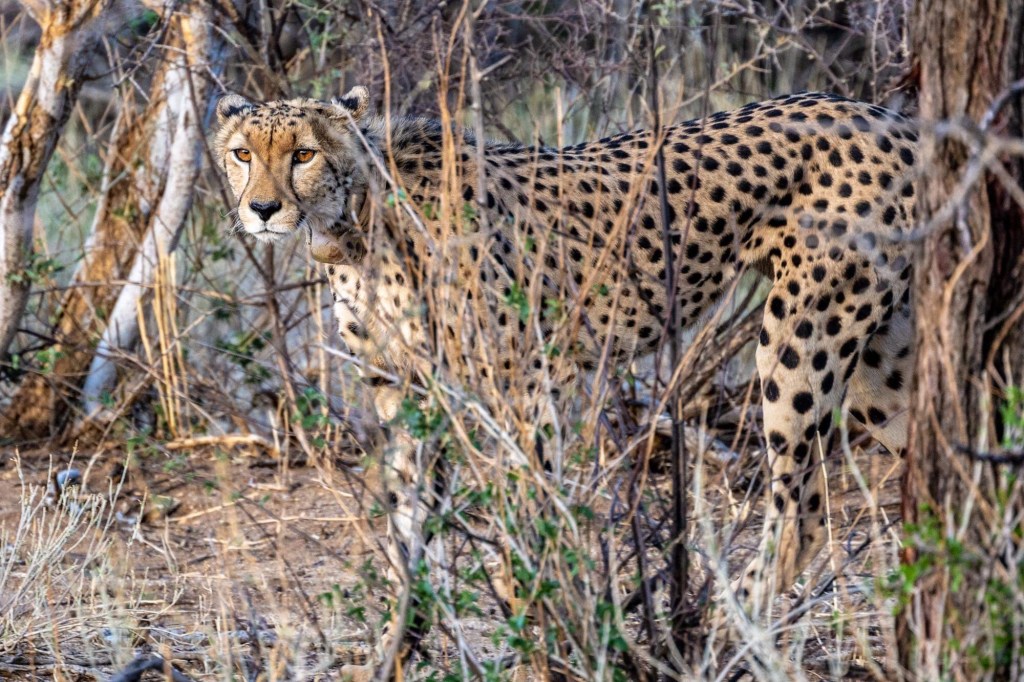
One of the other game vehicles had a tracking antenna and mid afternoon picked up the signal from a cheetah. It allowed us to get in the general vicinity but not an exact location. After a lot of searching and as the sun was setting, we spotted him in the thickets Here is a cool video as he sees something of interest and starts stalking it.

Chris Stewart was able to get a great shot of him.

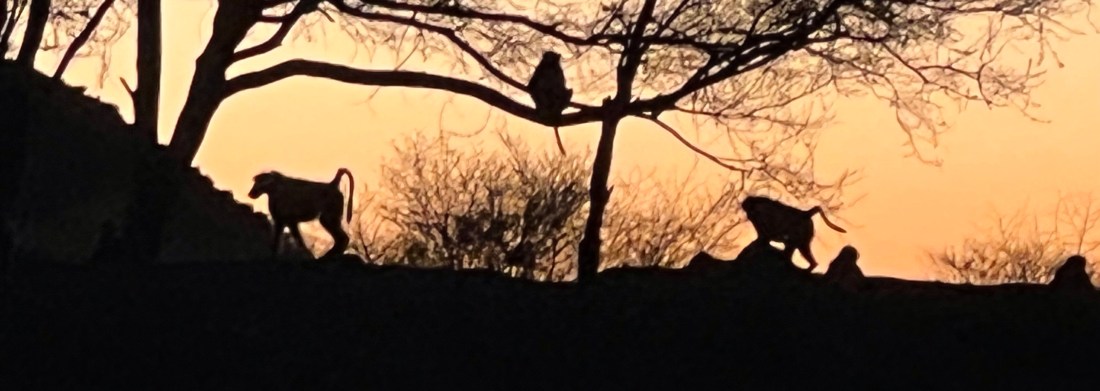
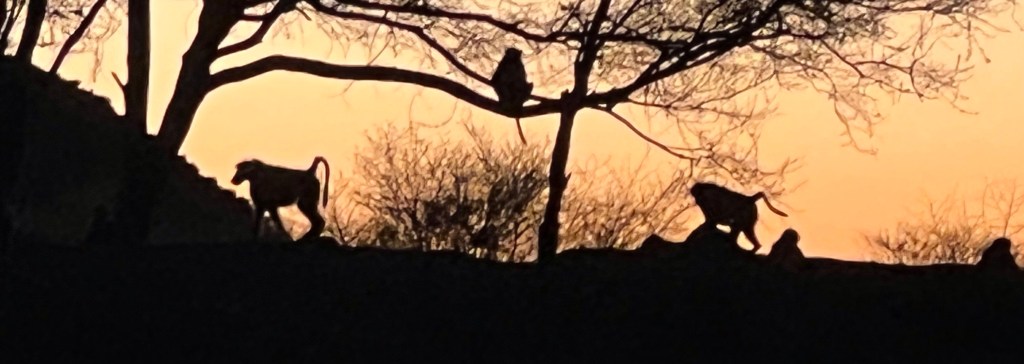
We watched as he headed across an open field to a watering hole and could see the baboons on the nearby hill as the sun set. Quite the finish to our Safari. We enjoyed sundowners in the field watching the cheetah, baboons, and other animals while the guards stood by with their elephant guns just in case. Tomorrow we head to Sossusvlei, a desert area with huge sand dunes for our last real stop of the trip.

Afternoon of October 30th – final time in Etosha

After lunch, we headed back out for our final game drive in Etosha National Park.

We finally got to see a warthog up close and got a little video of him:

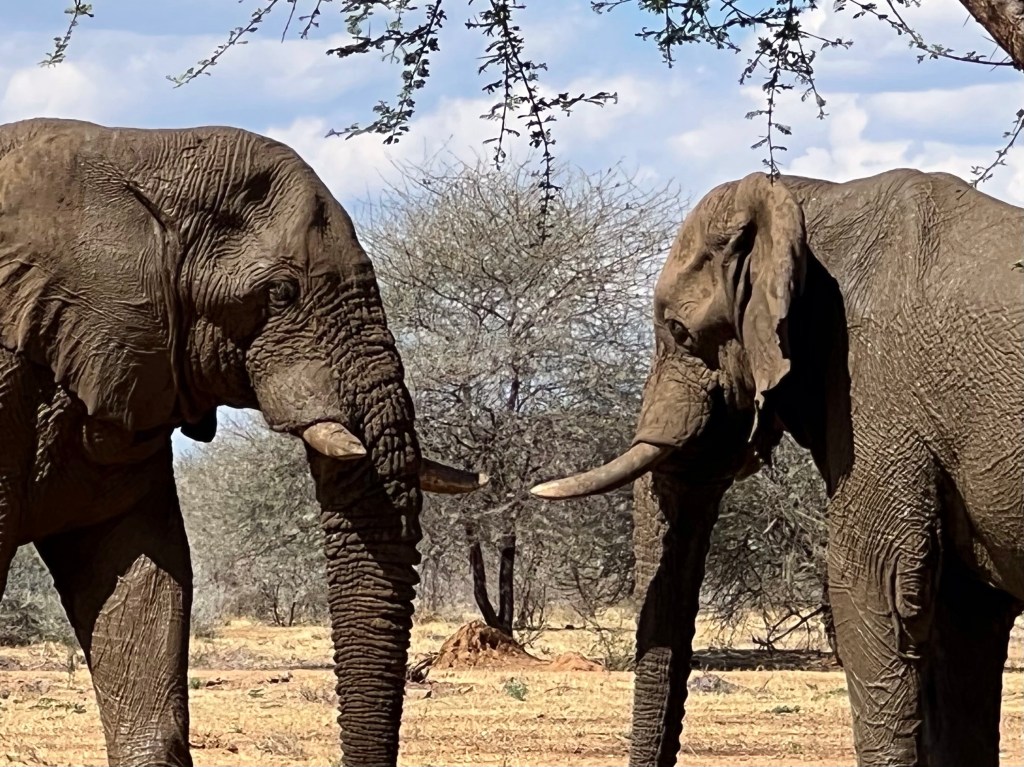
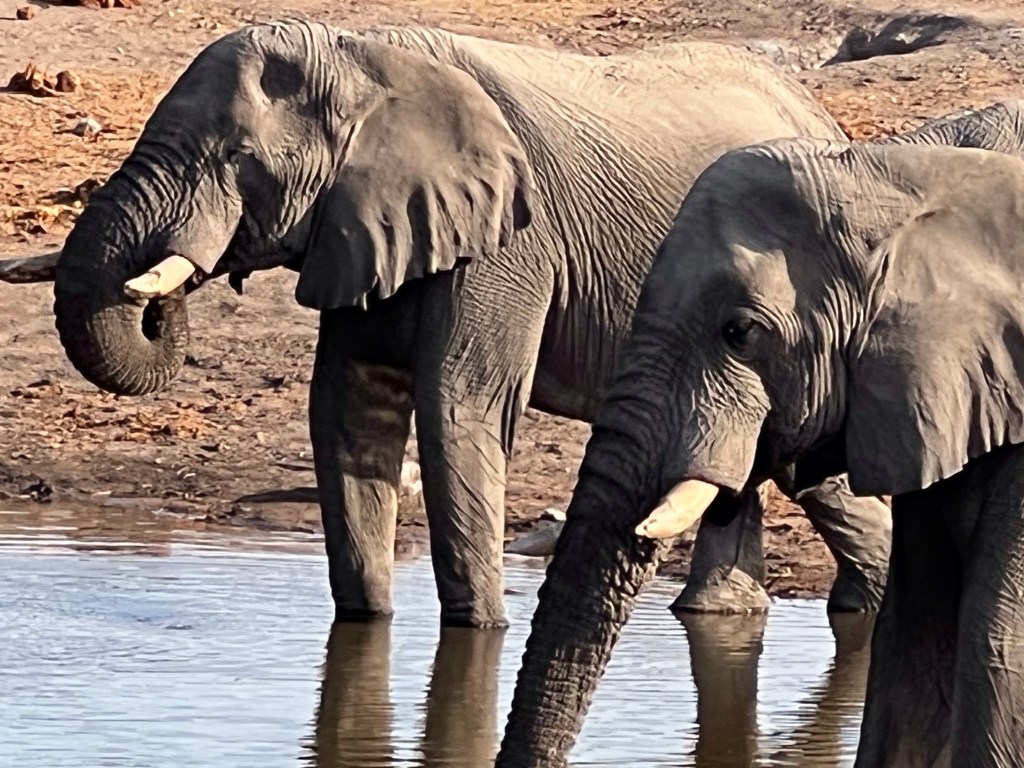
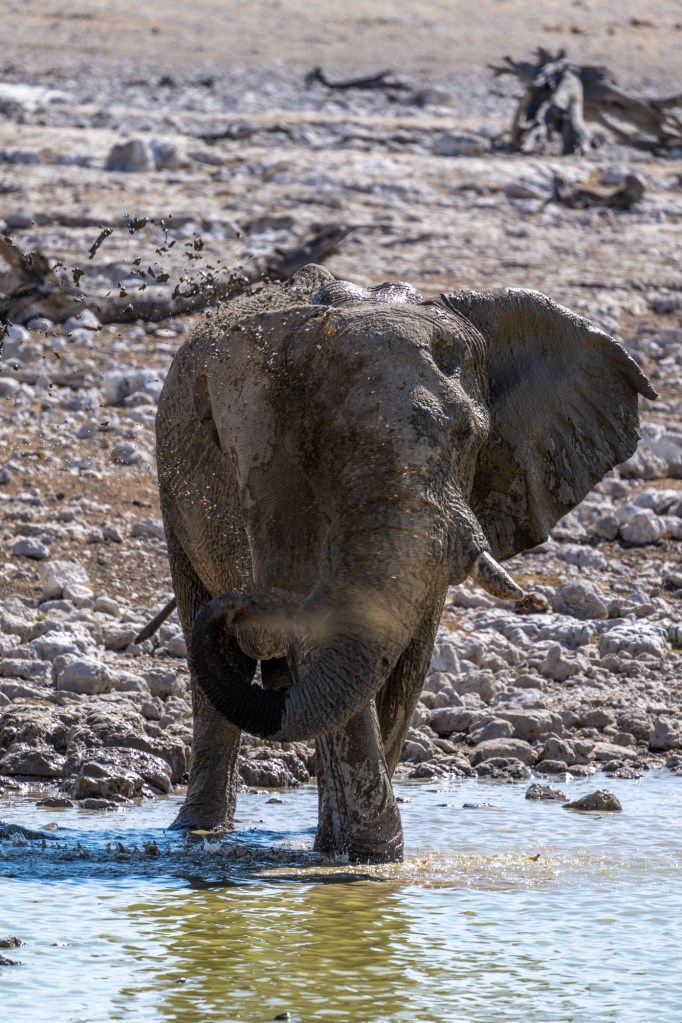
We stopped by a watering hole as the afternoon wound down and found two elephants. As the sun was starting to go down, the light on the elephants really highlighted the shadows and detail of their skin:

As we were heading back in, one of our group spotted a black rhino and we were able to watch him for about 20 minutes. He crossed right in front of our vehicle and slowly walked to a nearby watering hole where we were able to get a some shots with his reflection in the water. It was a great ending to our time in Etosha:

We went back in for dinner at the lodge where we had sundowners and enjoyed our last night with a little music and dancing. tomorrow we have a long travel day headed down to Erindi Preserve – the largest private game preserve in the country.

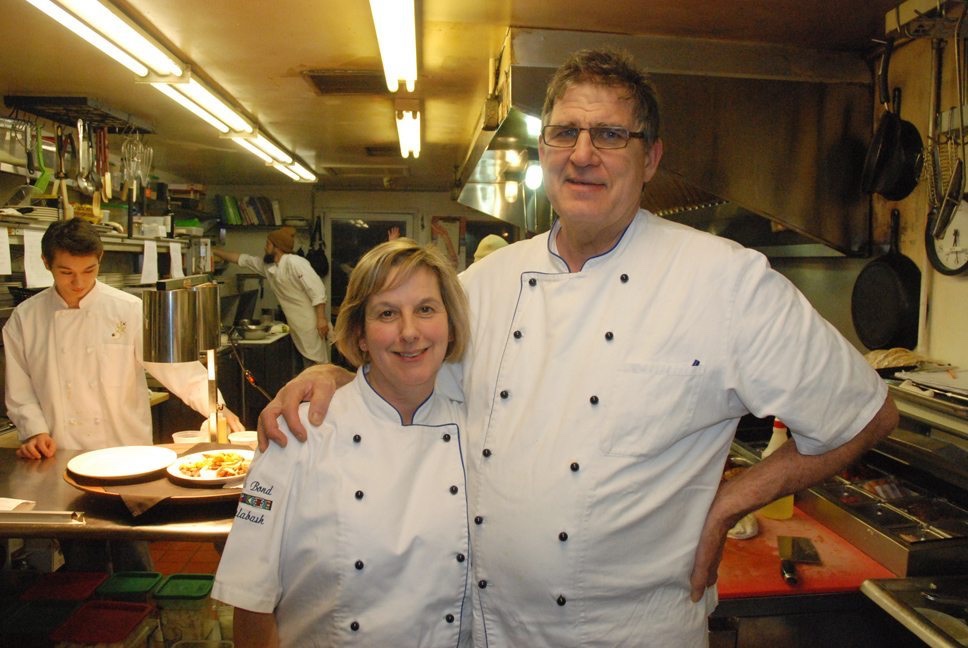
This is Sidney and Alison Bond. They are our leaders for the entire trip. They are both outstanding Chefs and trip hosts. If you love cooking and unique adventures, look them up (link)

Le Calabash

Le Calabash ‘Petit Conservatoire de la Cuisine’ is located on the river Creuse in the heart of the Indre et Loire region, set in a small French hamlet on the edge of the local forest.The kitchen is a traditional French farmhouse kitchen that is fitted to allow you to feel at home and you will work with equipment that is normally used in the home kitchen.

Alison and Sidney are award winning chefs with many years of international experience. After meeting at The Royal Swazi Sun Resort and Spa in Swaziland, they married and have enjoyed a colourful culinary career. They have cooked for several heads of state which have included Her Majesty Queen Elizabeth II +and The Duke of Edinburgh, Prince William, Richard Attenbourgh, Mick Jagger, Madonna, Cher, Sylvester Stallone, U2, Elizabeth Taylor and Richard Burton. Alison and Sidney have won recognition by major food guides and have won medals at international level. Sidney was Captain of The British Craft Guild Team for 2000/2001 when they achieved a record medal total. The philosophy of this husband and wife team is ‘Balade Gormande sans Frontière’, Cooking without boundaries, or as Sidney would like to say, lets take a walk on the wild side, and he would, as he was born and raised on the plains of Zululand. They take traditional French cooking and introduce exotic flavours and traditions from around the world to create an exciting ‘culinary adventure

October 30th – great morning in Etosha

My view of Cathy most of the trip

We did two half-day Safari trips today in the park. The first half of the day was at a “hide” which was essentially a large container positioned next to a watering hole where you quietly waited for game to visit. It was a comfortable way to observe with snacks and beverages being served but we actually saw few game there and most of our sitings were by just driving around the park and visiting various watering holes or just happening upon game on the drive.

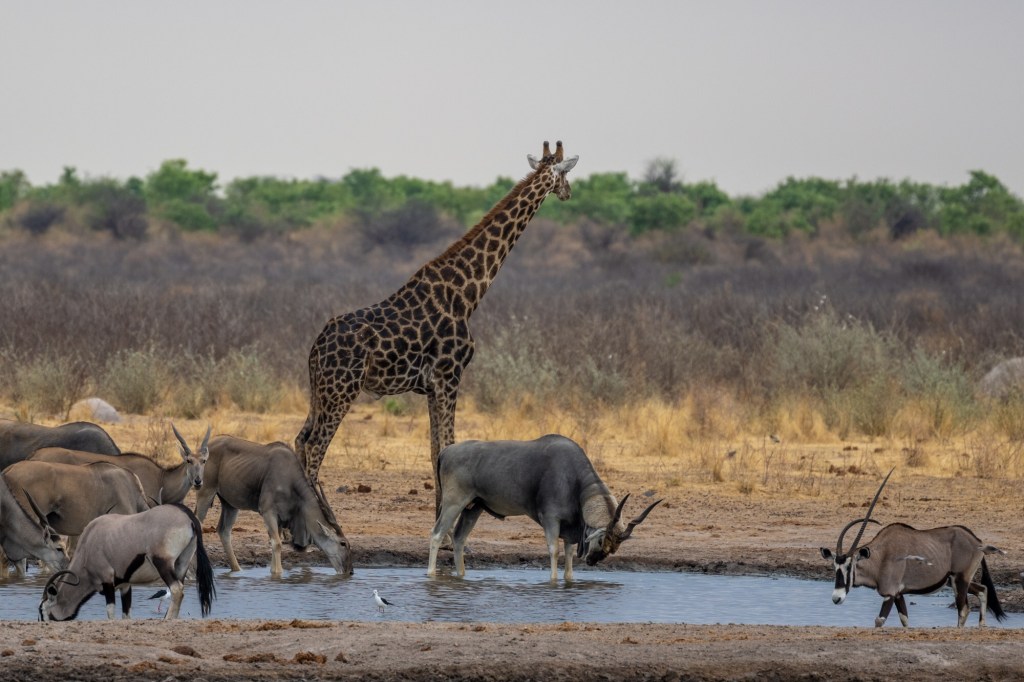
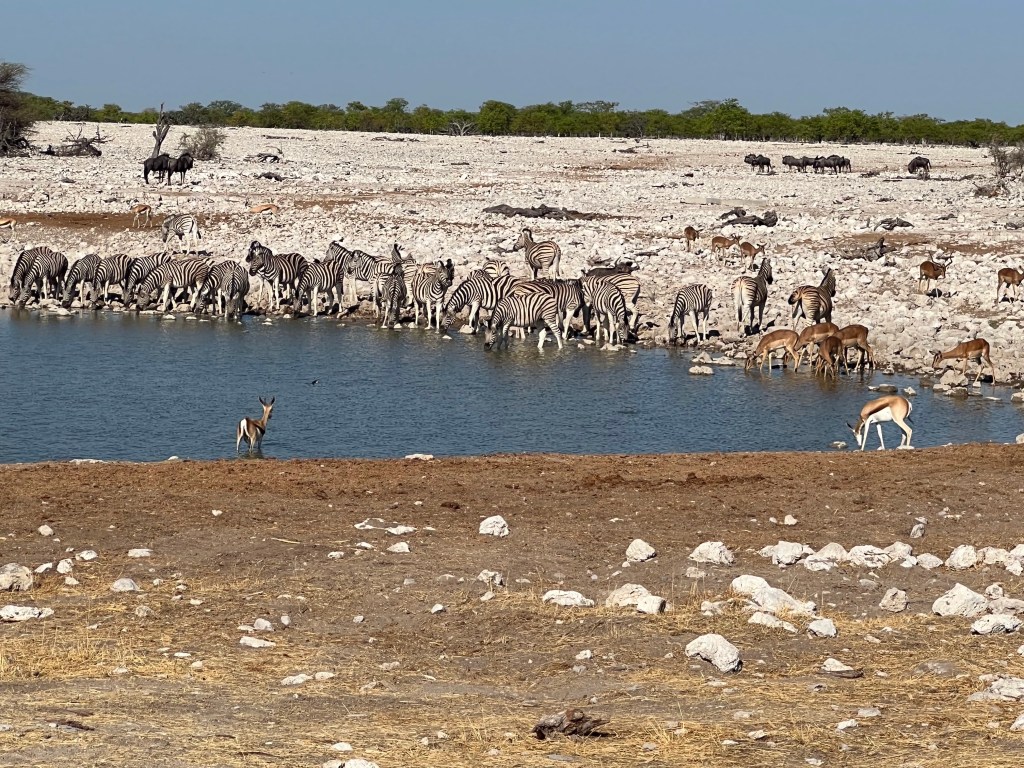
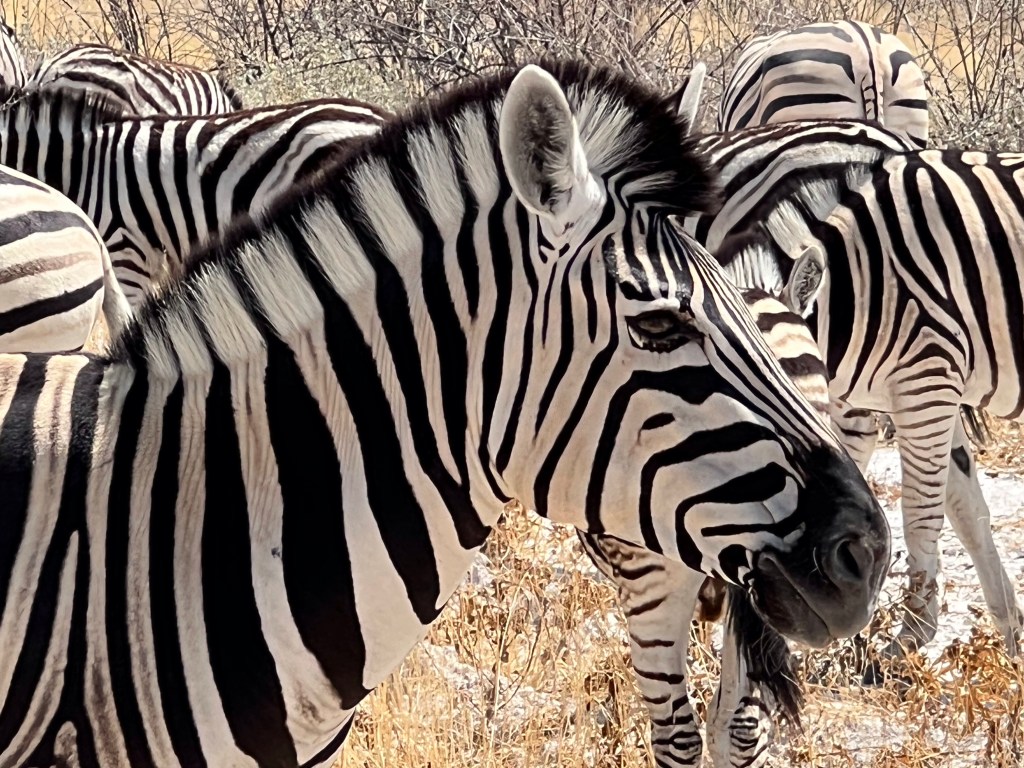
The view from the hide. We did see a variety of antelope as well as giraffe and zebra come in to drink.
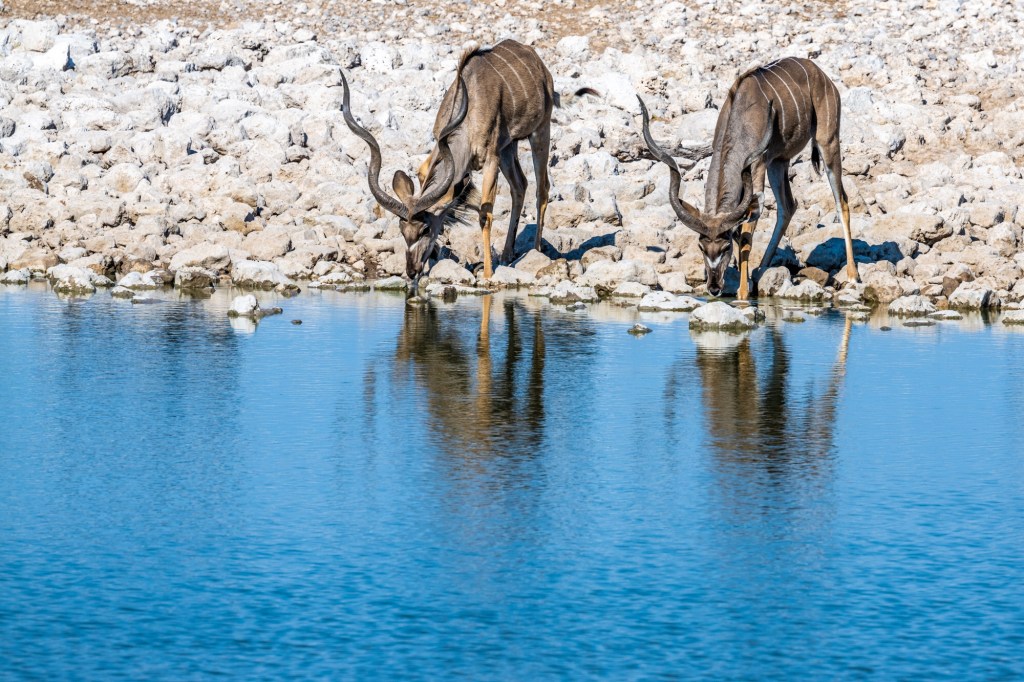
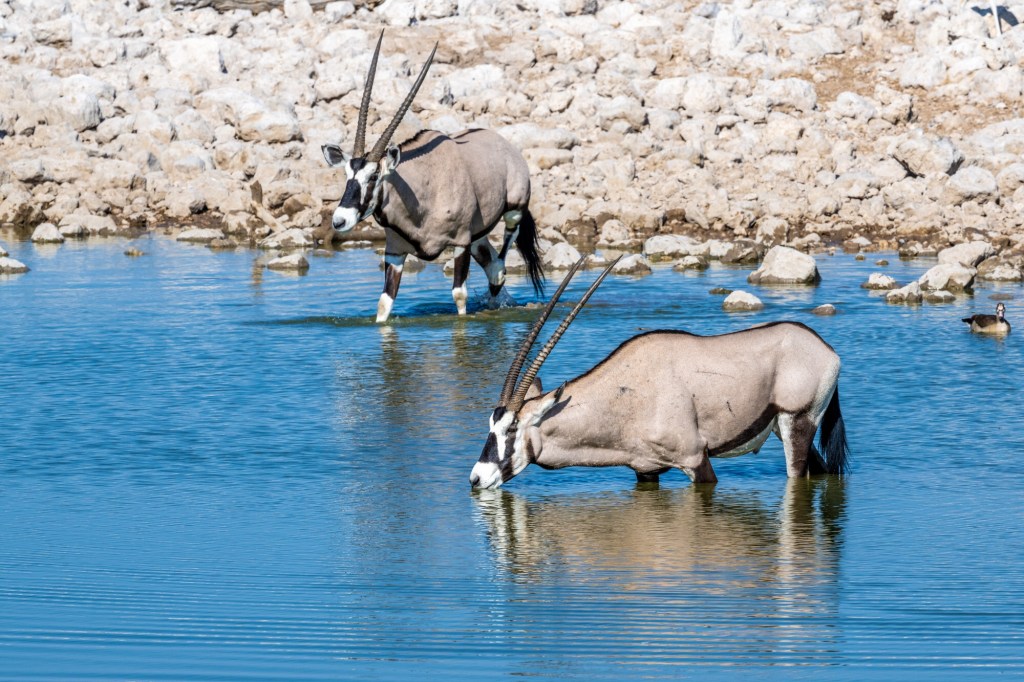
Oryx, Kudu and Giraffe and the watering hole.

On our drive to the hide, we stopped by a watering hole because our guide spotted something across a huge plain. We couldn’t see anything. Turned out to be several lions and as we came in, we also saw the carcass of a young elephant that had been killed about a week ago.

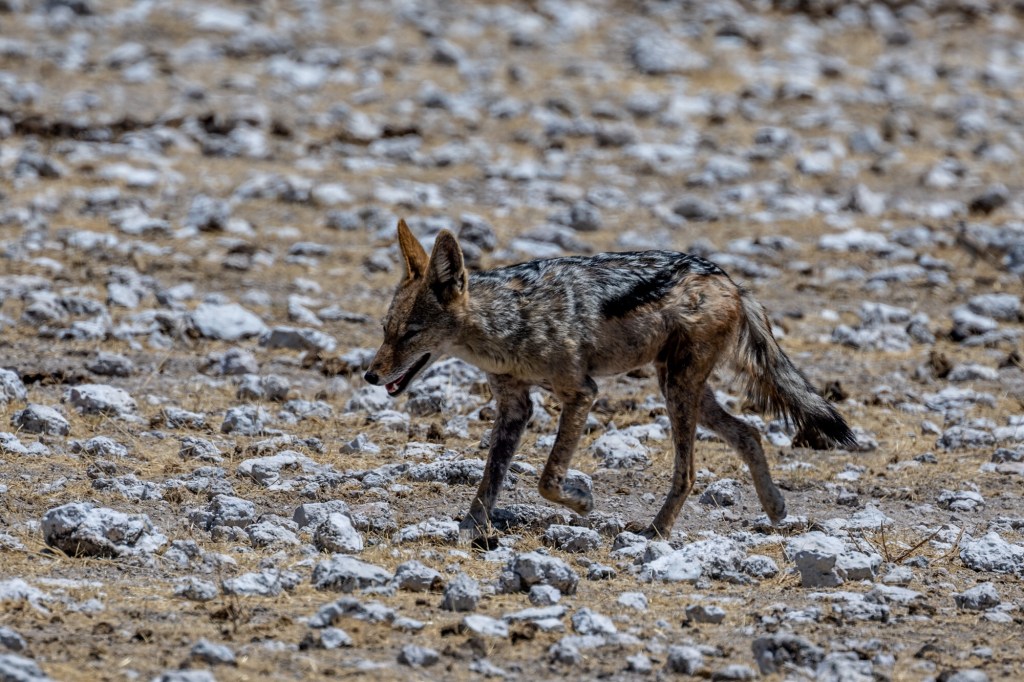
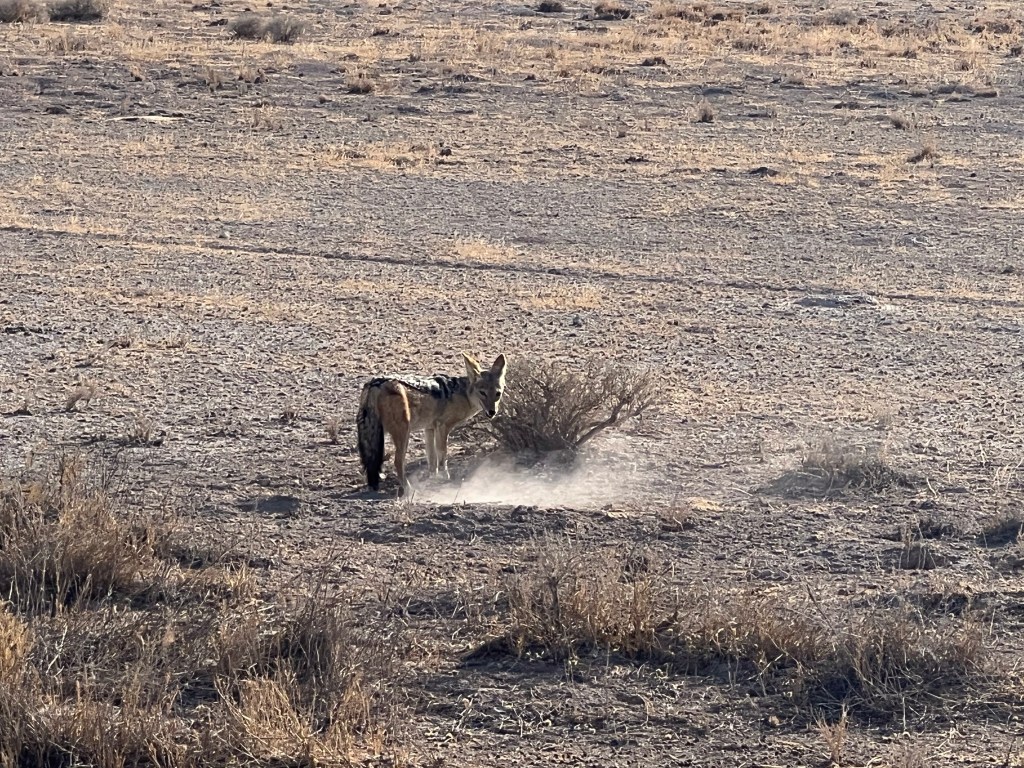
The lions and other animals had picked it pretty clean but a jackal still found something to eat.

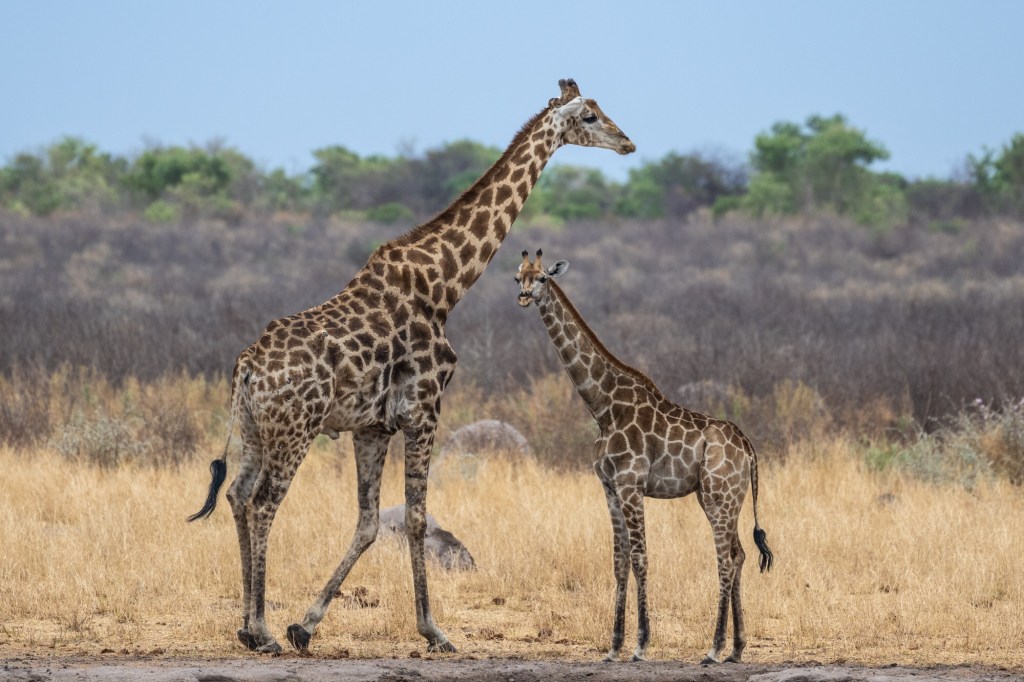
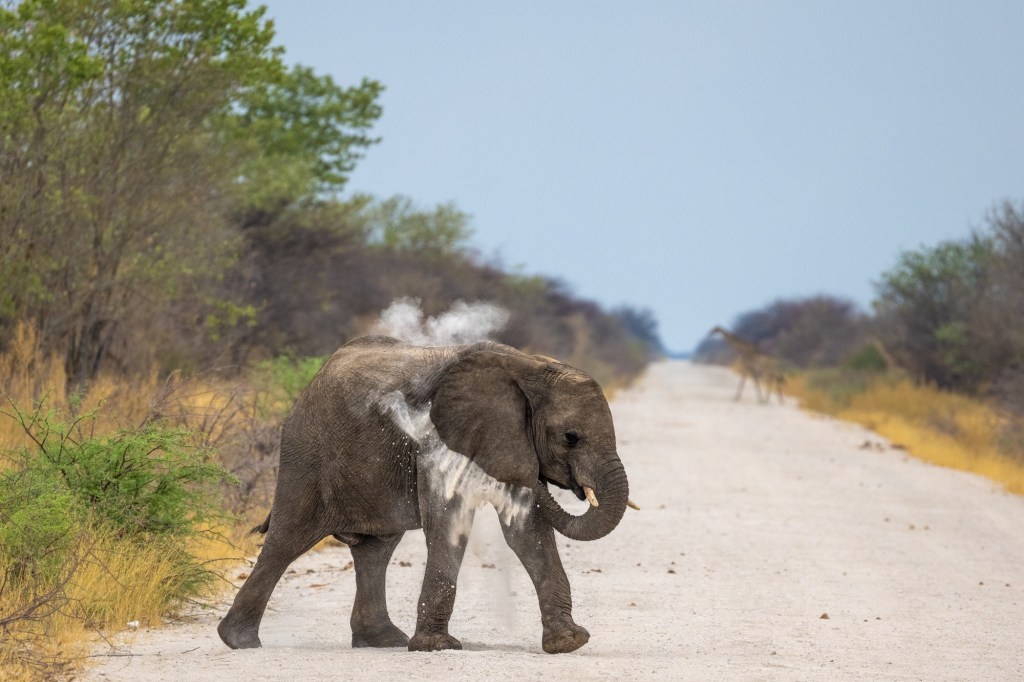
There were a couple animals left on our “really hope to see list” a Warthog and a rhino but as the people told us “it is not a zoo – you might see them and you might not”. We were able to see a few new things including a young giraffe, and a young elephant,

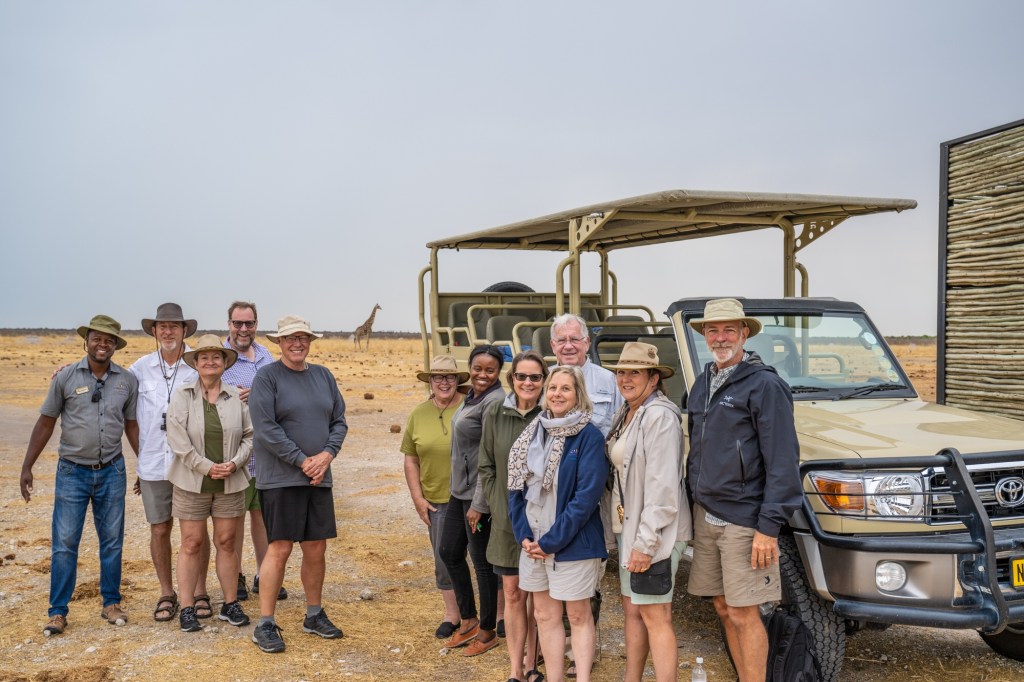
The gang

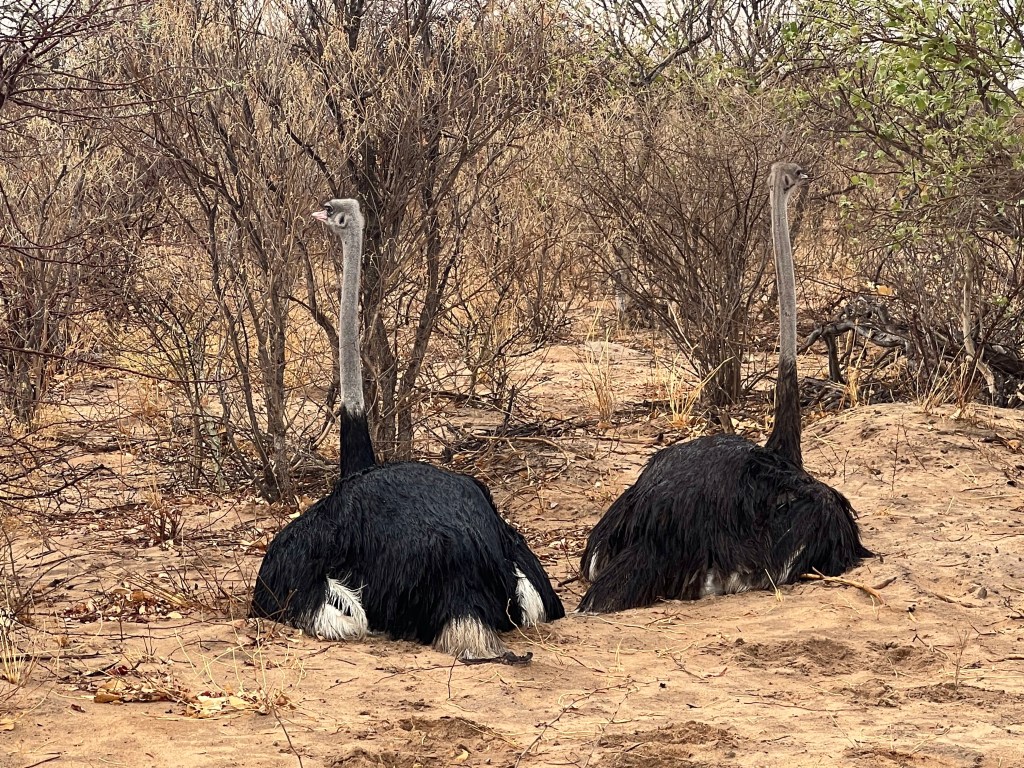
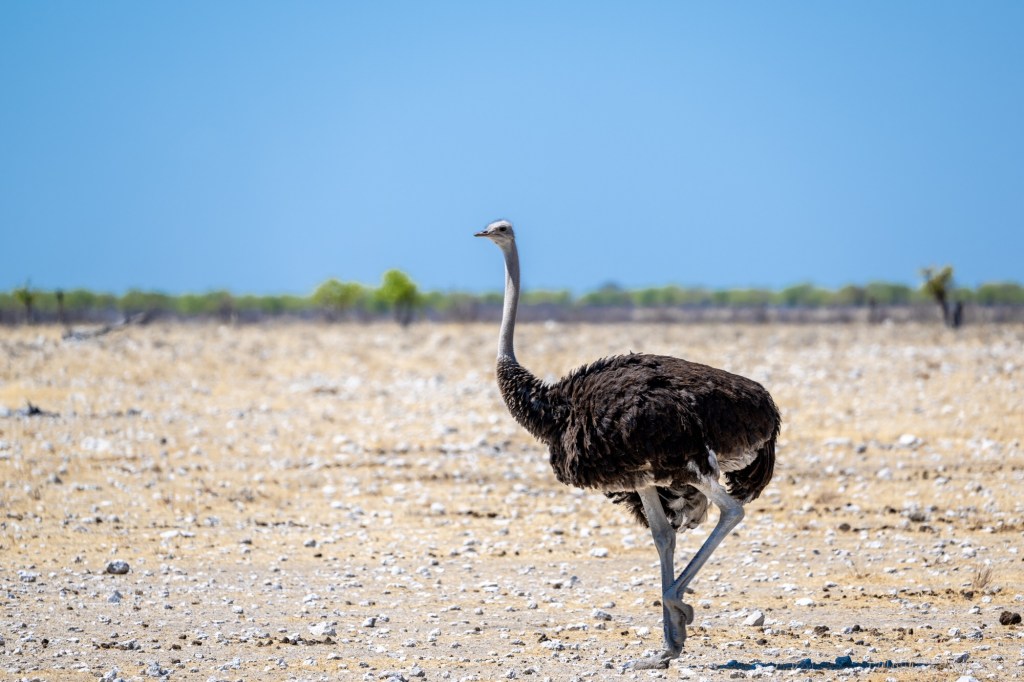
After the hide, we headed back to the lodge for lunch and along the way we came upon two ostriches sitting next to the road and they wouldn’t move as we drove up to them.

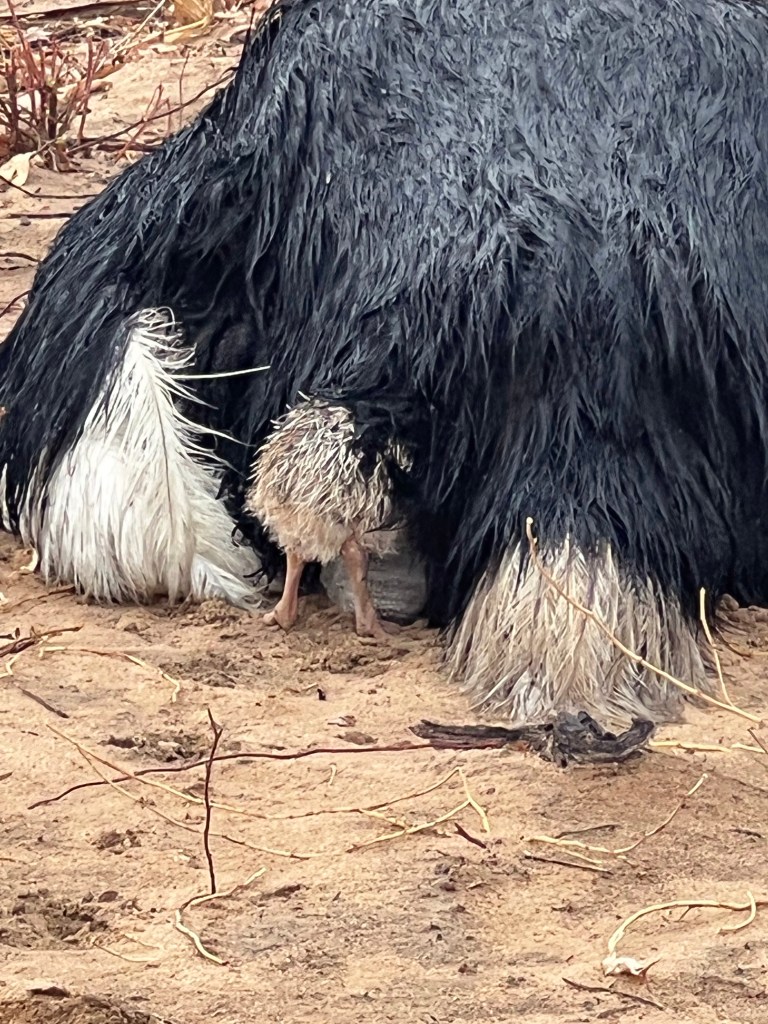
After a minute, a little head popped out from beneath one of them and we realized they were sitting on some young.

After that, we headed back in for lunch and a bit of rest before our afternoon Safari and our last trip into the park.

October 29th – across the park

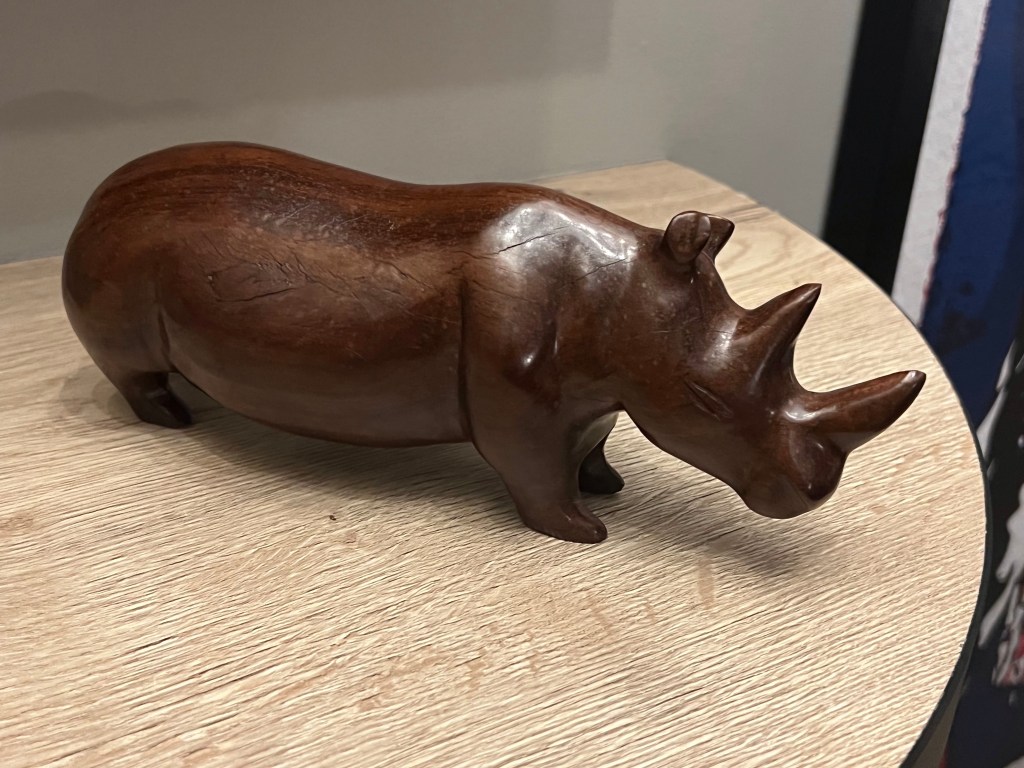
Here is my Rhino. It is made of iron wood and it was very hard to carve. I got a special price.

After checking out of the Etosha Safari Lodge, we headed across the park to the Etosha King Nehale Lodge. The lodge is on the far north end of the park and as you travel north, the landscape gets greener. It was a bit of a travel day but since we were traveling though the park the whole way, we were able to observe lots of animals.

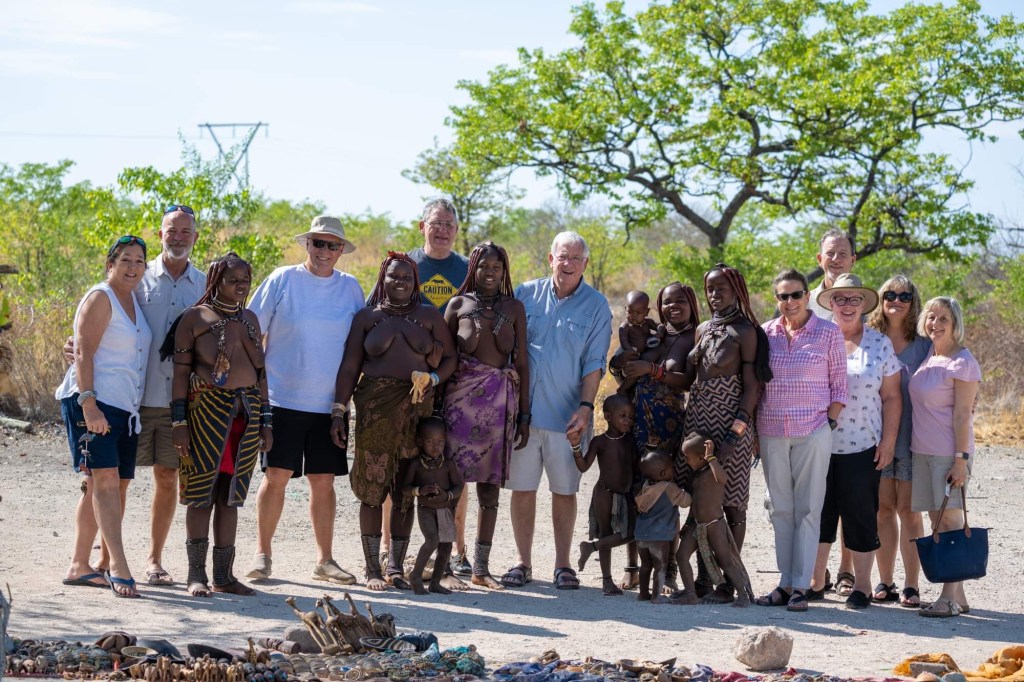
On the way in, we stopped at a craft area where women from the Himba Tribe come to sell their crafts. They are a very interesting people. The women do not bathe but use a mud rub and smoke their bodies to stay clean. Interesting video here.

Our group with the Himba women

One of the highlights of the day was two large elephants that we saw from a distance. We parked and they came right by our vehicles. Amazing to watch them walk.

Video credit to Bob Szelistowski

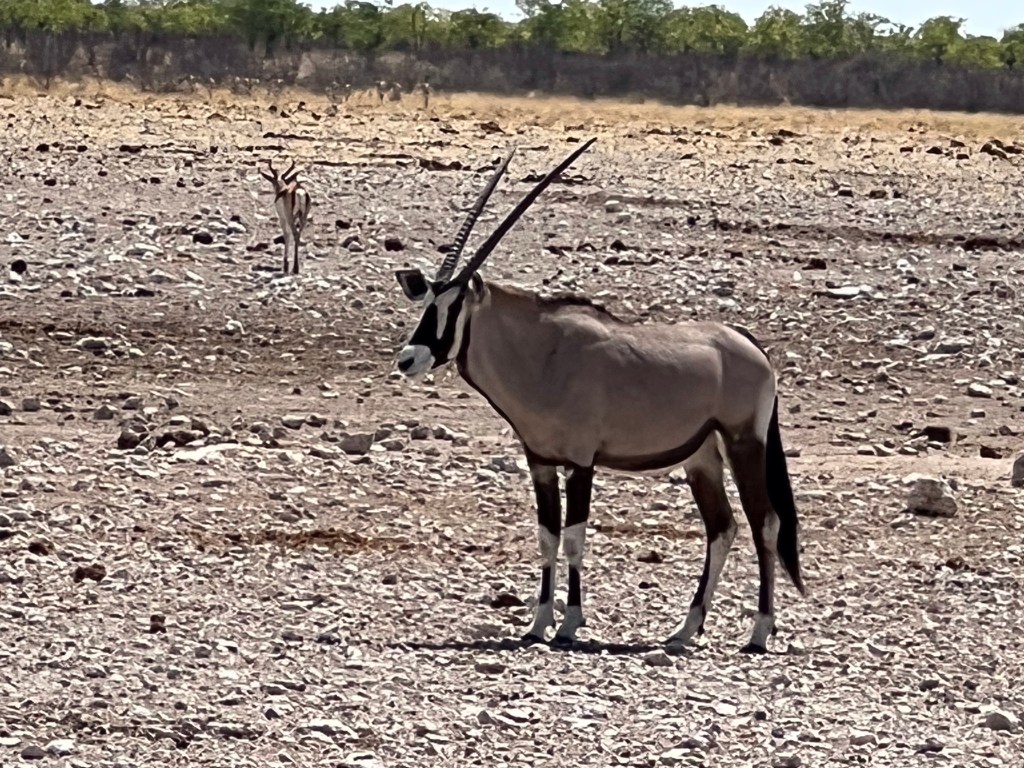
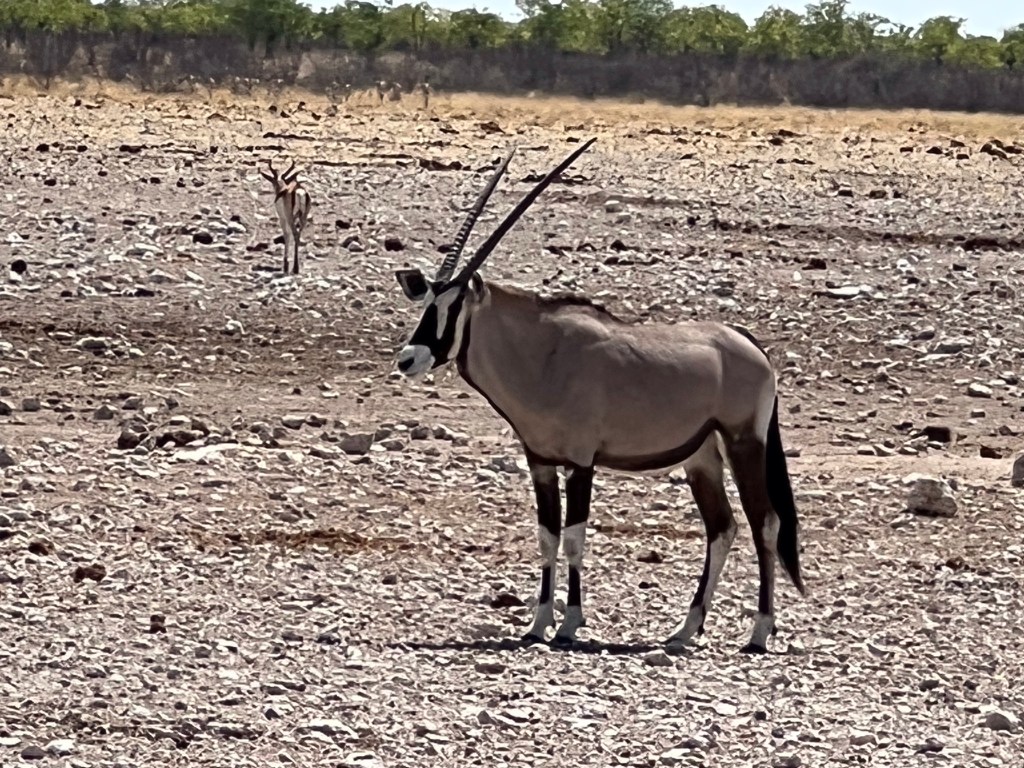
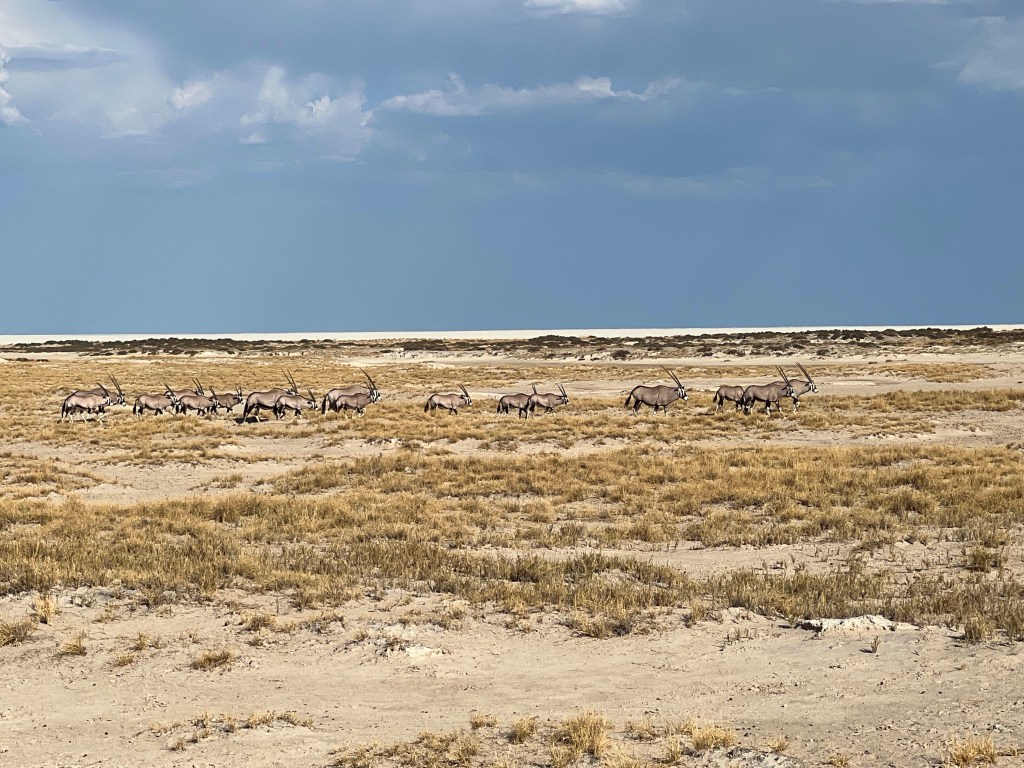
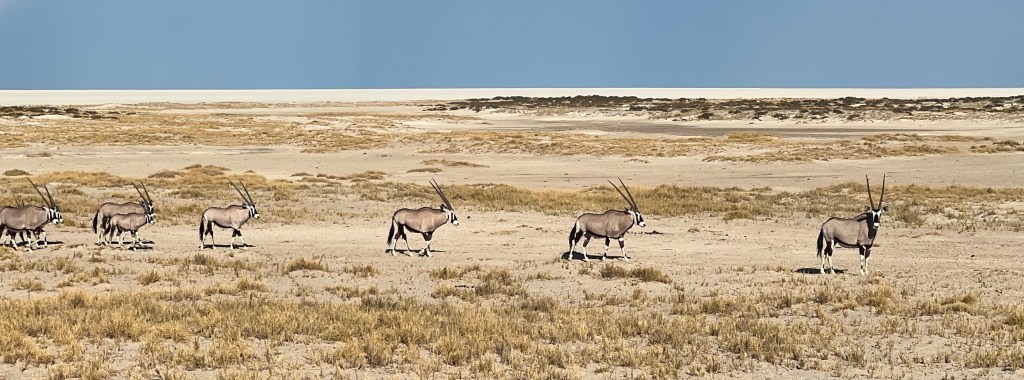
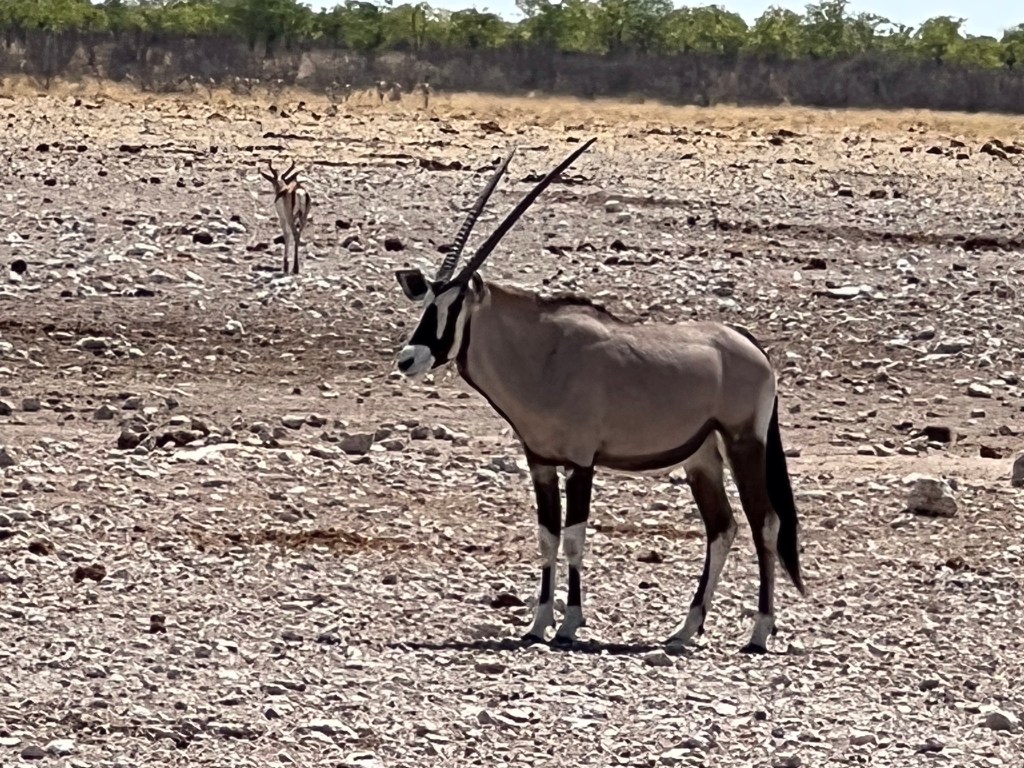
We saw a number of Oryx with their impressively long horns. Here is a shot of what much of the landscape was like.

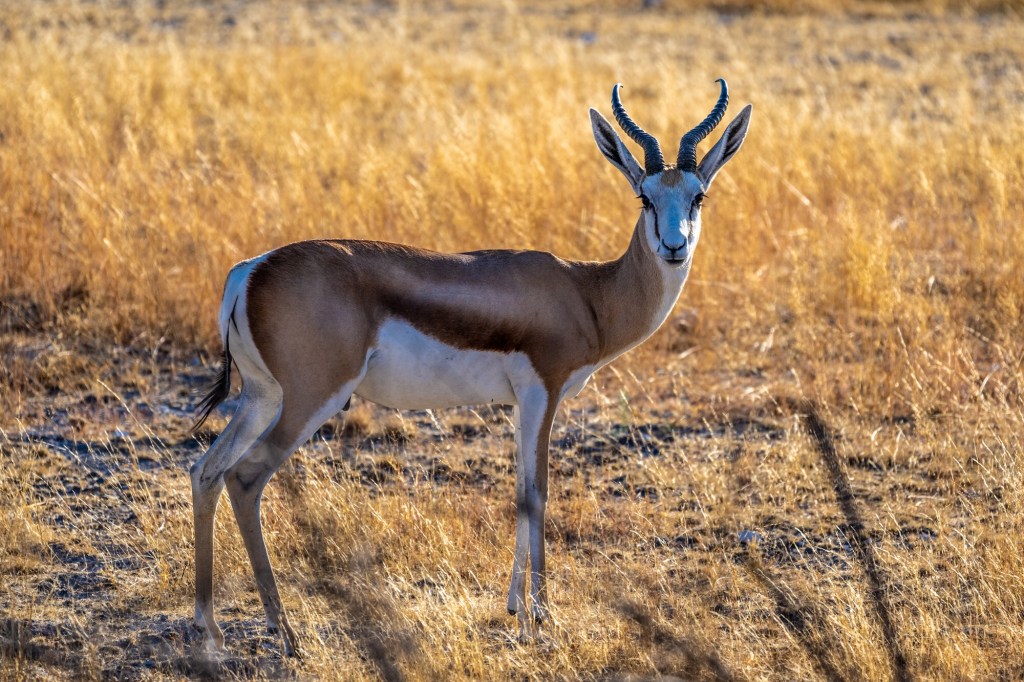
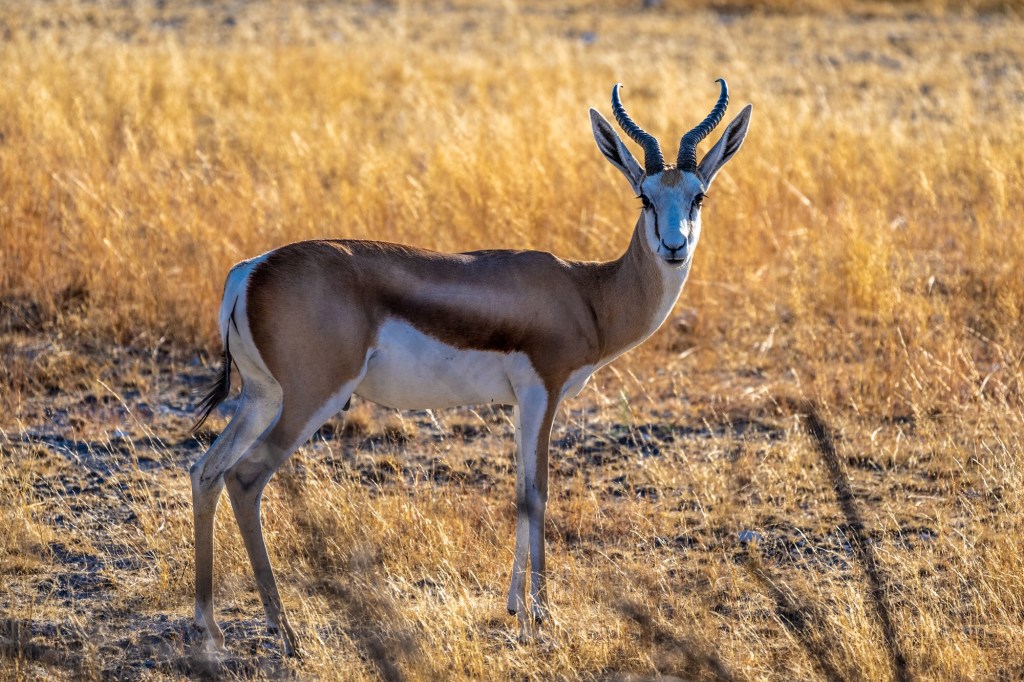
Springbok – one the the smaller antelopes, but there are very many of them throughout the park. We saw hundreds. And hundreds.

We stopped by several watering holes on the way to the next lodge

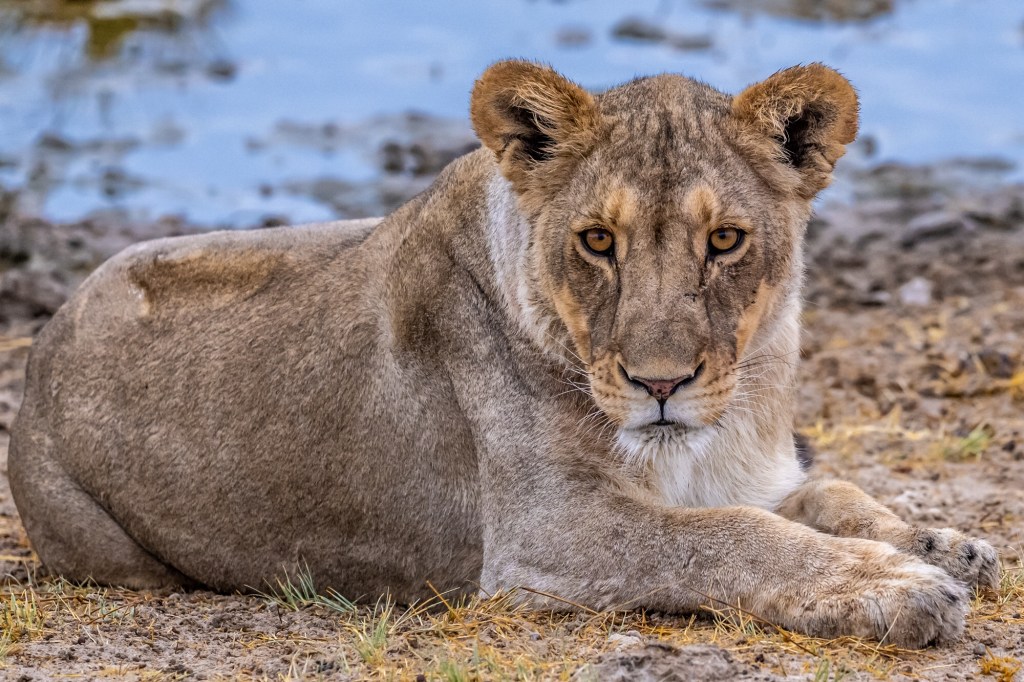
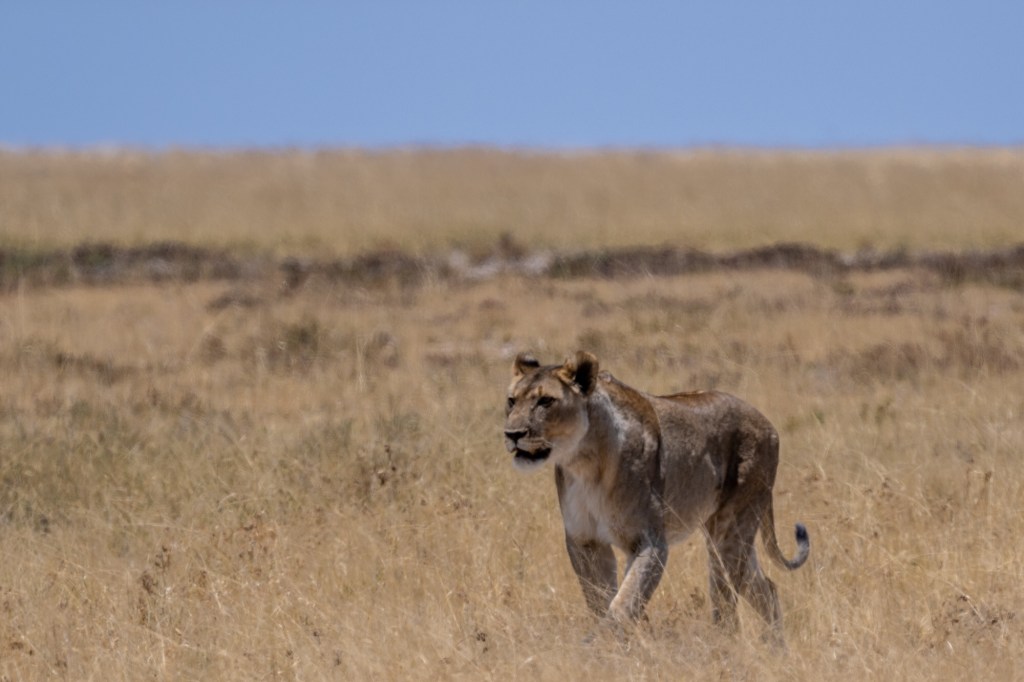
Along the way, we came across a beautiful lioness and we were able to get quite close

The King Nehal lodge is a very interesting facility.

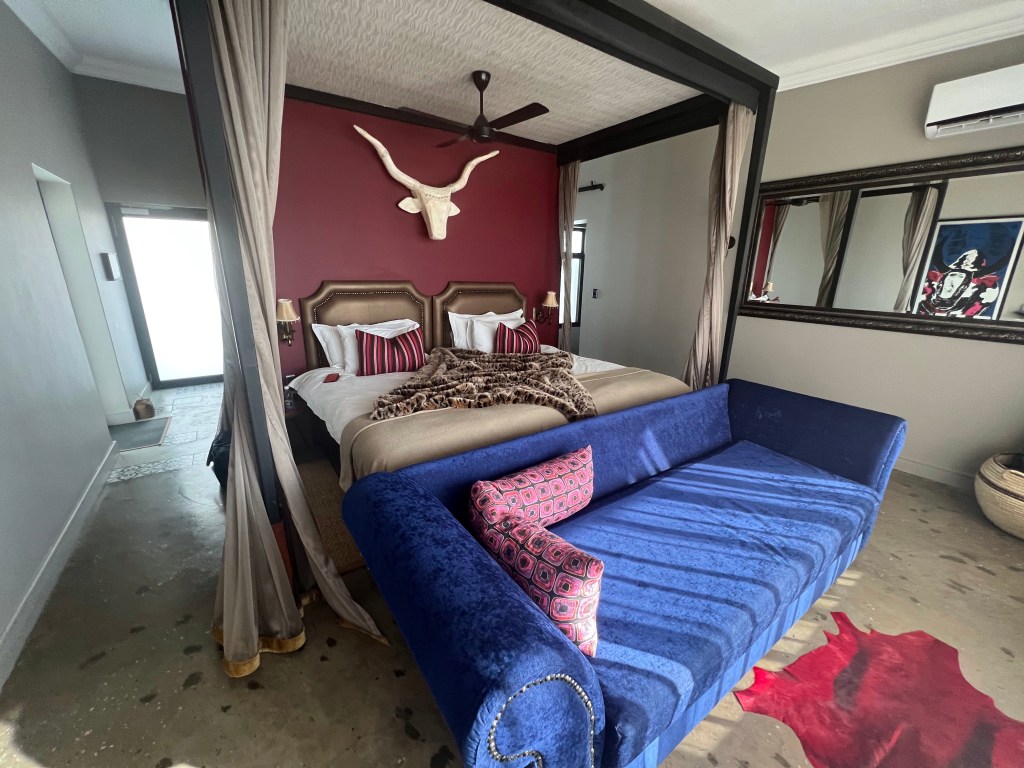
From a distance, it looks like a military base. But inside, it is very nice and the rooms themselves are great, with private plunge pools for each room.

A couple comments on our tour group. We have 4 couples on the tour and they are all nice, easy-going people. The tour is led by Sidney and Alison Bond who own and run Le Calabash. They are really special people who run small culinary classes and food and wine related trips to places like France (their home) Africa, Israel and will soon add India (2024). They keep all their groups really small and it makes all the difference. Sidney was born in South Africa and raised by a Zulu woman. Sid and Alison met in Africa and one of their daughters was born in Namibia. They have deep ties to the area and care deeply about the people. They are a wonderful couple and they are the main reason we chose this trip.

We had a very late lunch so we took it easy on the Buffet at dinner. I passed on the Eland steak.

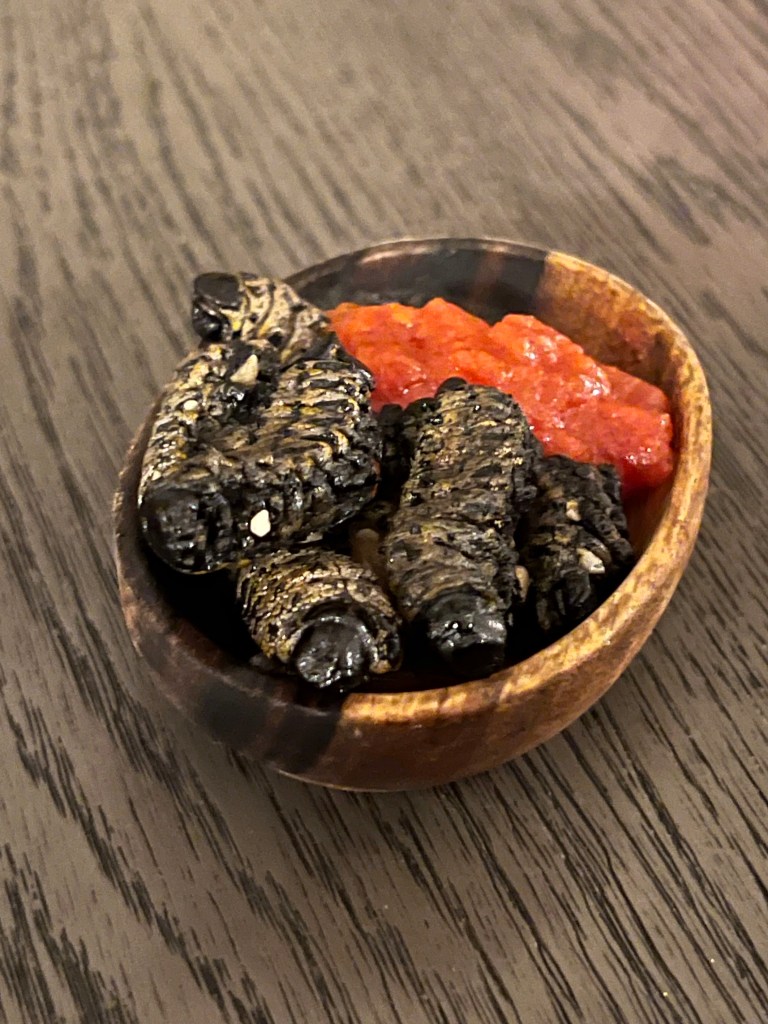
But I did try the worms. Crunch on the outside with a bit of spiciness but quite chewy once you start chewing it. And chewing… and chewing. Mopani worms. Try them!

Namibia!

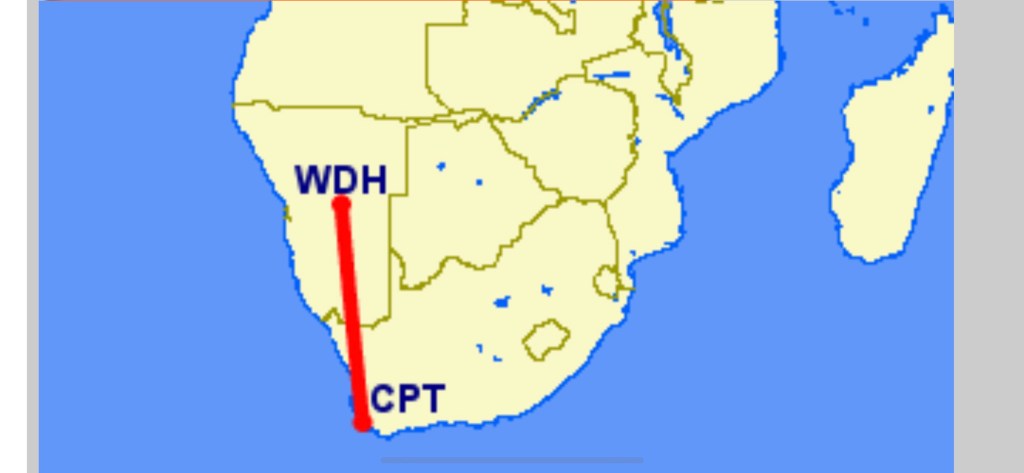
On October 26th, we traveled from Cape Town to Windhoek, the capital of Namibia.

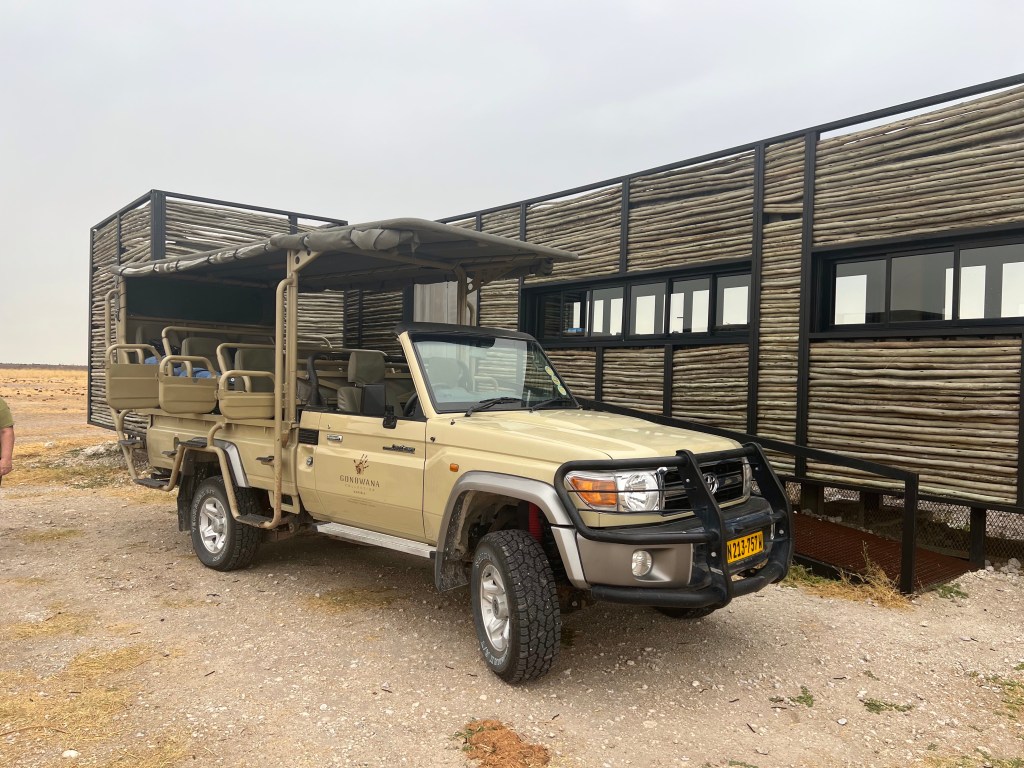
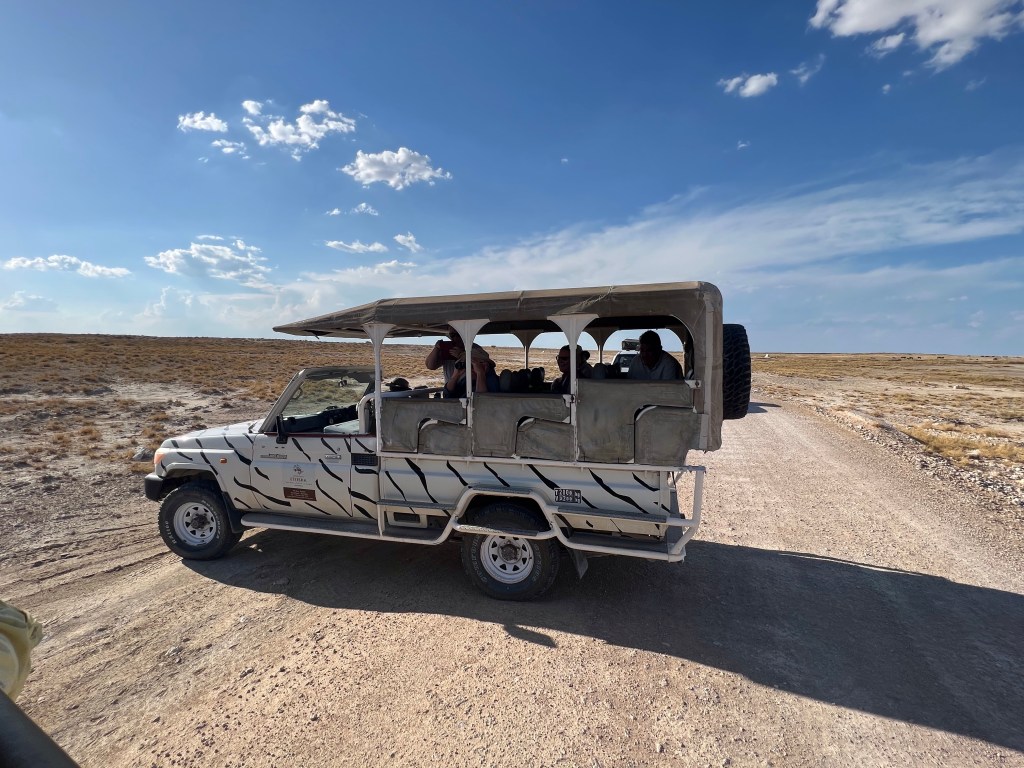
On the 27th, we continued by car/van/truck up to the Etosha Safari Lodge.

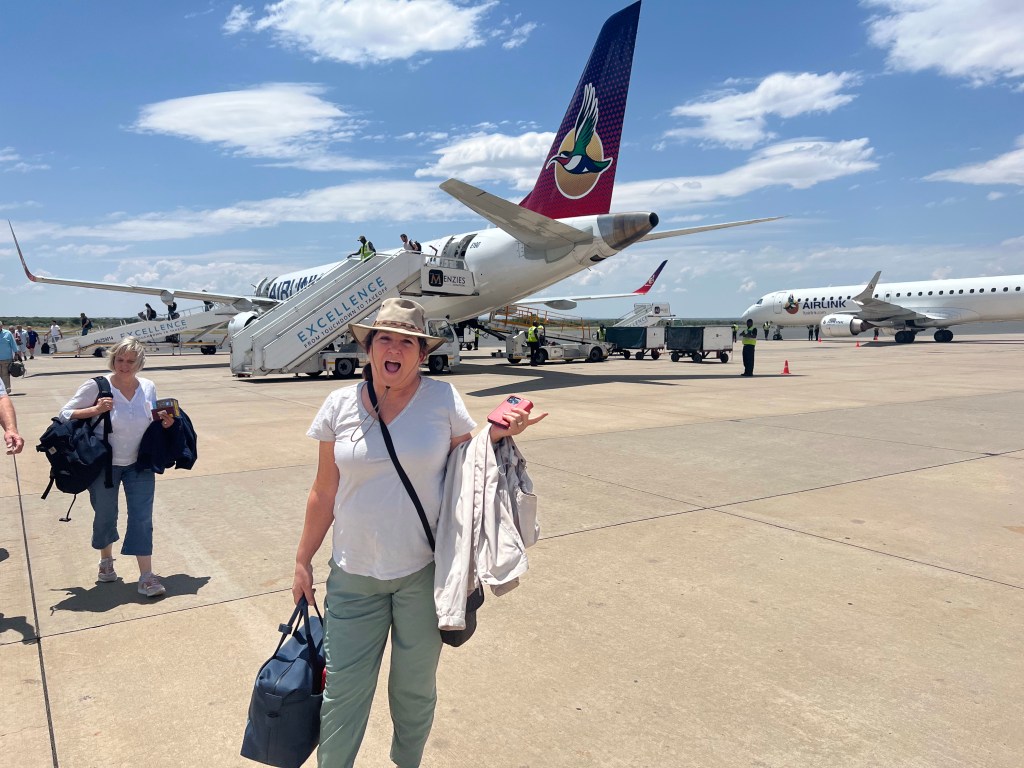
Found our first elephant – in the airport!

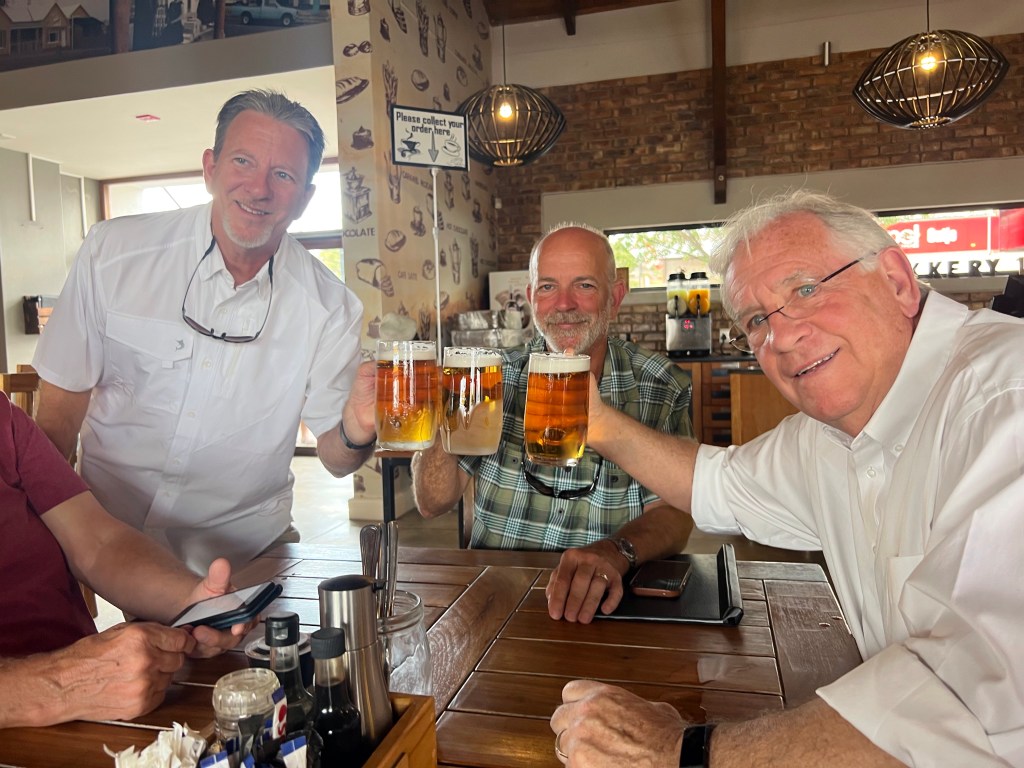
We traveled through some very interesting countryside and had lunch at a roadside restaurant and enjoyed a local beer.

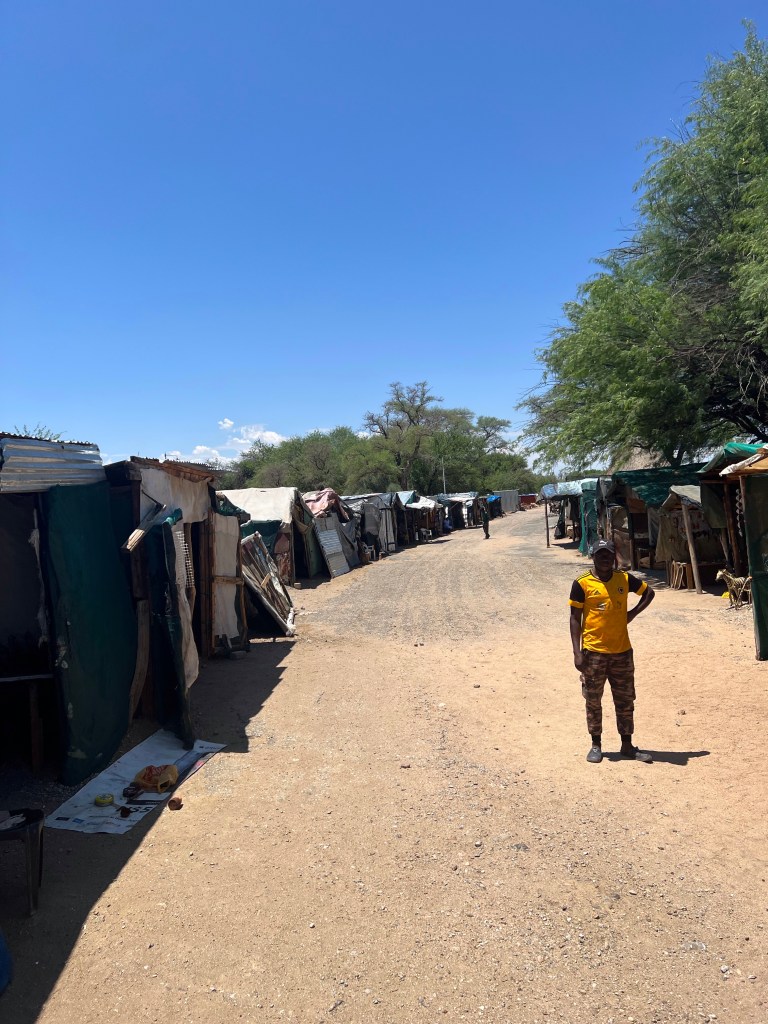
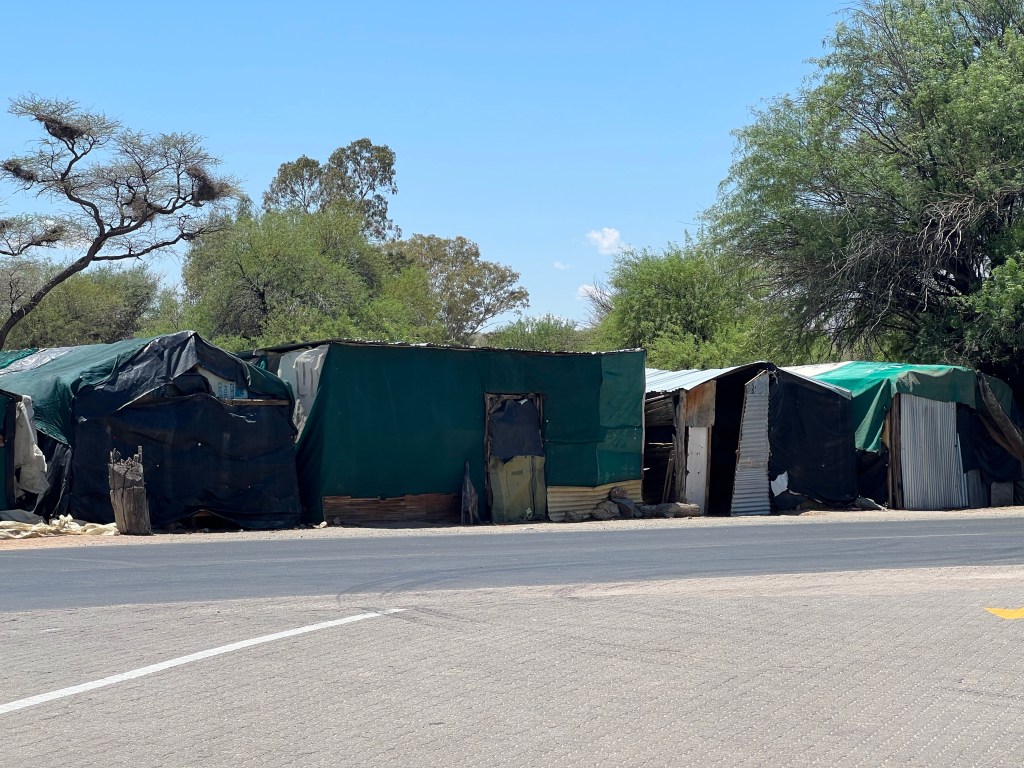
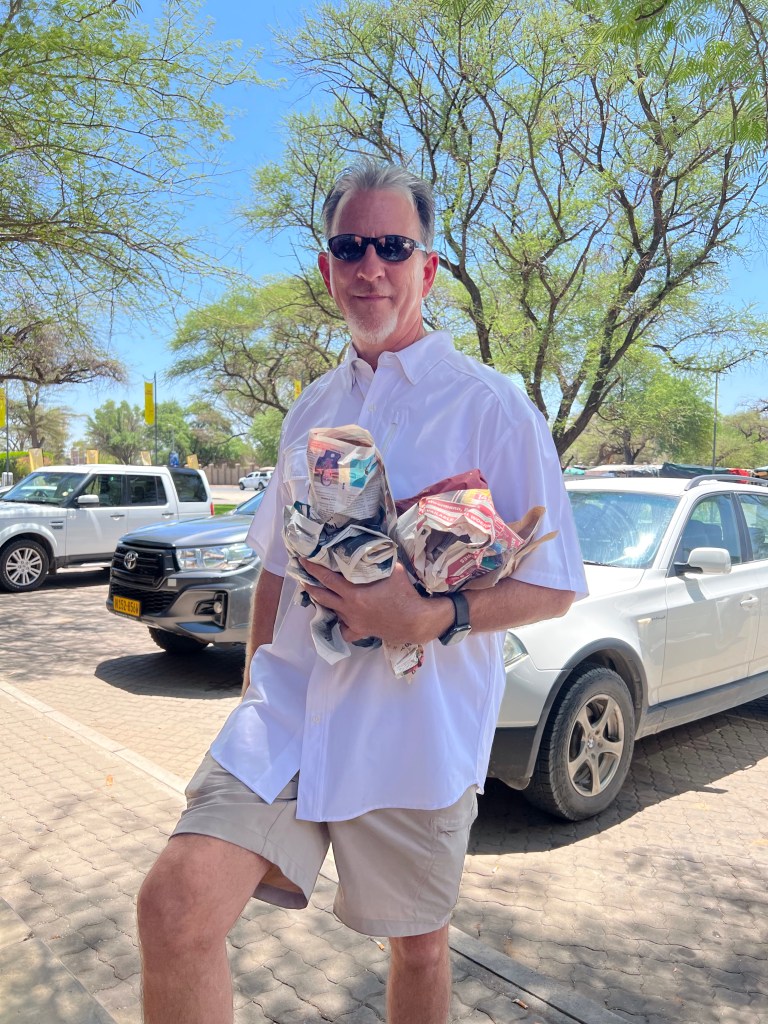
We stopped for some Biltong and to browse at a collection of wood carving craft tents. Probably 100 tents and the local artists and families would strongly beckon you in as you walked by. Many of the pieces were really stunning and the people would all tell you why you should buy from them: “I will give you a special price”. You are my first customer of the day”, my father carved this”, and if none of those worked, “buy this so I can feed my children”. I bought a rhino. All of the crafts were very reasonably priced and the bartered price ended up being about half of what the original price quoted. If we were not limited in space or weight, I would have loved to have purchased more. Nothing had a price tag and I am sure they were gauging how much you might pay based on how you were dressed. If you asked how much something cost, you were in for a 5 minute discussion before you could get away. “it is 350 Rand” “ok, thanks.” “How much do you wanna pay”. “no thank you”. “ I give you a special price, 300 Rand (about $20). “No thank you”. “275”. No thank you…. This is iron wood. Very strong, very hard to carve”. No thank you. My name is Thomas. What is your name? “i am sure it is a coincidence and he didn’t just hear Cathy call me by my name. “I will give you a special Thomas price”. I bought a rhino. It is iron wood and very hard to carve.

Bob bought more than a rhino.

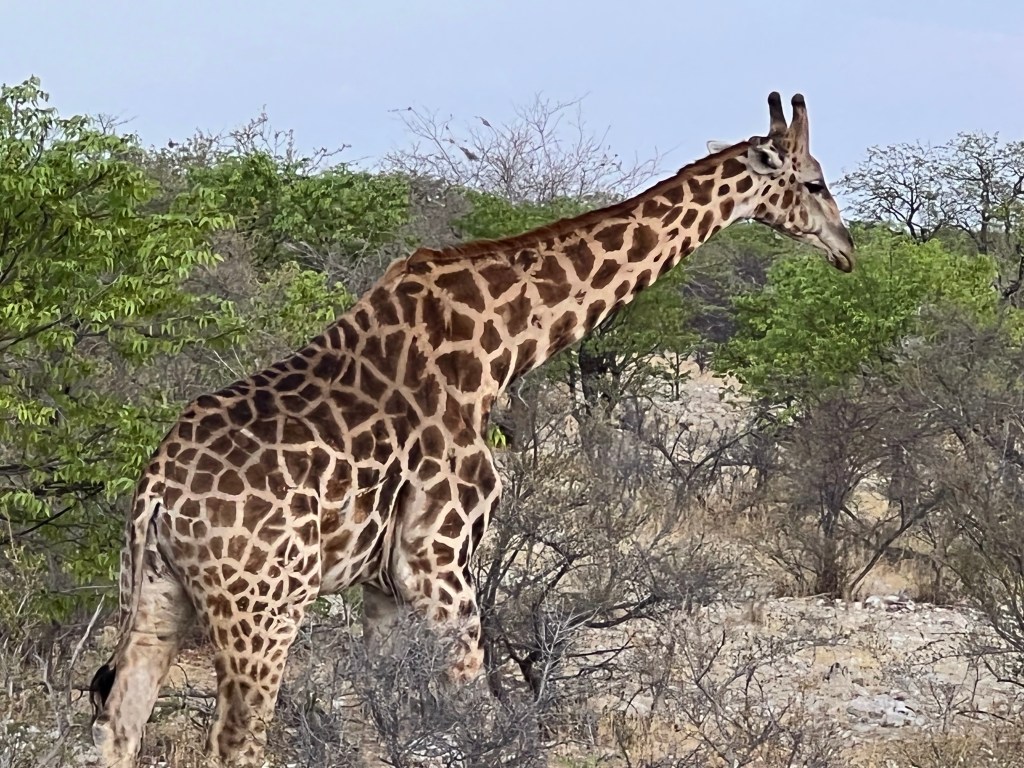
The Etosha Lodge has with a large deck looking over a water hole and the lodge is made up of individual cabins that also look over the savanah. It was a good sign of things to come when we drove past two giraffes on the driveway into the lodge.

Etosha National Park was the first conservation area in Namibia, established in 1907 and grew to 19,000 square miles! It is now about 1/3 of the peak size but still huge. Much of the land is dry Savanah and a large part of the park is made up of the Etosha Salt Pan, a flat saline desert that used to be covered in sea water years ago. Nothing grows there but the animals sometimes go to lick the salt. In the rainy season, much of the pan is covered with water and attracts flamingos and white pelicans.

October 28th was our first Safari day and it did not disappoint.

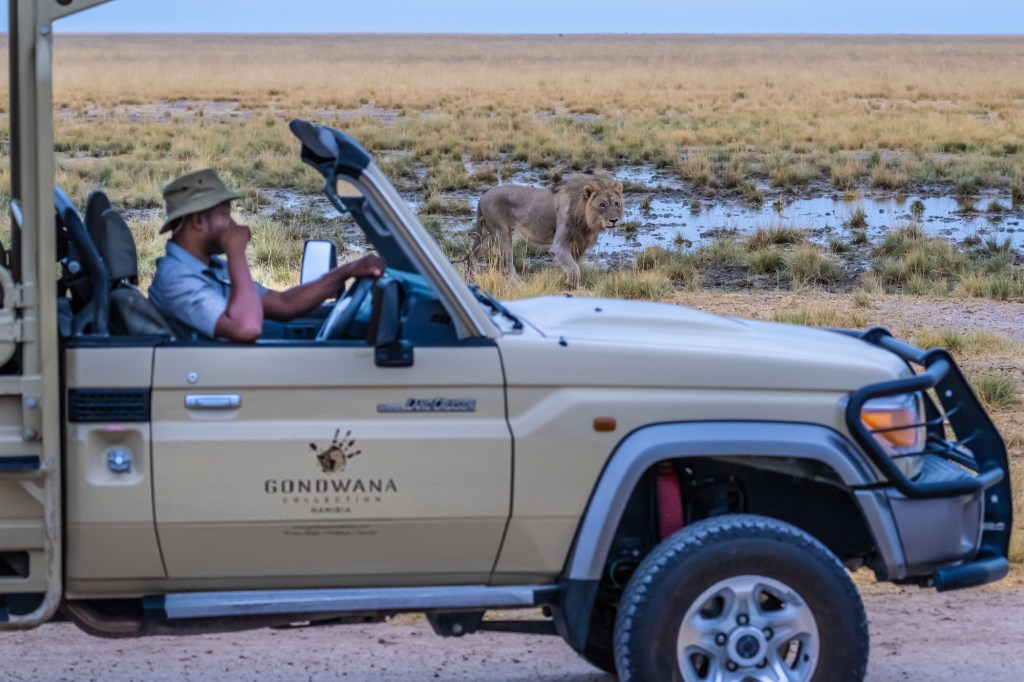
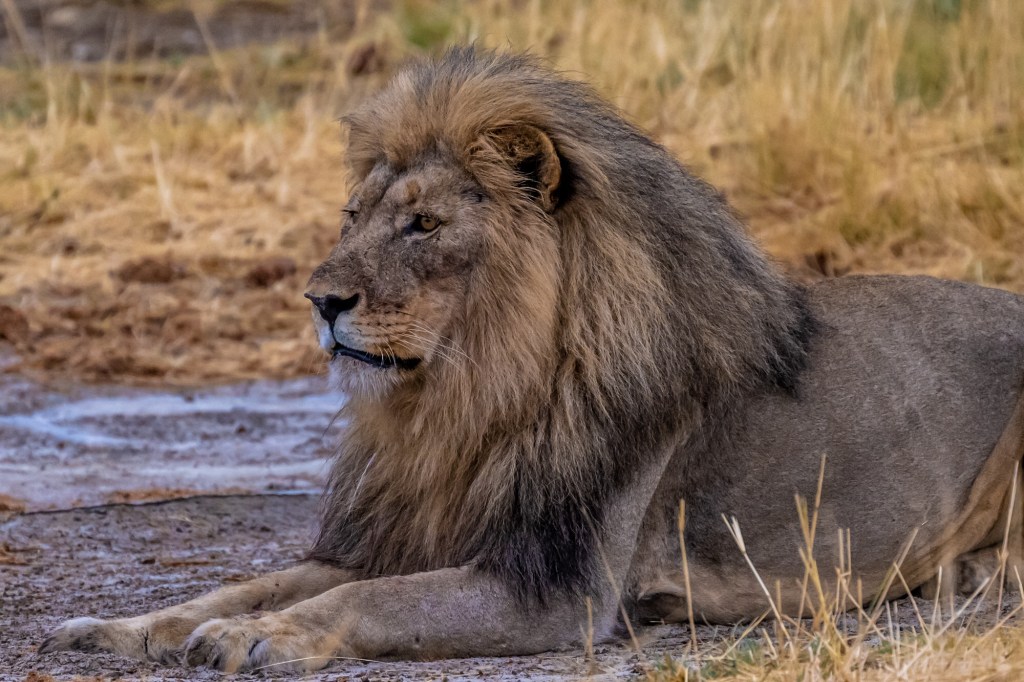
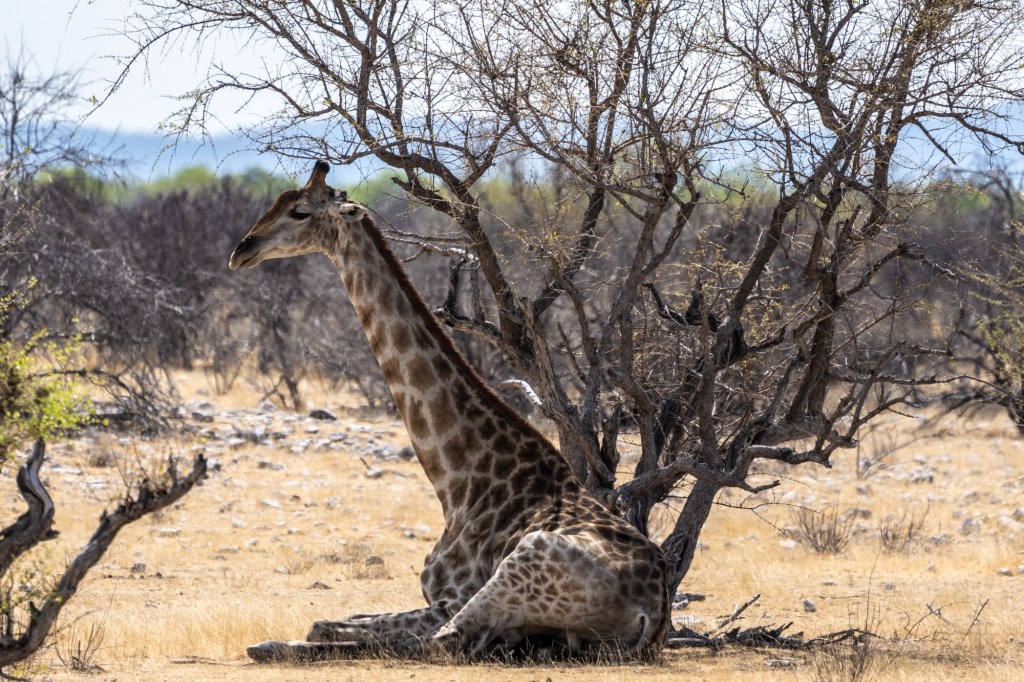
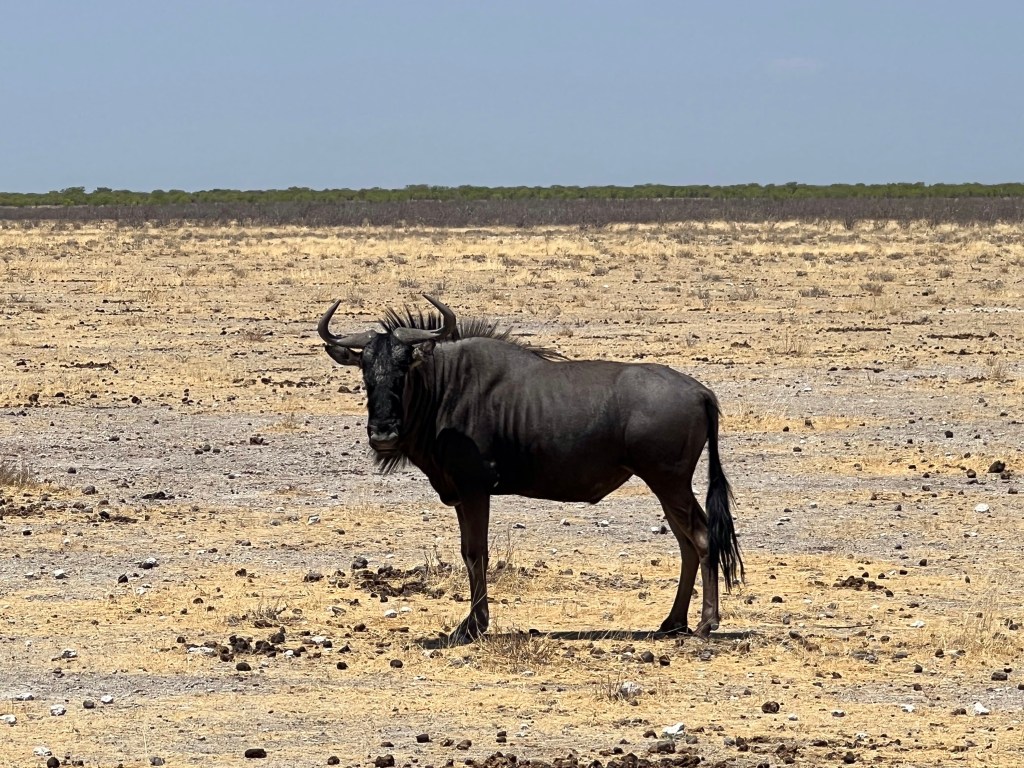
We spotted 12 different species of mammals and a large variety of birds. several of the highlights were elephants, lions, hyaena, and giraffes. Here are some pictures taken from our Safari vehicle. Many of our best shots are curtesy of one of our travel companions (but some are pics we took)

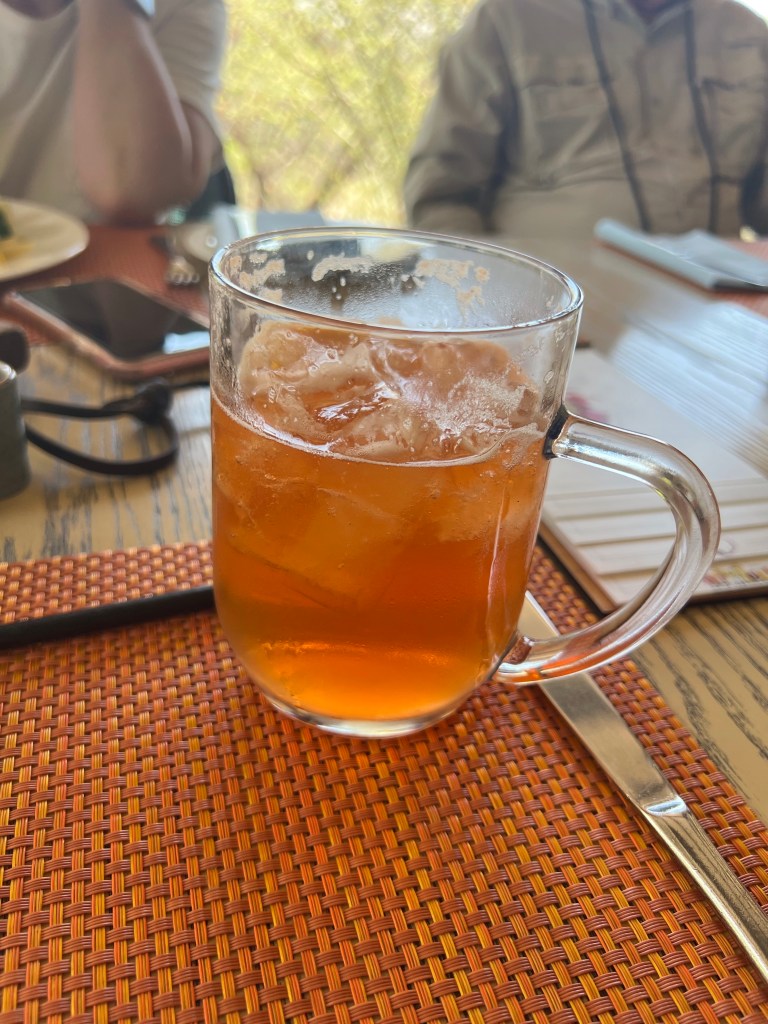
After our morning Safari drive, we came back to the lodge for lunch and a very brief rest before heading back out. enjoyed a(nother) Rock Shandy. Recipe can be found here.

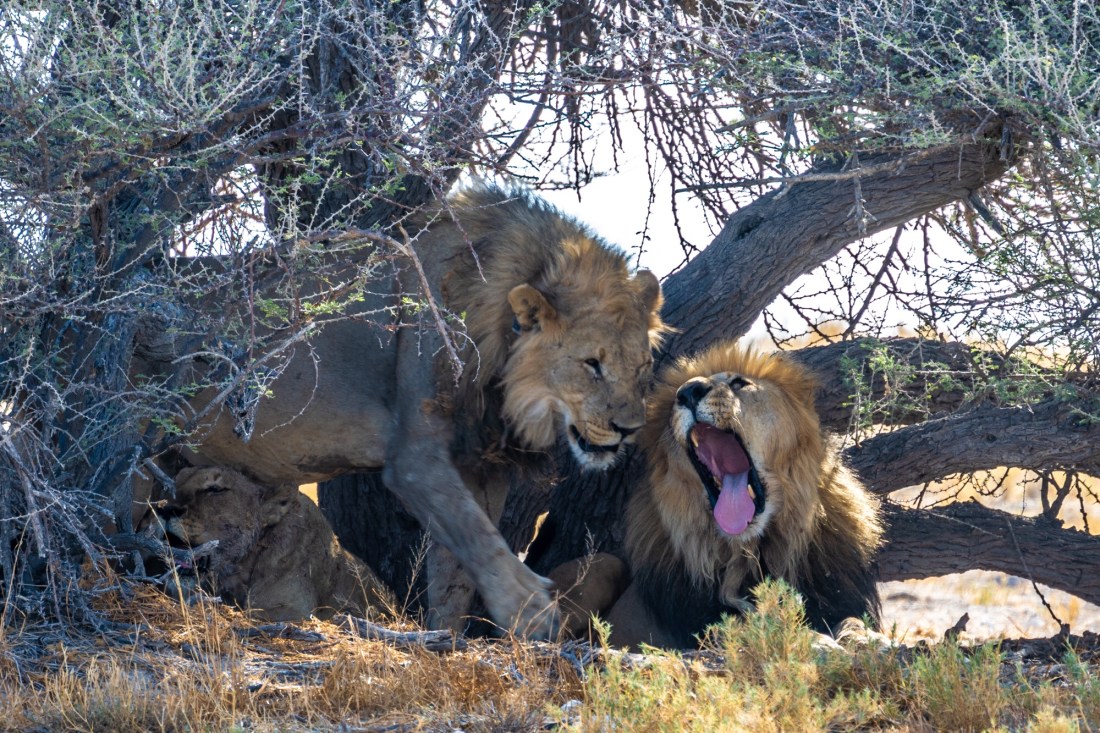
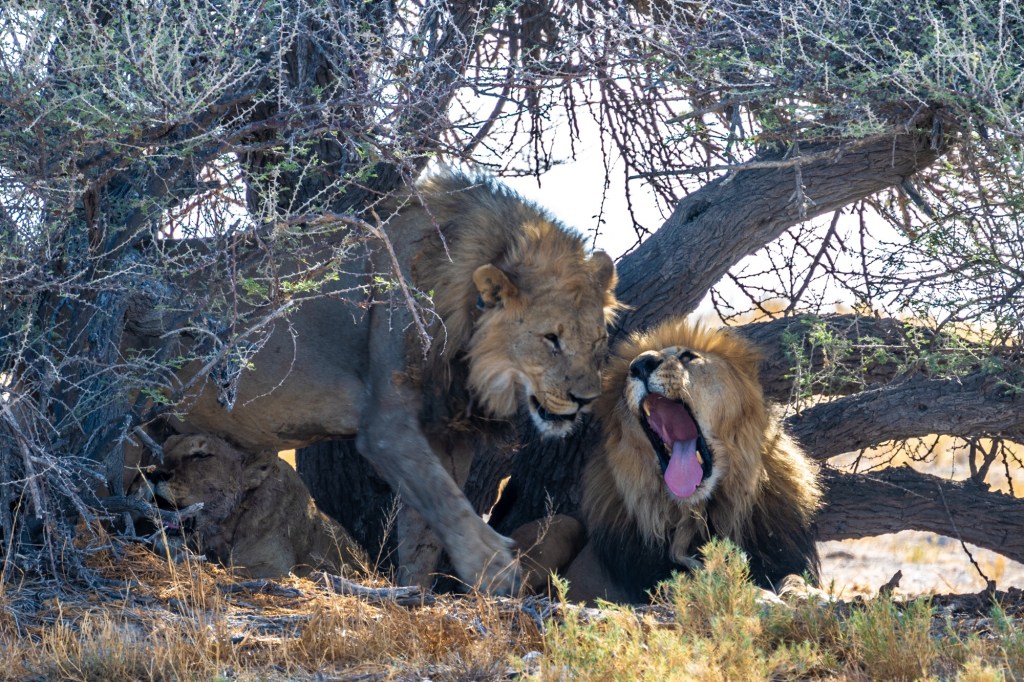
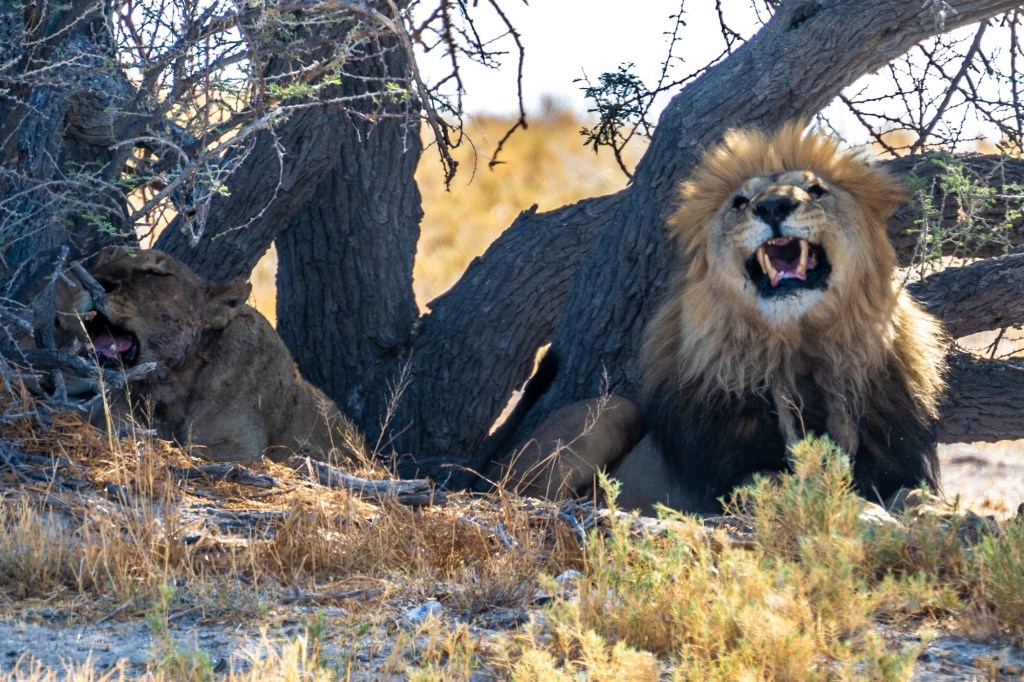
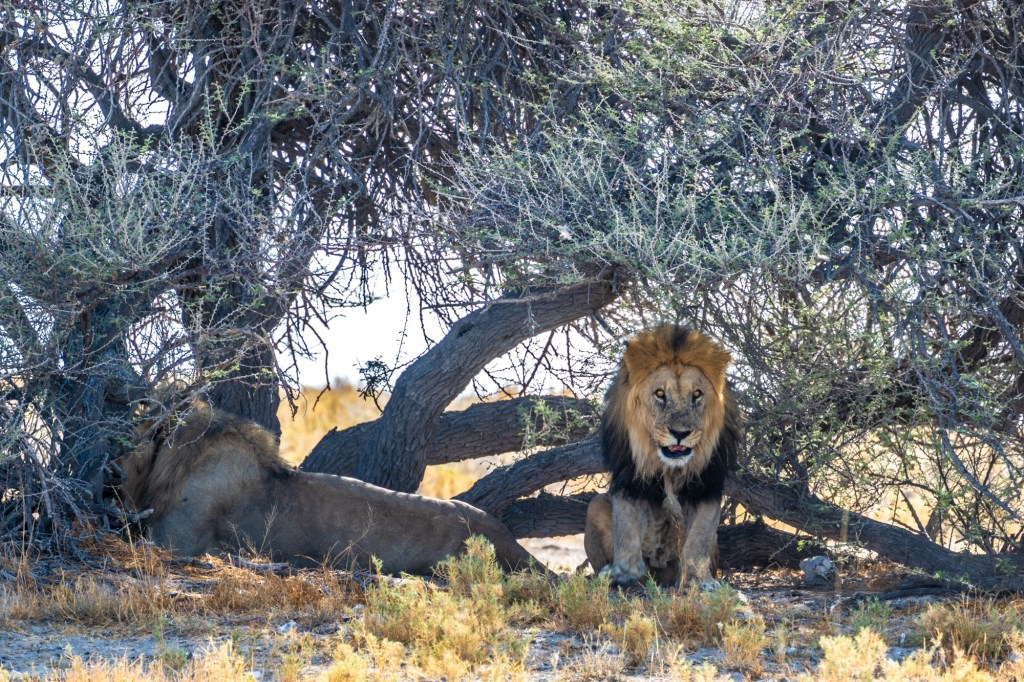
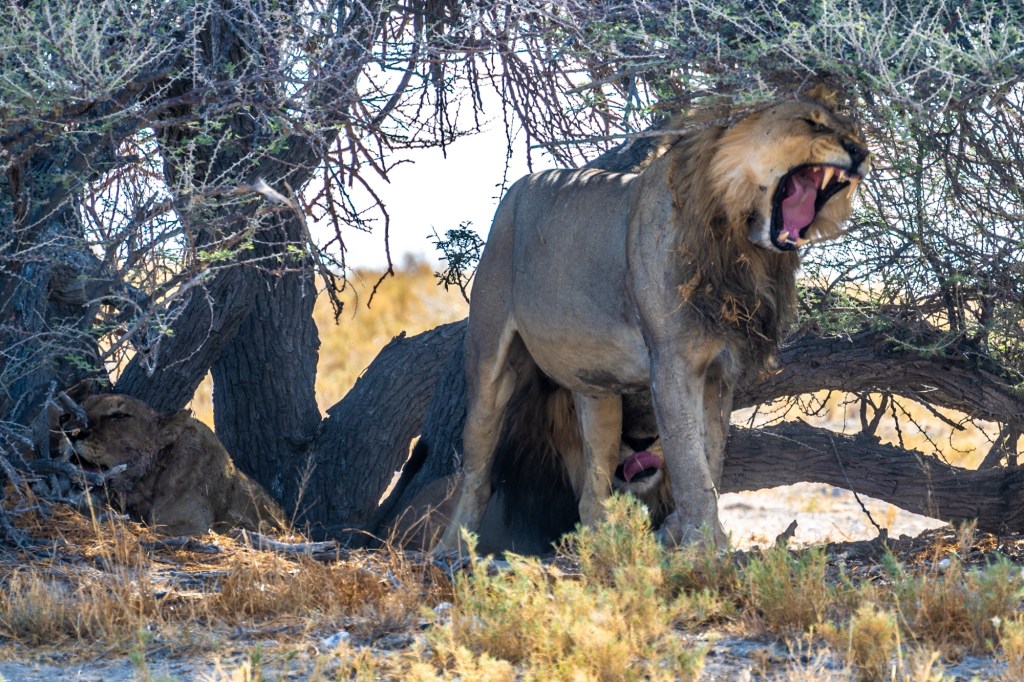
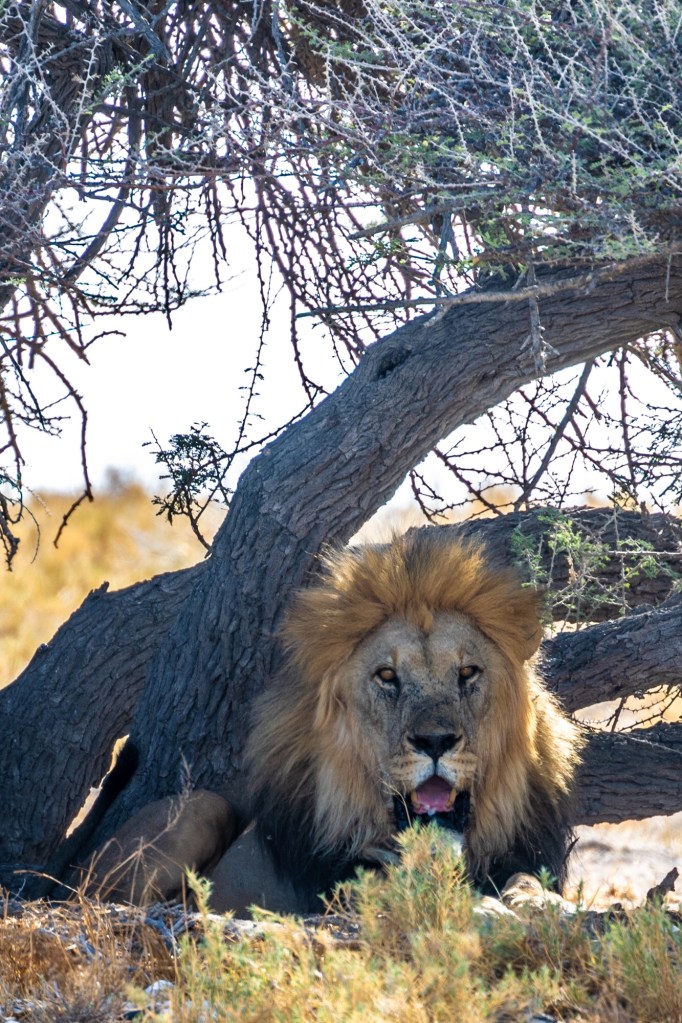
We saw several lion prides during the day, all resting in the shade. and our travel mate Chris was able to get some great shots.

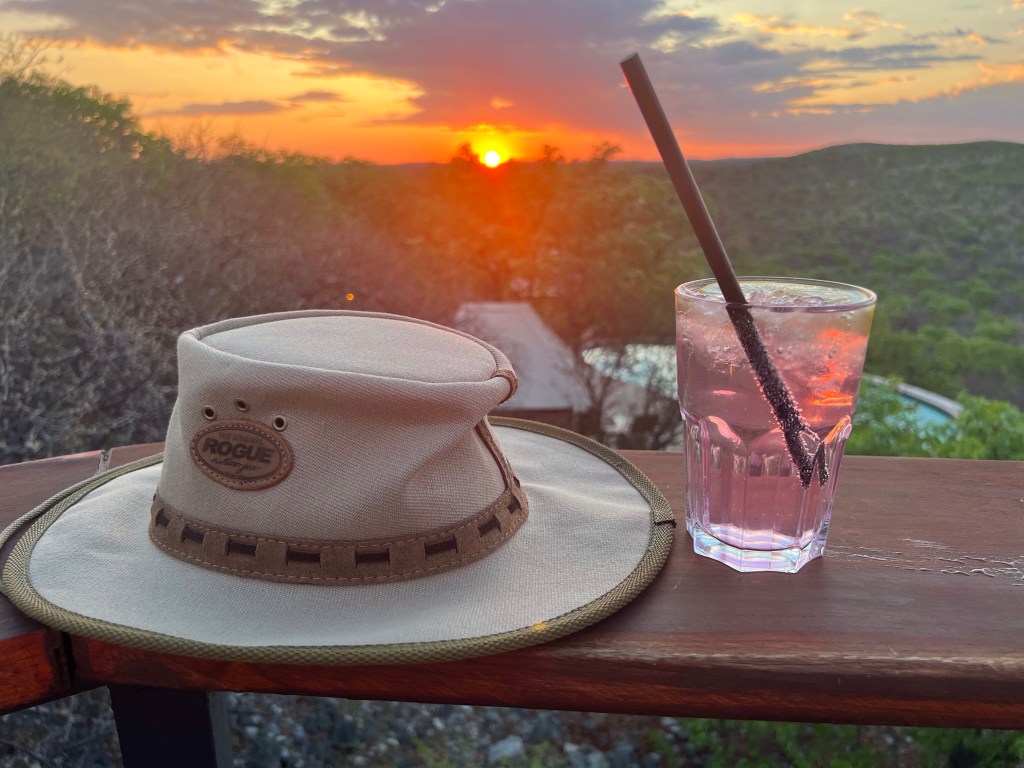
We finished the day with Sundowners on the observation deck watching the sunset before our final meal before heading off across the park tomorrow to our next lodge. All meals have all been tasty local dishes such as springbok steak, Kudu, roasted Eland, Oryx Goulosh and antelope. It is all served buffet style so you can try them all.

Quite the Day!! Table Mountain, and more…


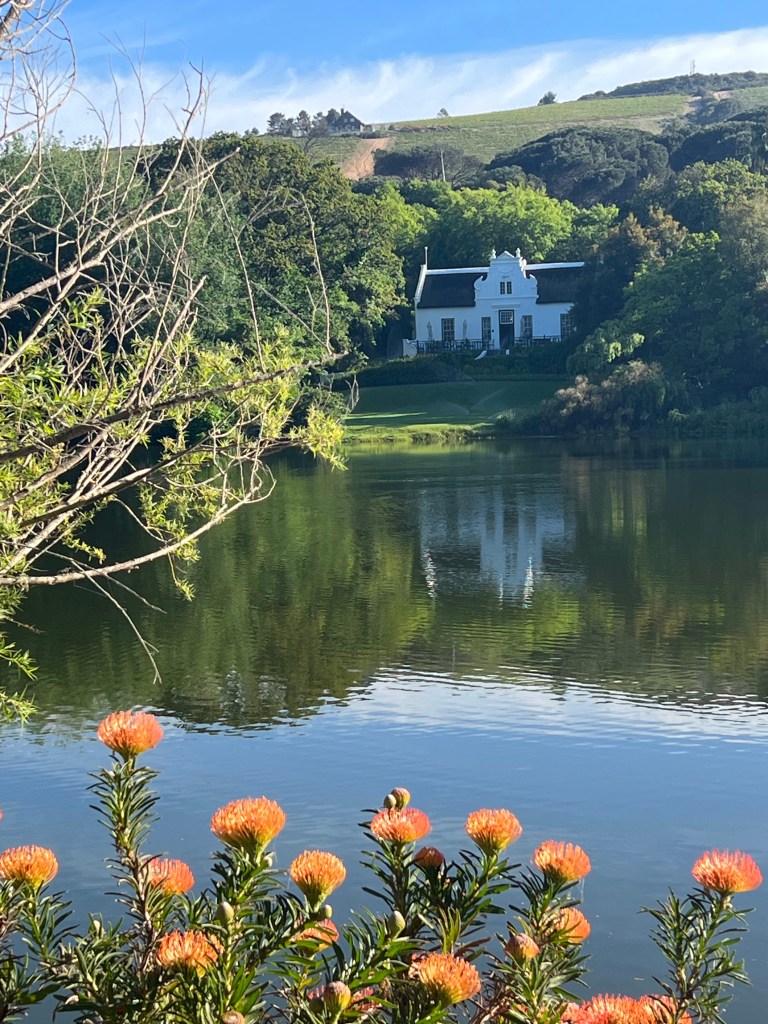
The Manor House

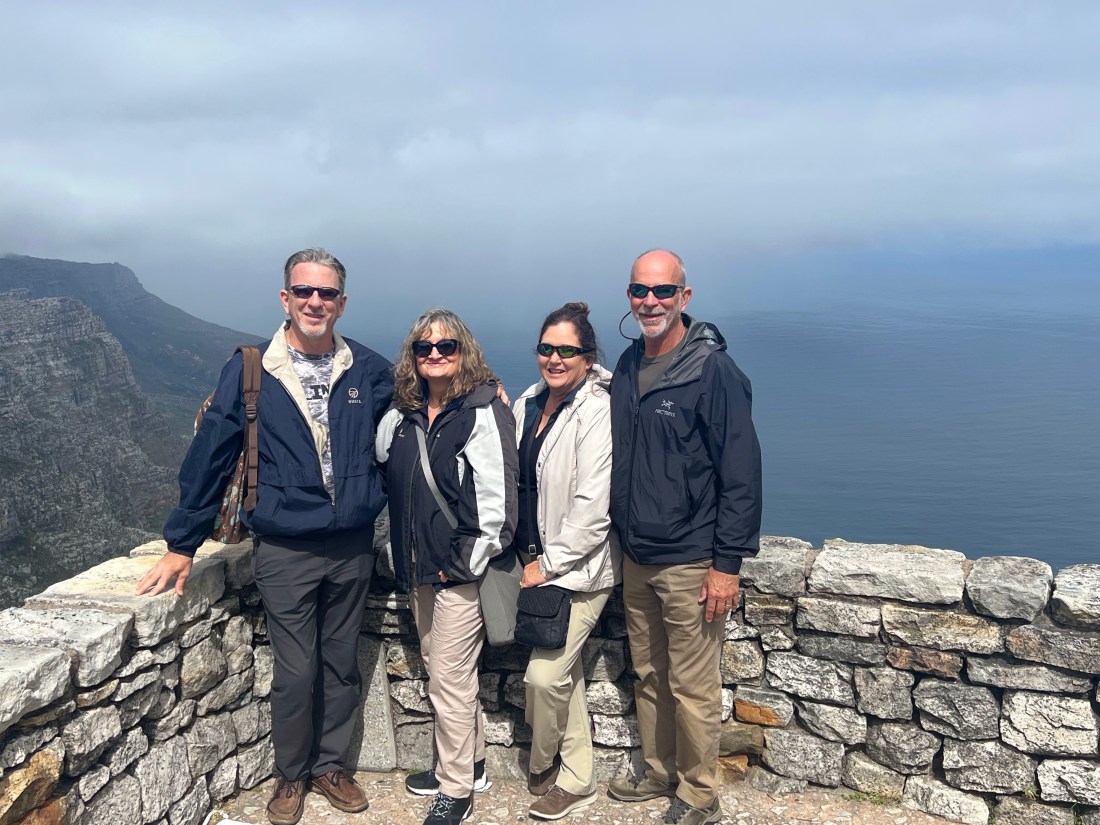
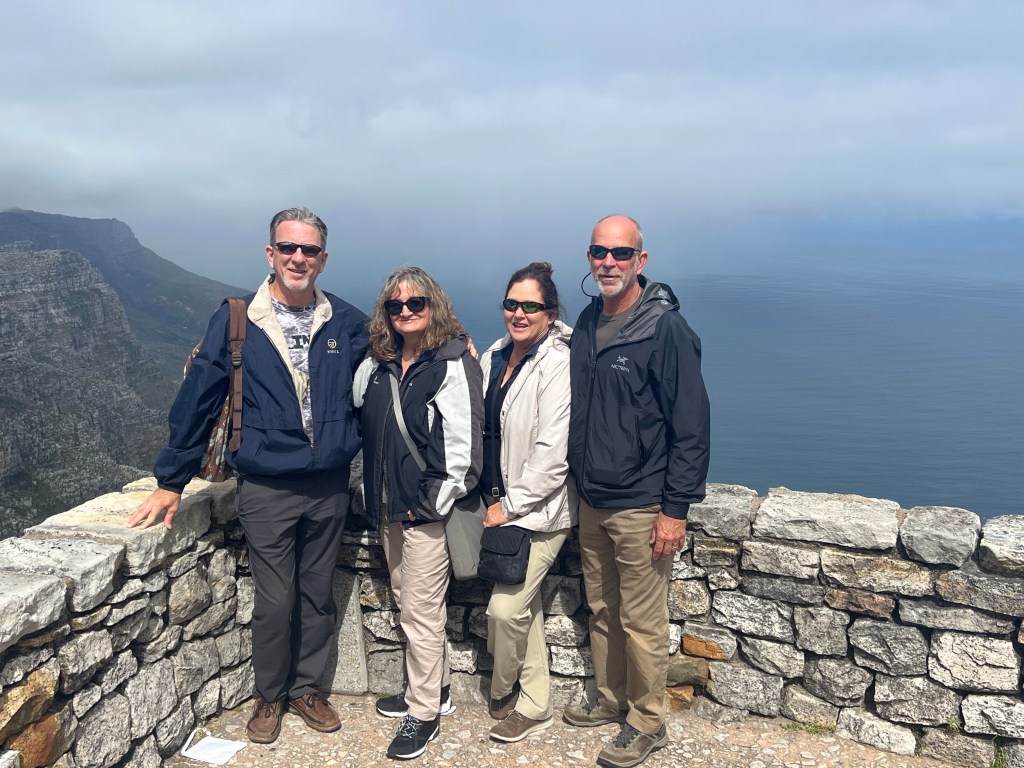
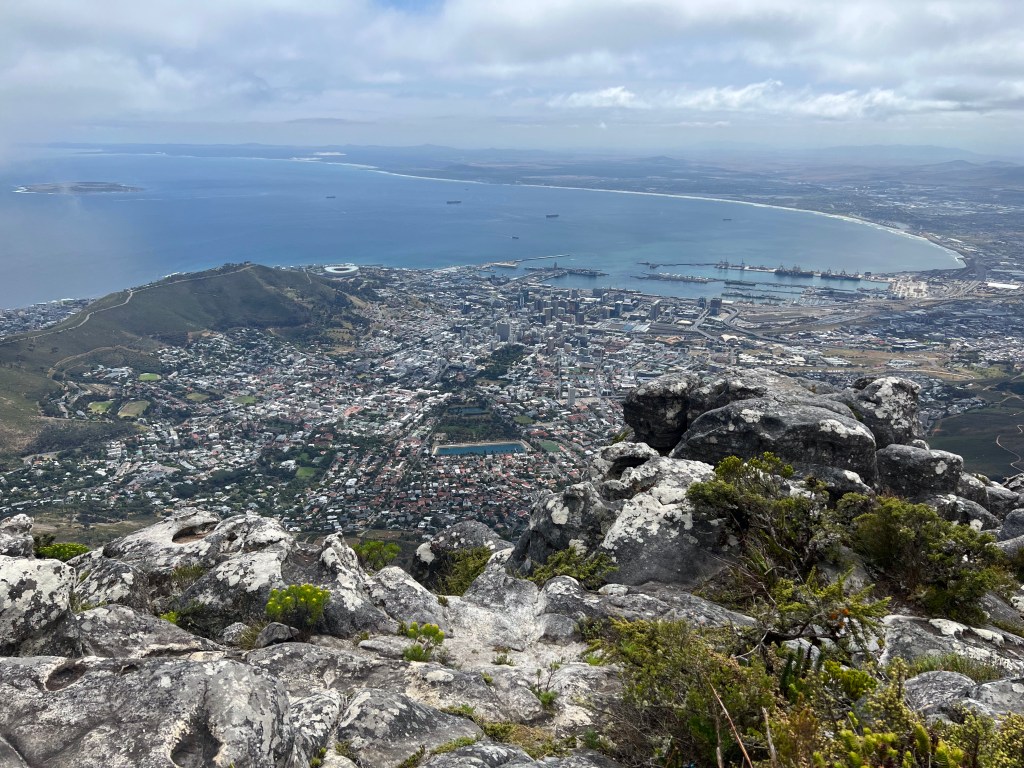
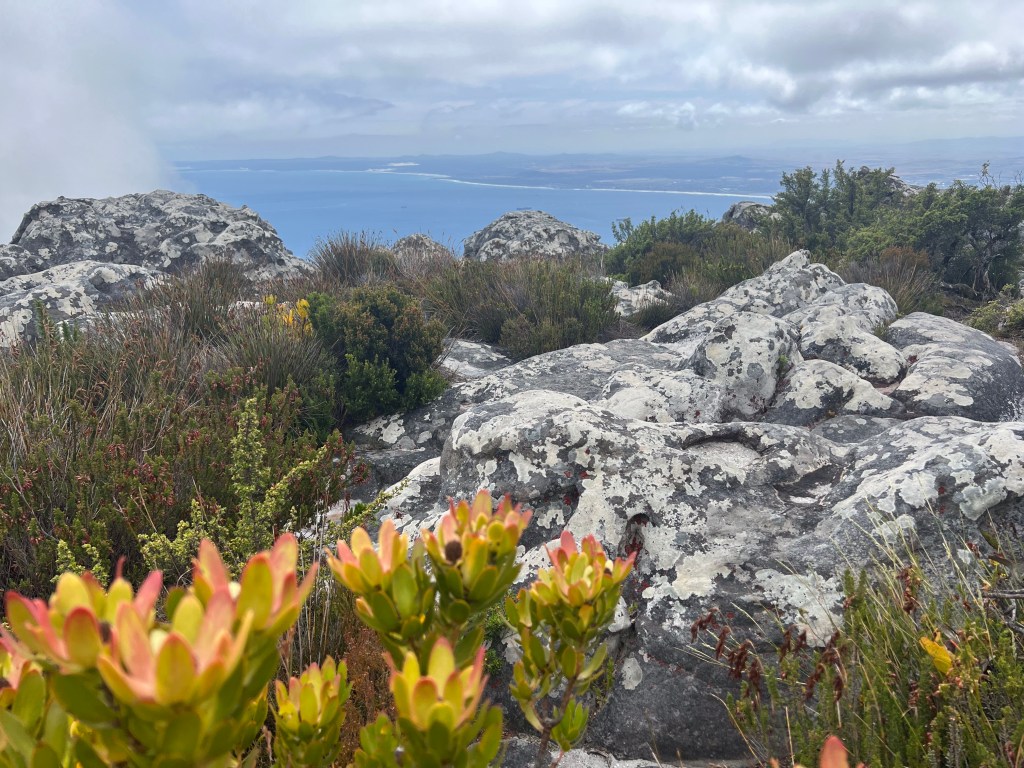
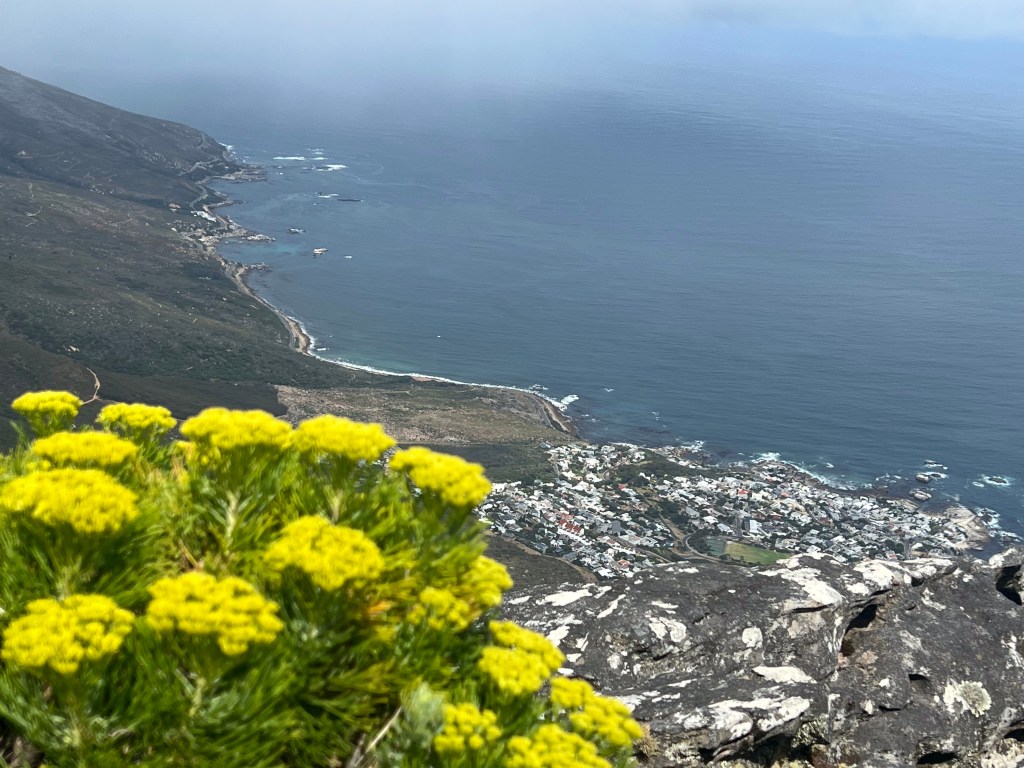
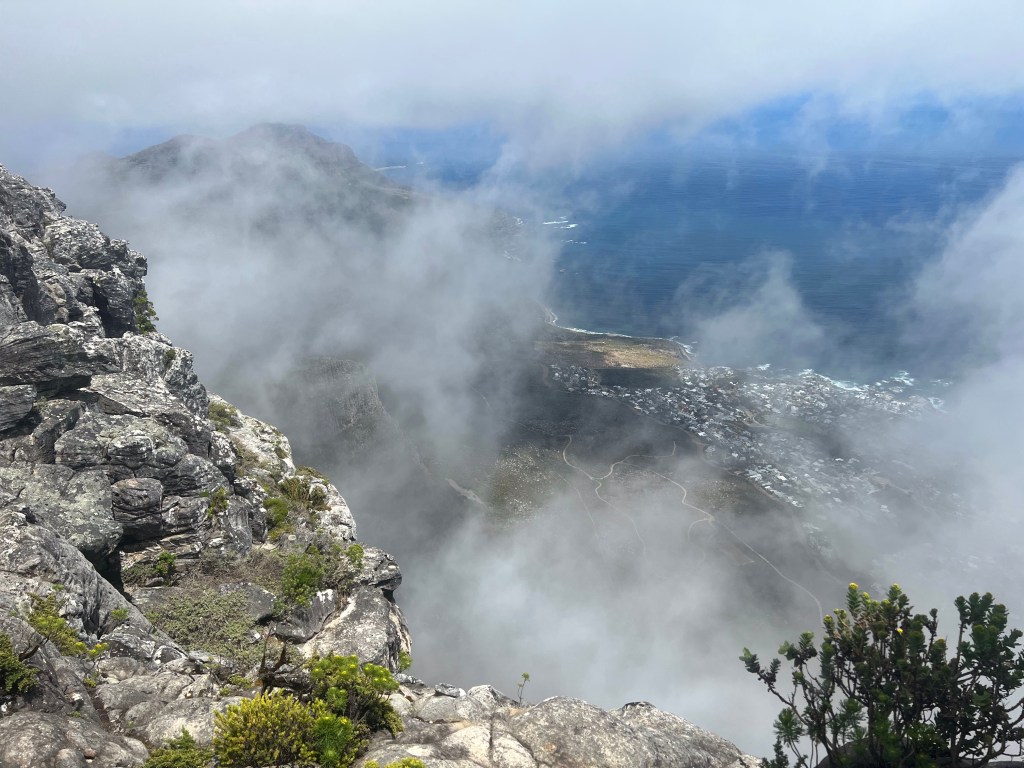
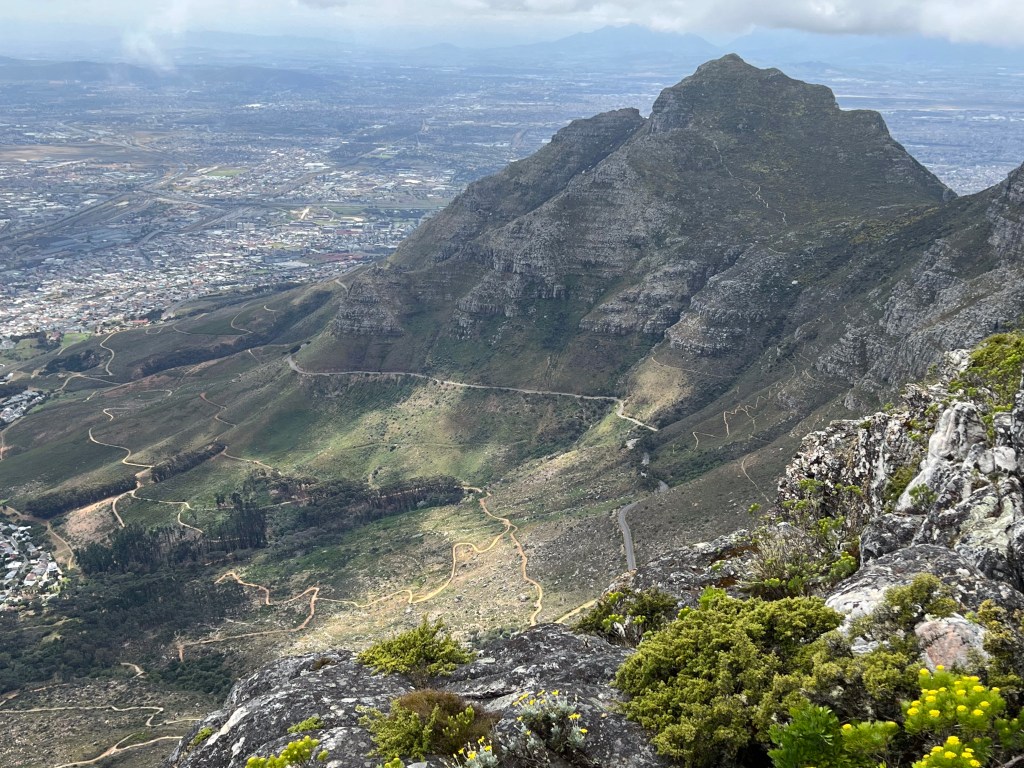
We started early for the best weather and after breakfast at the manor house, we headed to Table Mountain. The plateau towers about 3000 feet above the city of Capetown and the views were really spectacular. We had good weather for most of the morning before some clouds starting rolling in.

Overlooking Capetown

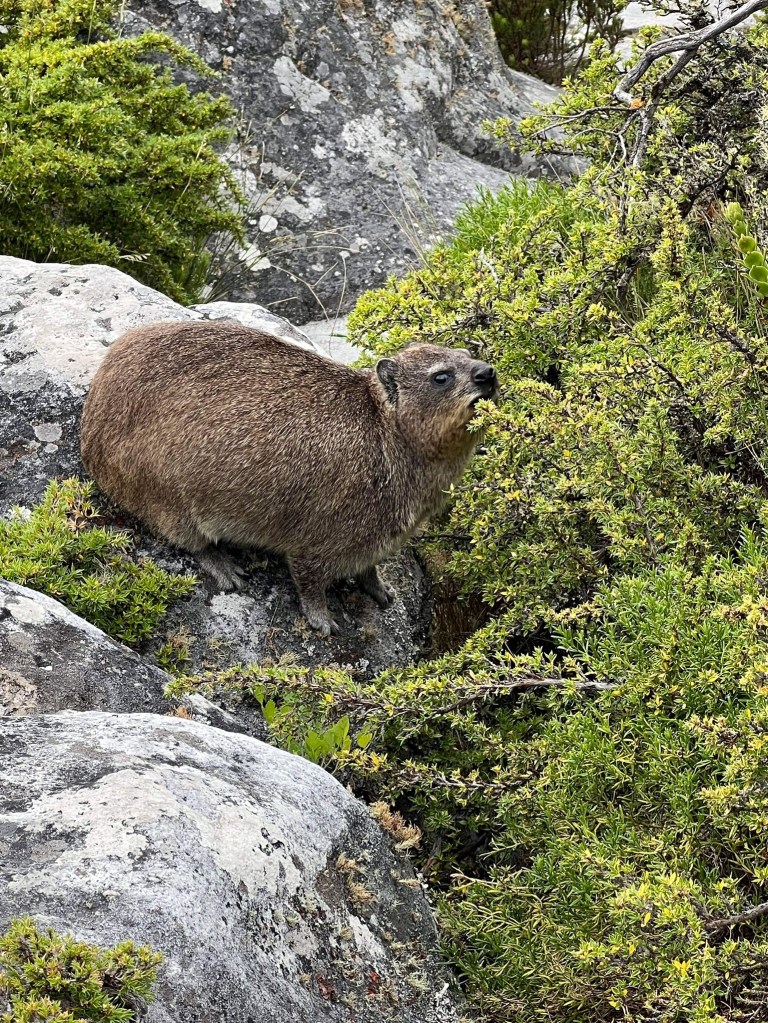
A Dassie

Next we headed to lunch and it was a humbling experience.

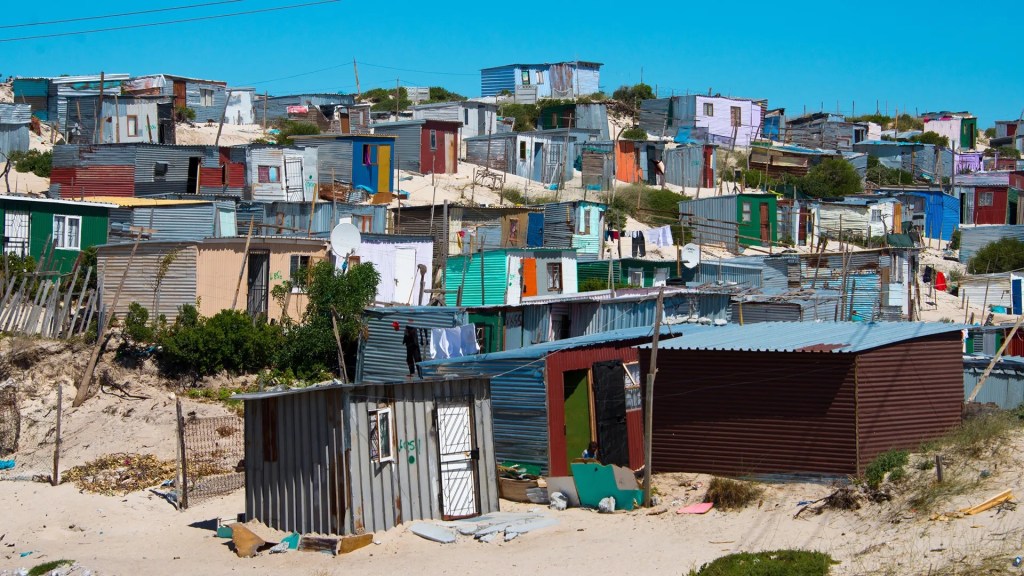
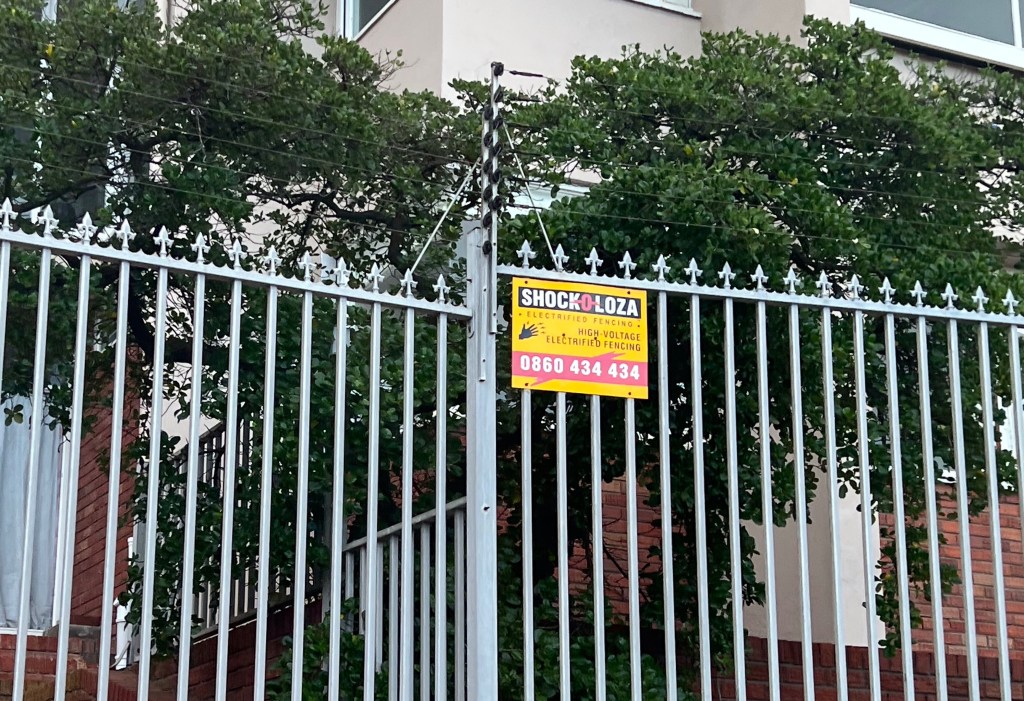
As a bit of background, more than a third of Cape Town’s 4 million people live in desperate poverty in the “townships” that are very poor slums with no running water or sewer. The “homes “ do generally have electricity but are made of corrugated siding with leaky roofs, no windows and mud floors. The unemployment rate in the townships is over 70%. It is in stark contrast to some very nice homes and neighborhoods through the the city. Many of the homes were surrounded by high walls with razor wire and electric fences.

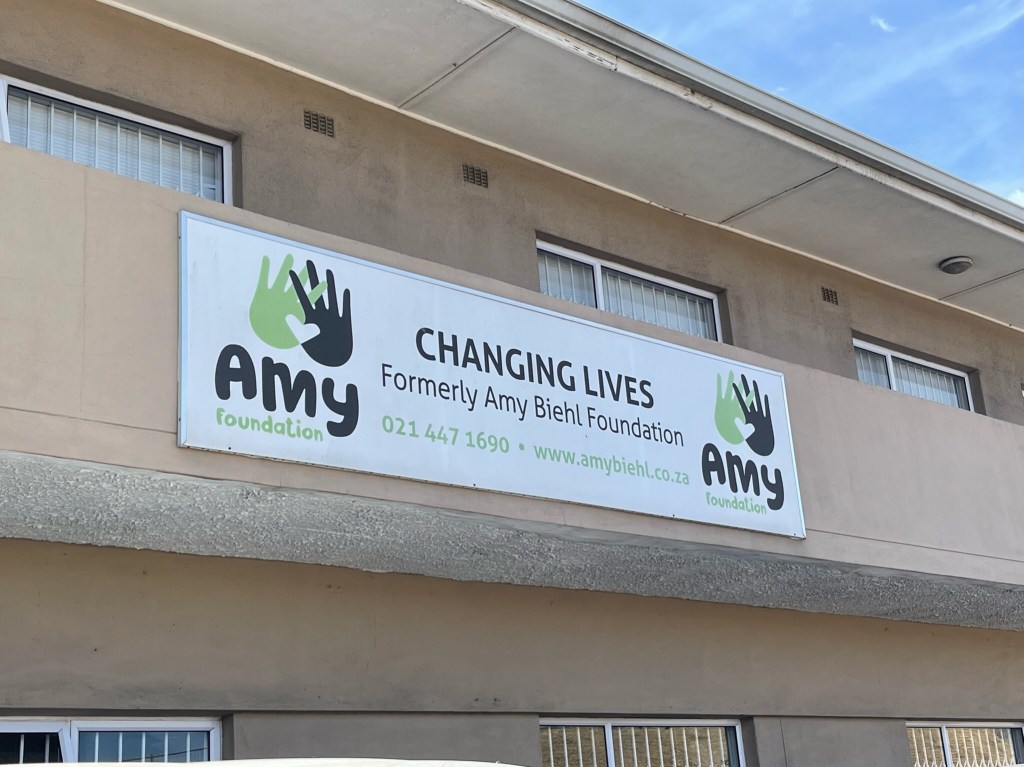
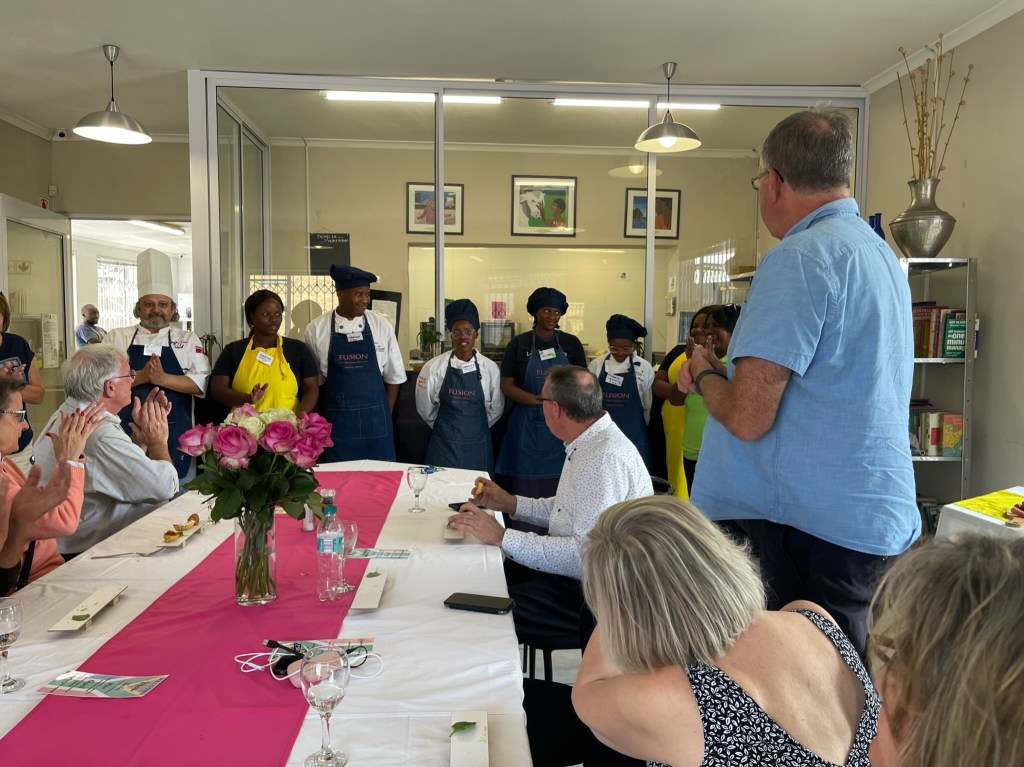
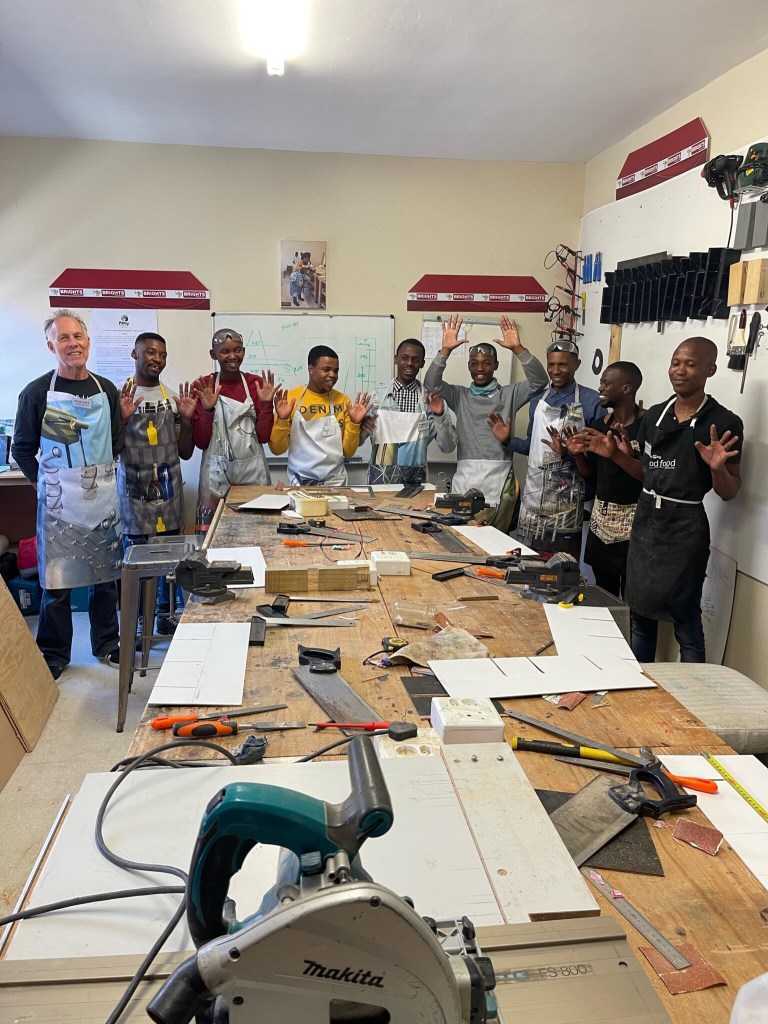
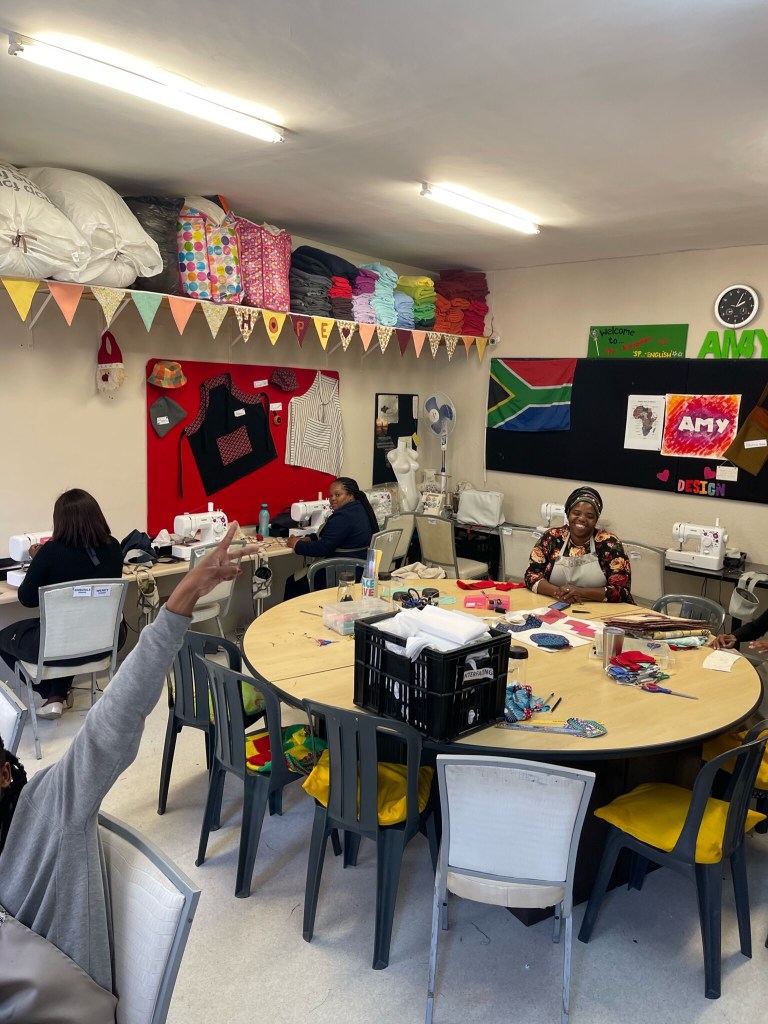
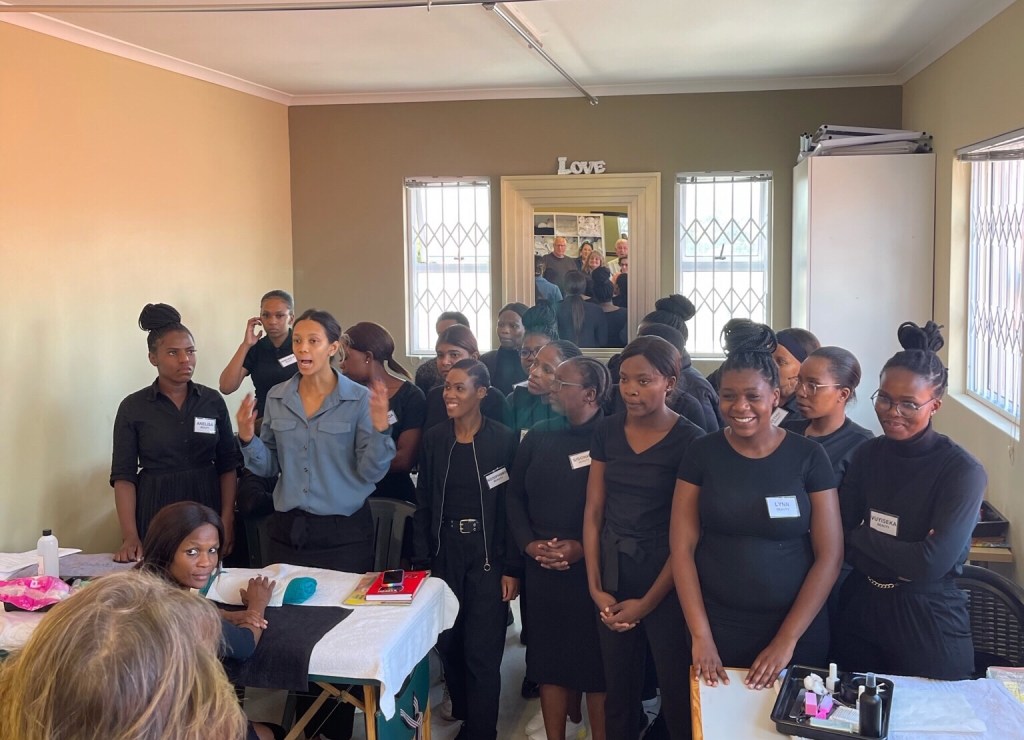
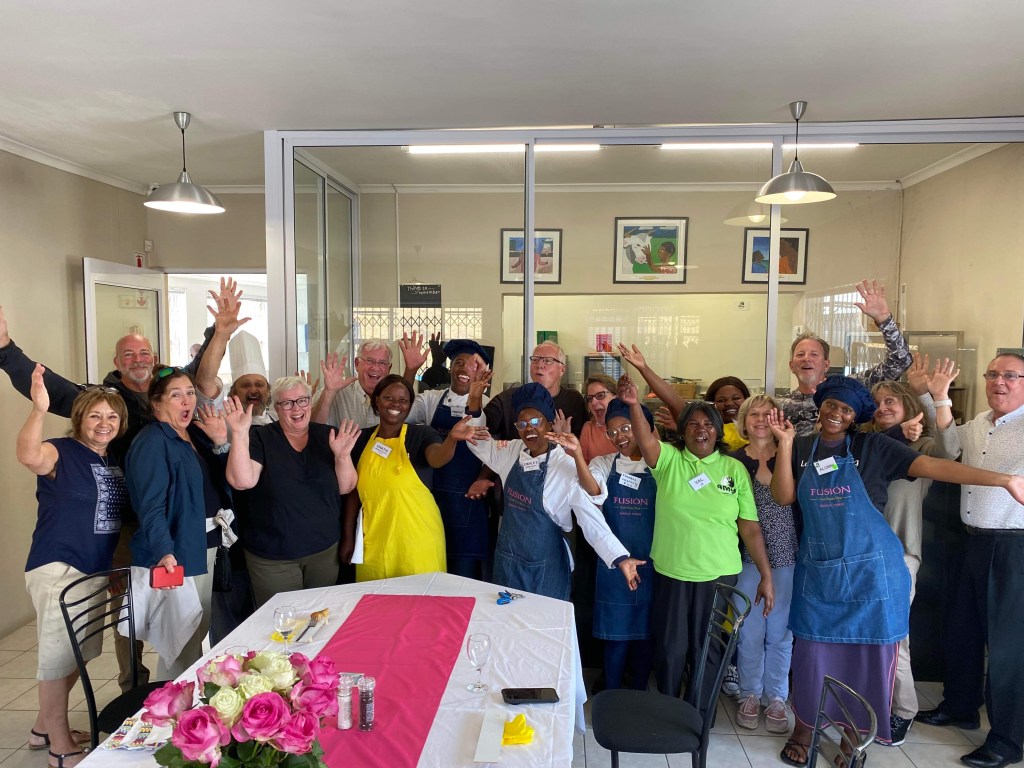
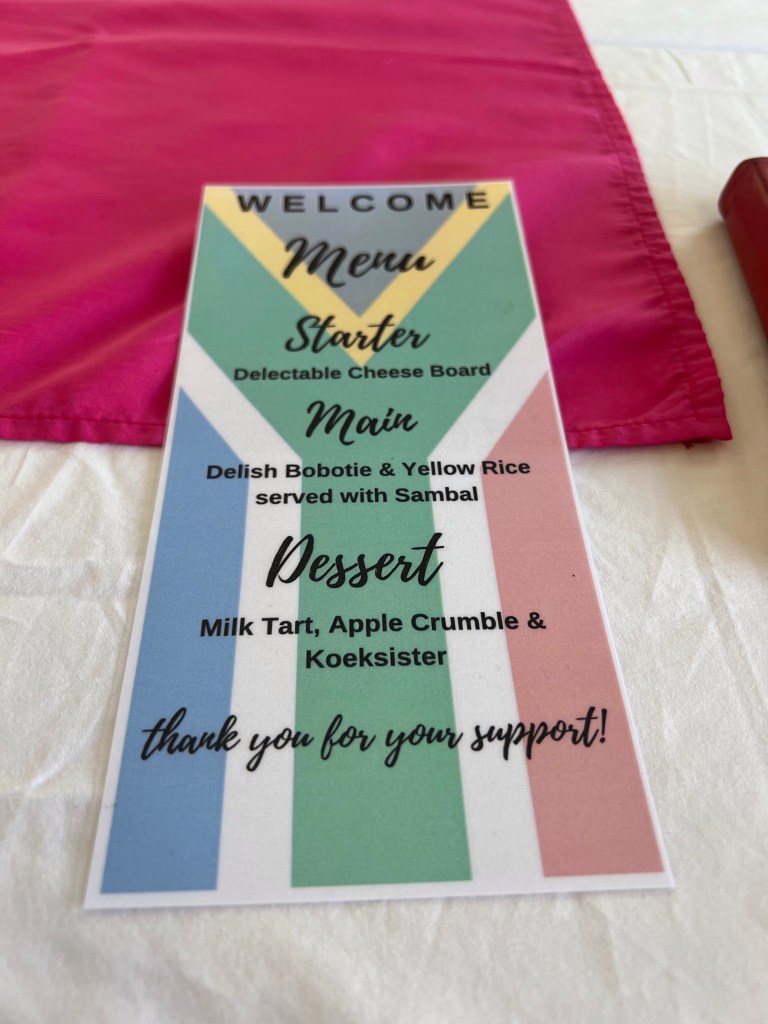
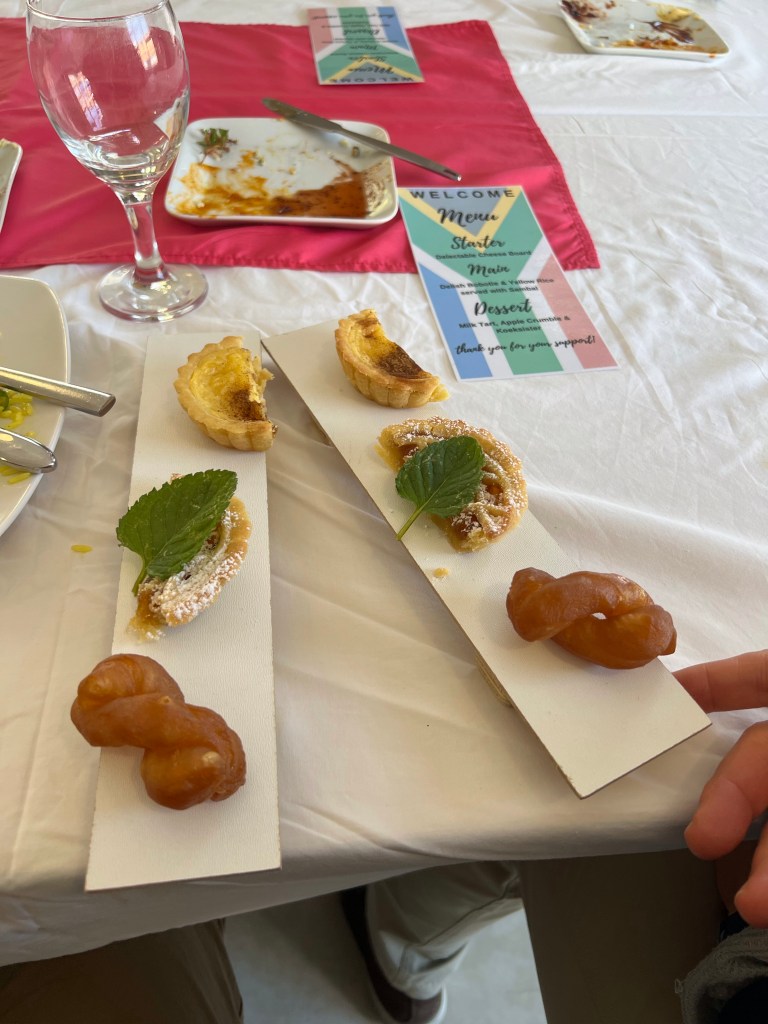
Our lunch was at the Amy Foundation. It is an organization that helps people from the townships lift themselves out of poverty that grips much of the country. Young people who have finished a basic high school education are trained in practical skills such as carpentry, sewing and culinary skills. In addition to the other skills, they are taught business and personal interaction skills to help them be successful in lives outside of the townships. From there, they apply those skills to join or start businesses. it is named after a young American woman who went to help people from the townships and she ultimately lost her life during a riot. We had a great traditional South African meal prepared and served by the students.


They were all very proud of the skills they were learning.

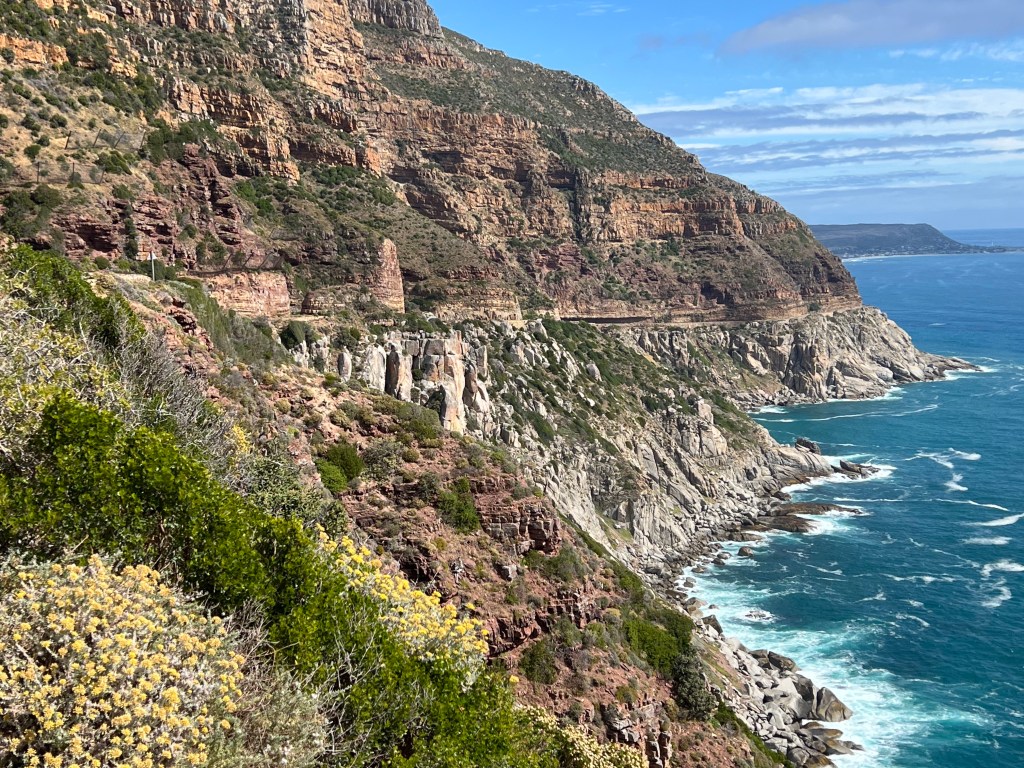
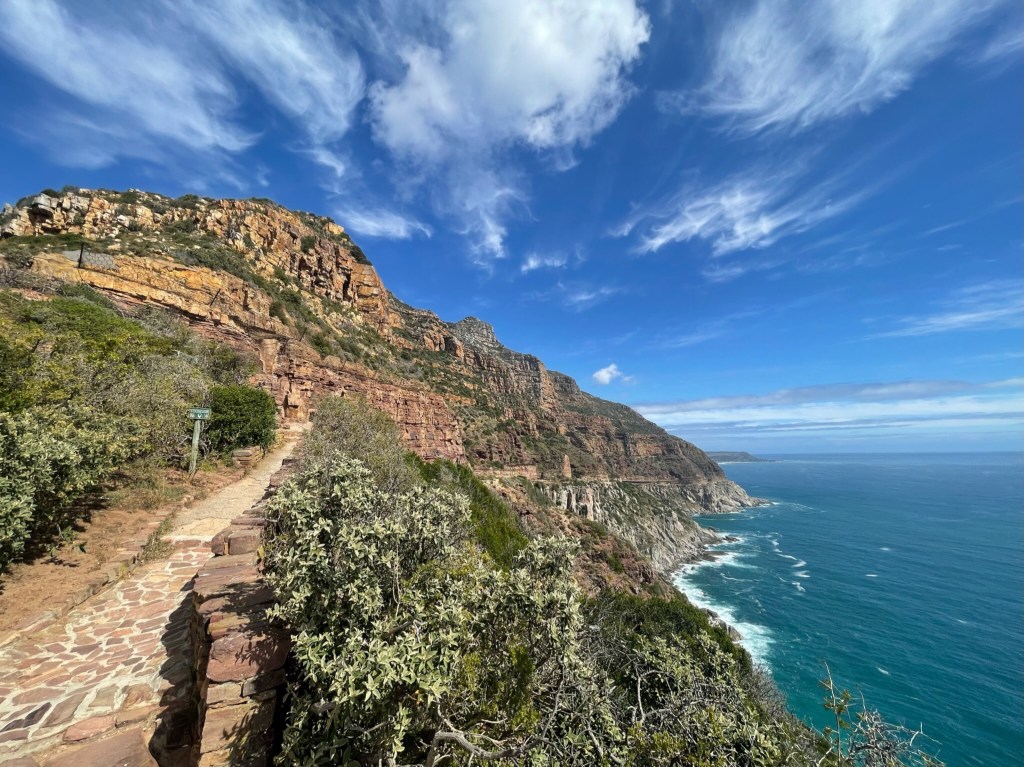
After lunch we headed down Chatman’s Peak coastal drive.  The views were spectacular!  It is similar to the Big Sur coast in California but the cliffs were much higher.

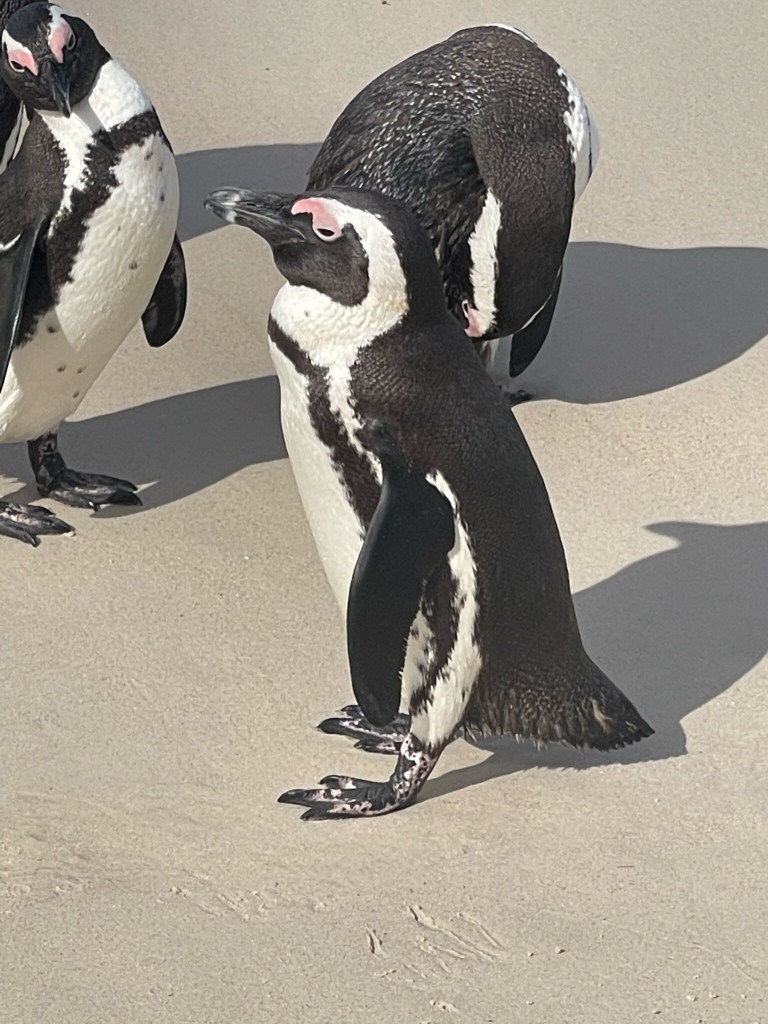
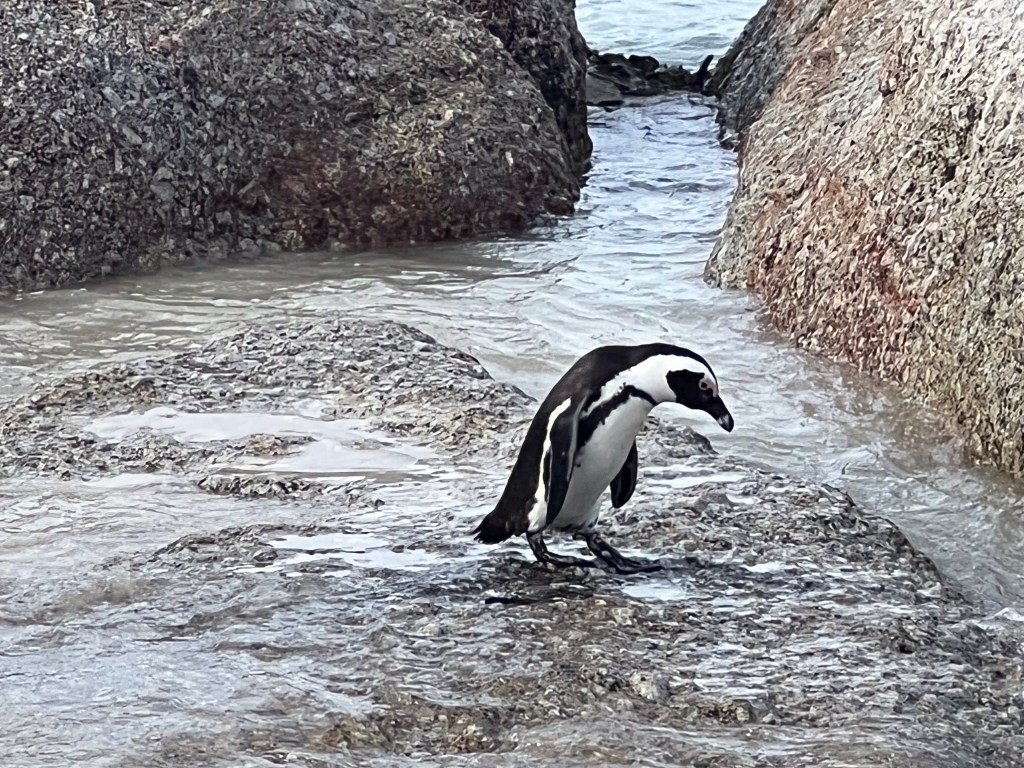
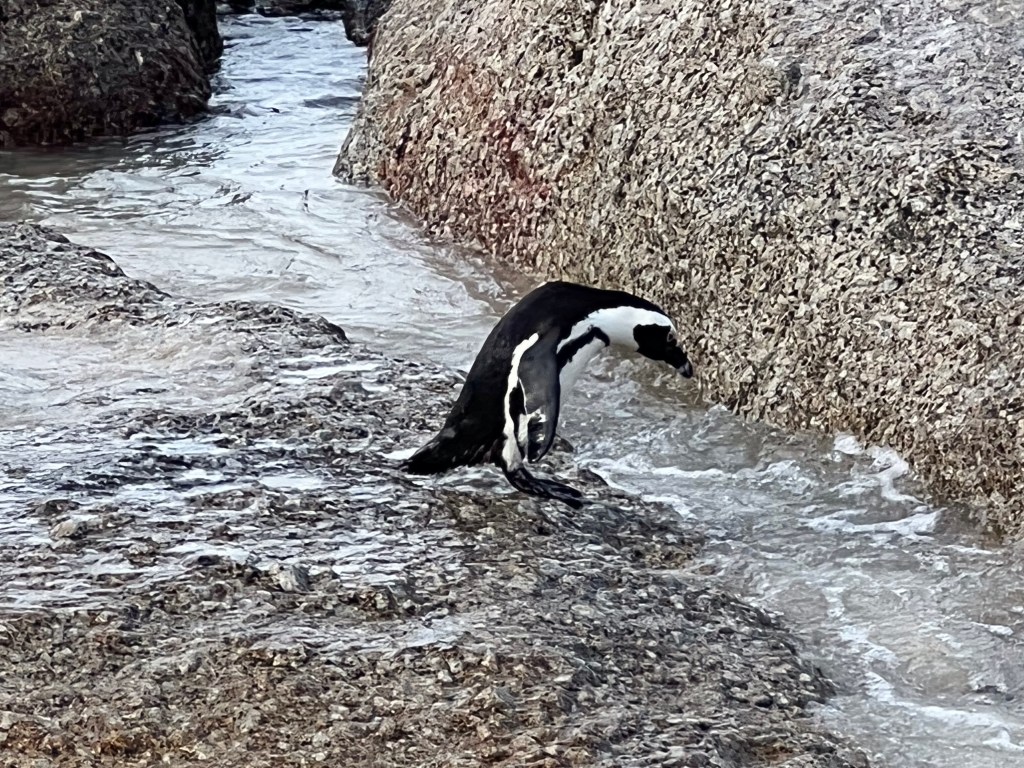
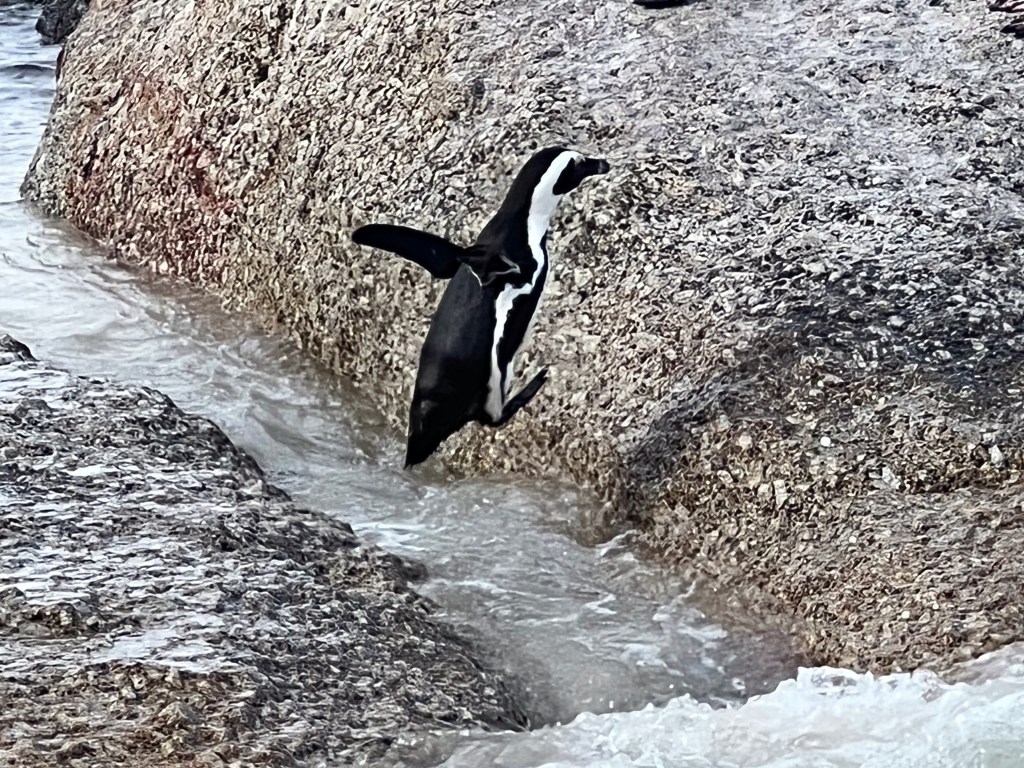
Our last stop before heading back to the wine estate was the Simons town that is home to a colony of South African penguins. We enjoyed watching them swim and waddle around on the beach. You could get quite close to them.


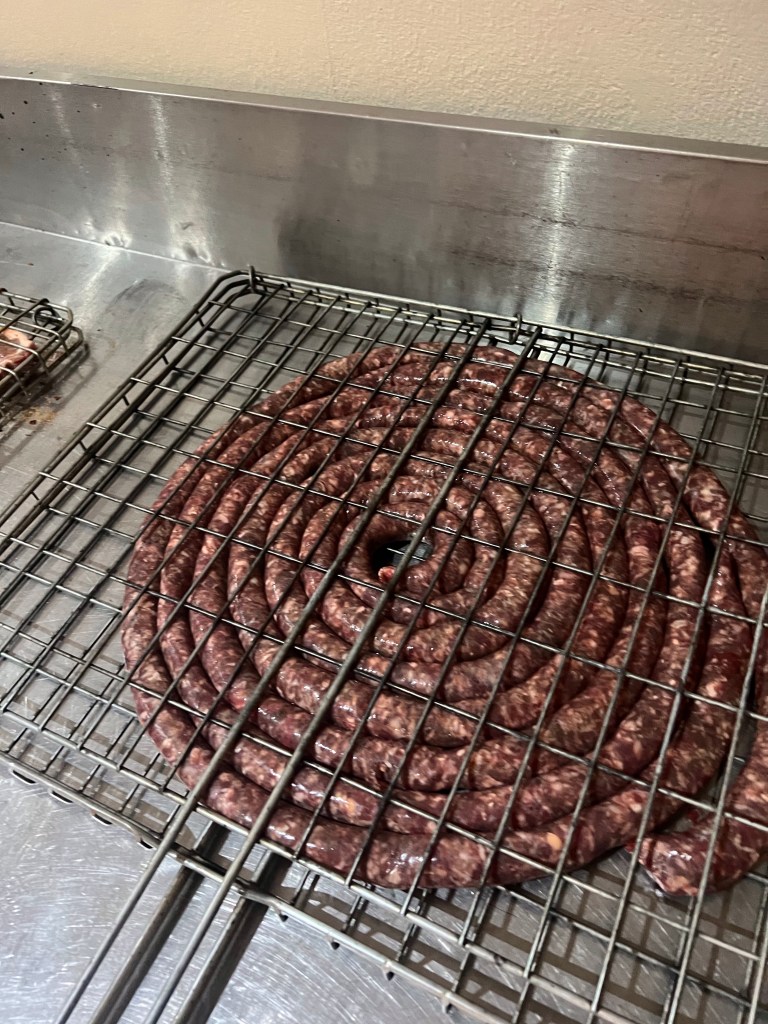
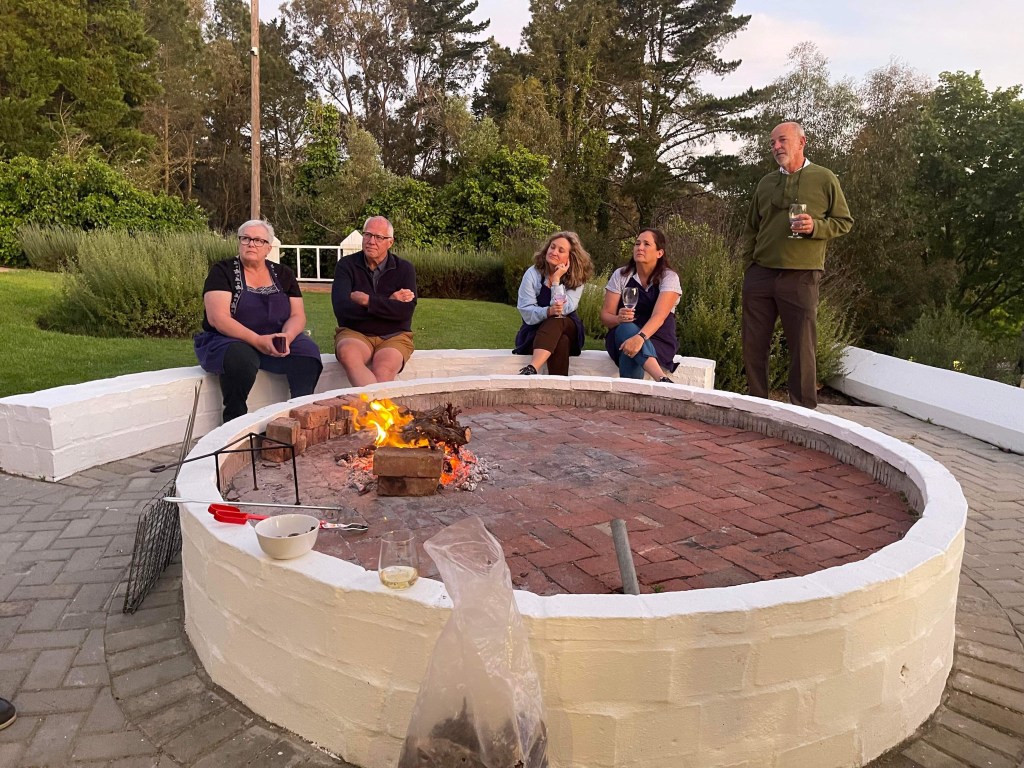
With our final night before heading to Namibia, we had a wonderful meal of sausage and veal chops cooked over the fire pit. As a side dish we had maze (grits) and chakalaka.

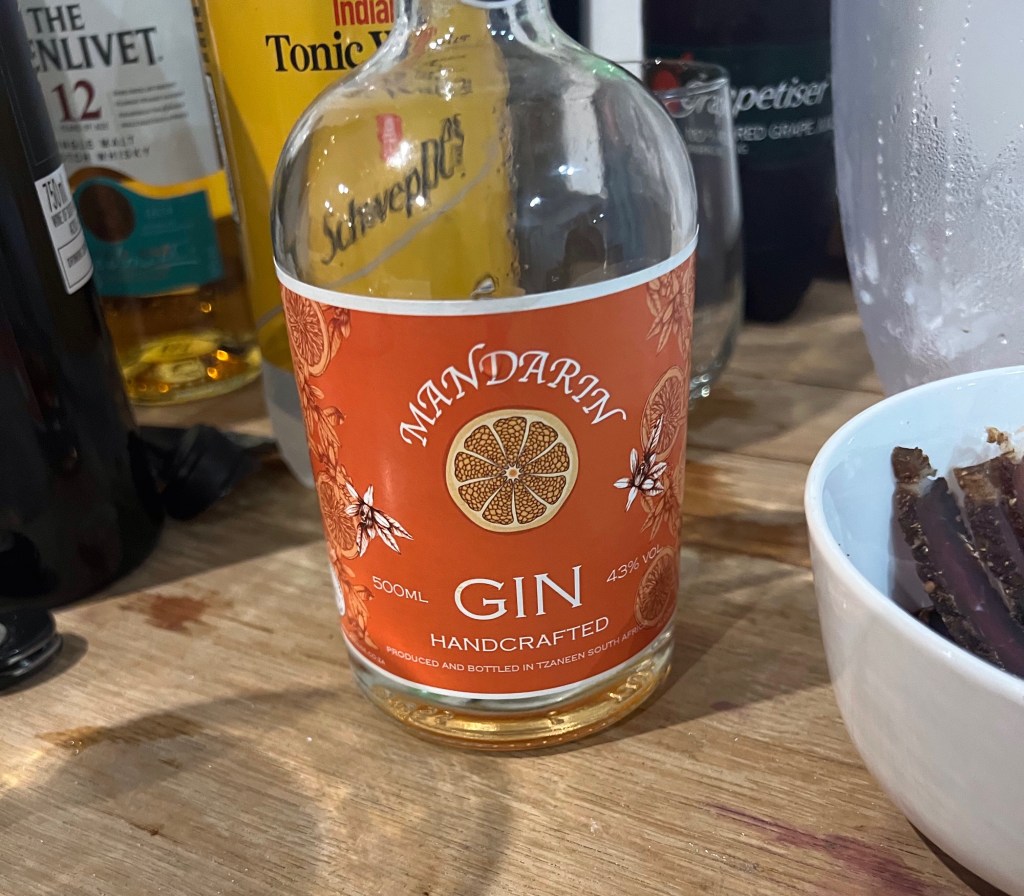
But first, some Sundowners….

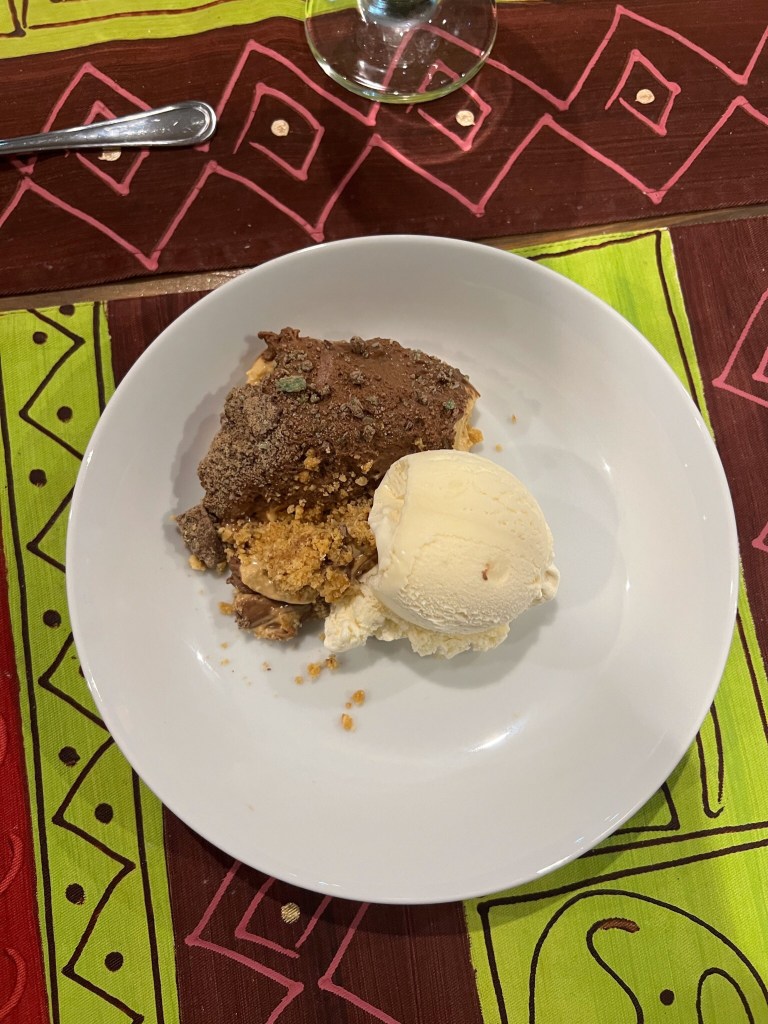
And for dessert, we had a peppermint chocolate mousse.

Tomorrow we have a travel day where we take a 2 ½ flight to Windhoek, the capital of Namibia where we will spend the night before traveling on to Etosha national park. 

October 24th – Today was Wine Day!

We spent the day today visiting three different wine estates before finishing the day with time around the fire pit and a wonderful steak dinner cooked on the open fire.

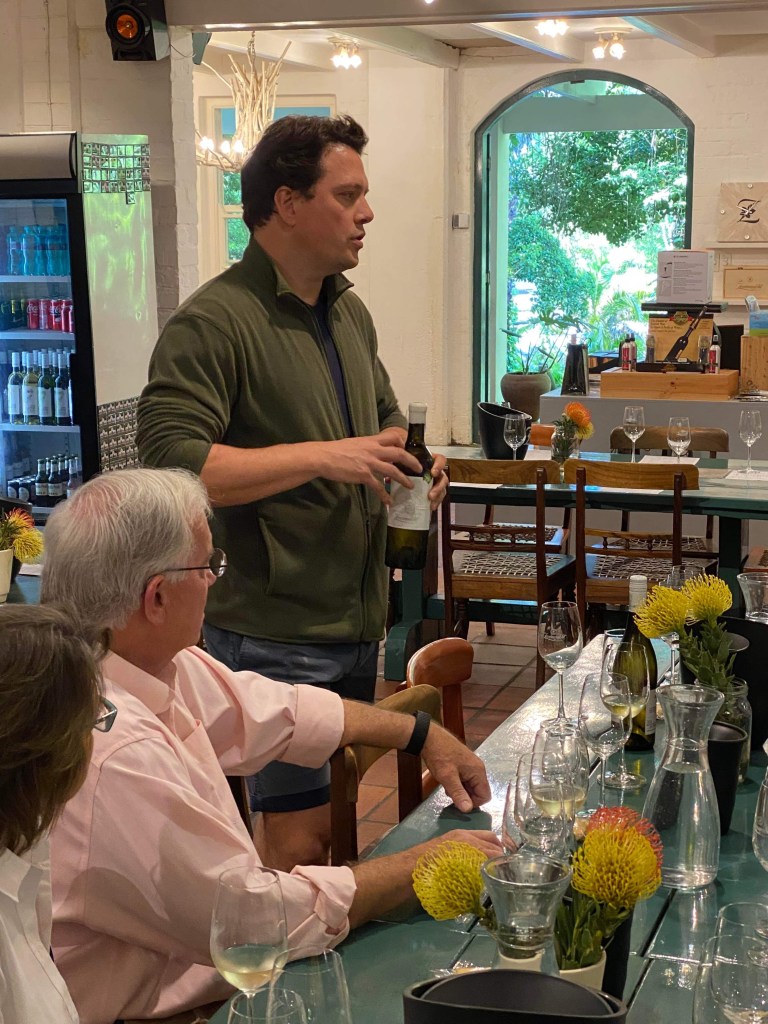
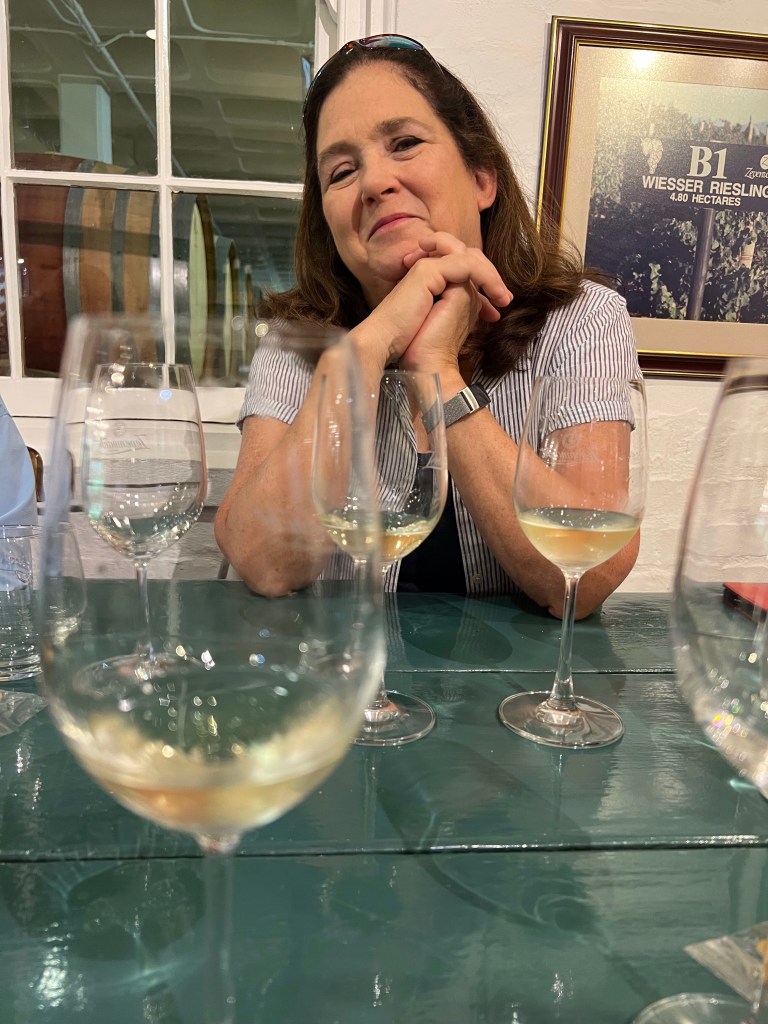
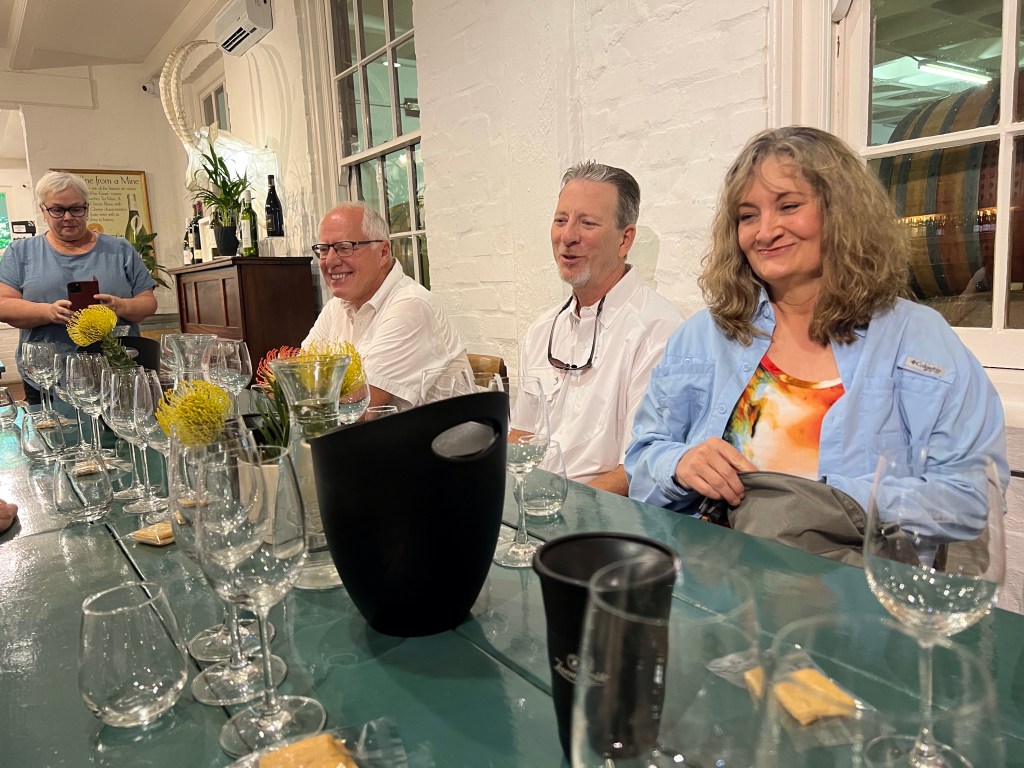
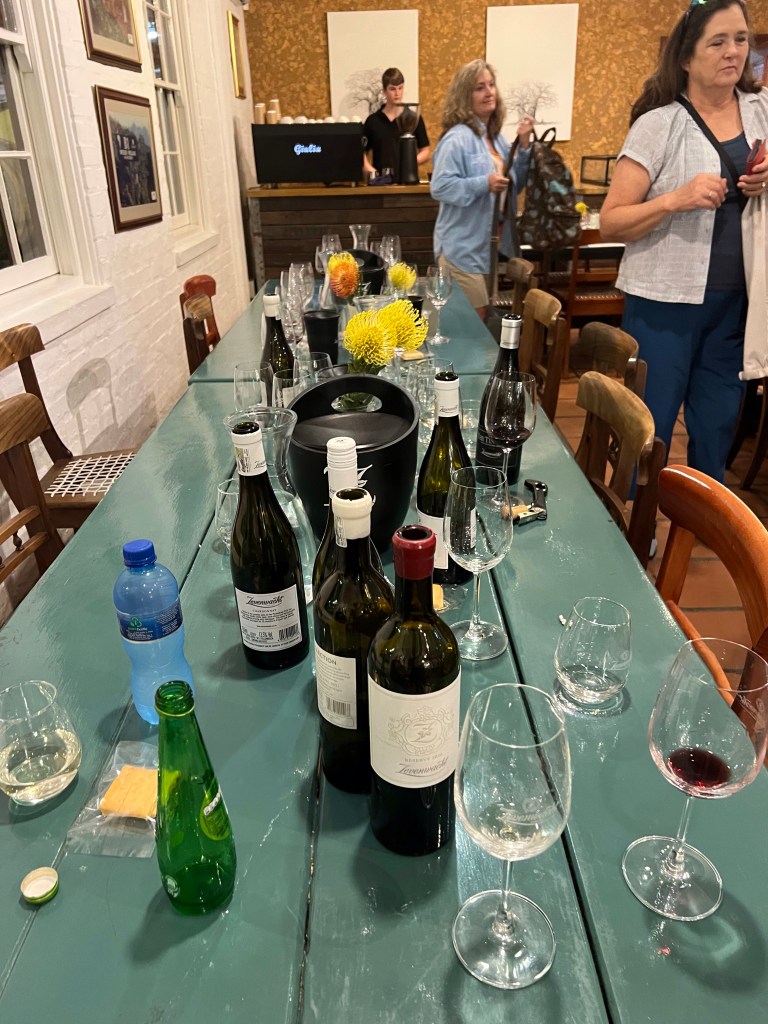
We started the day at the Zevenwacht Wine Estate where we are currently staying. Link to the estate here. We spent time with the winemaker who led us through the cellar and then a tasting of 6 very nice wines. We started at 9 am. But if you are going to drink all day, you have to start early.

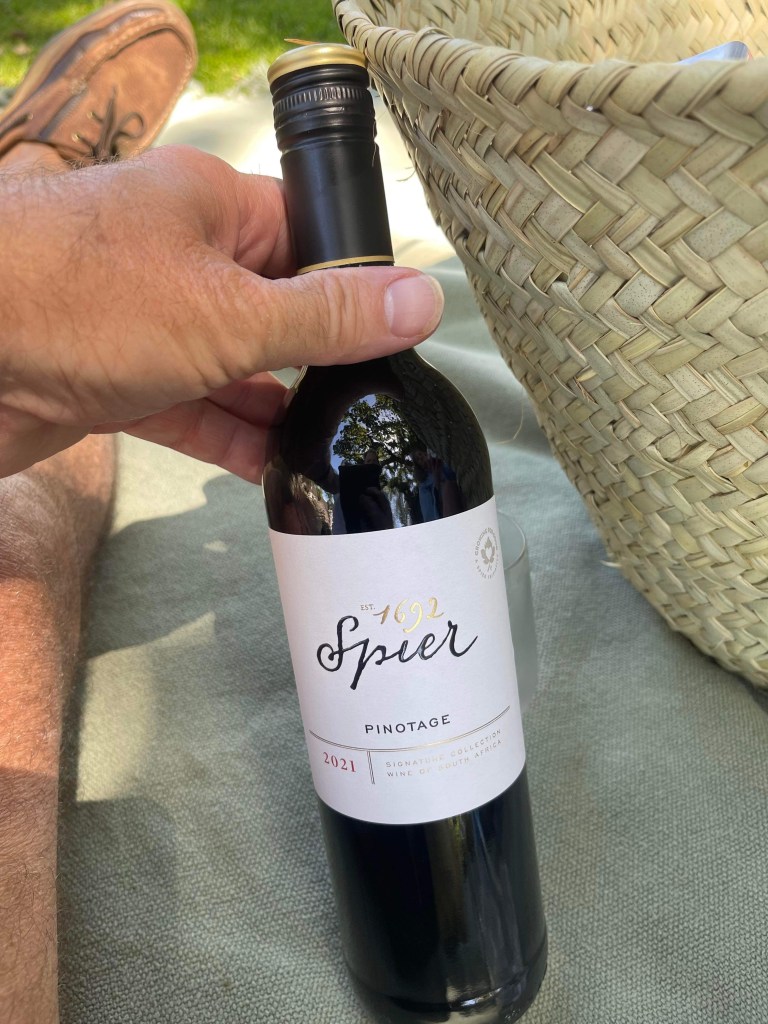
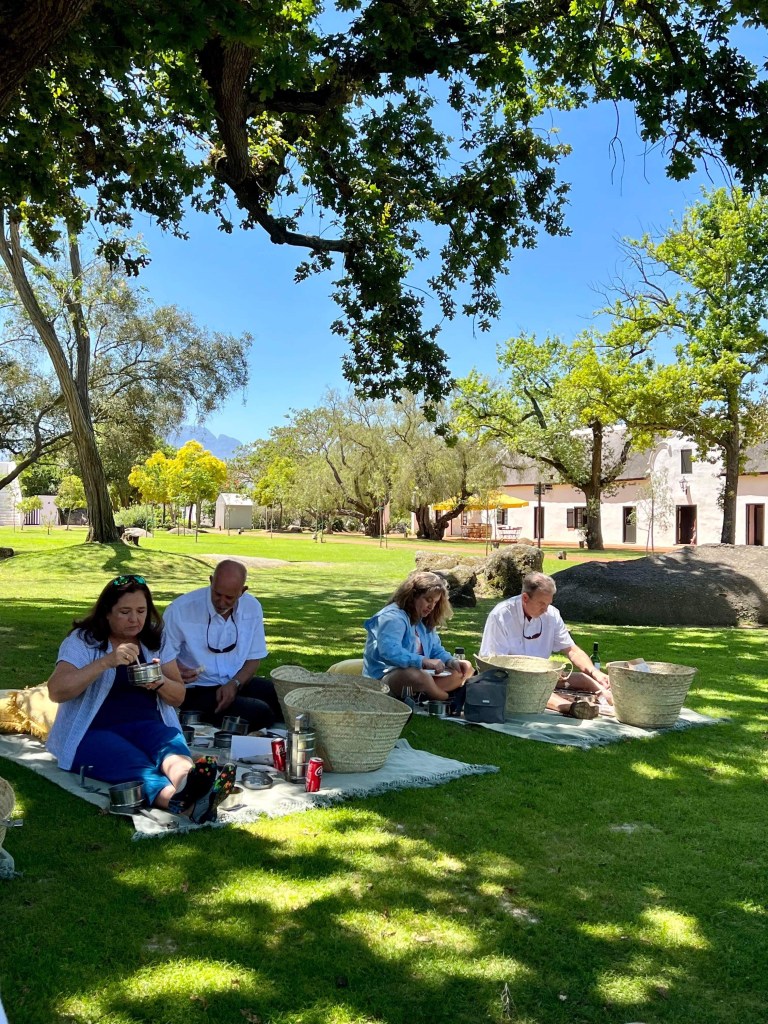
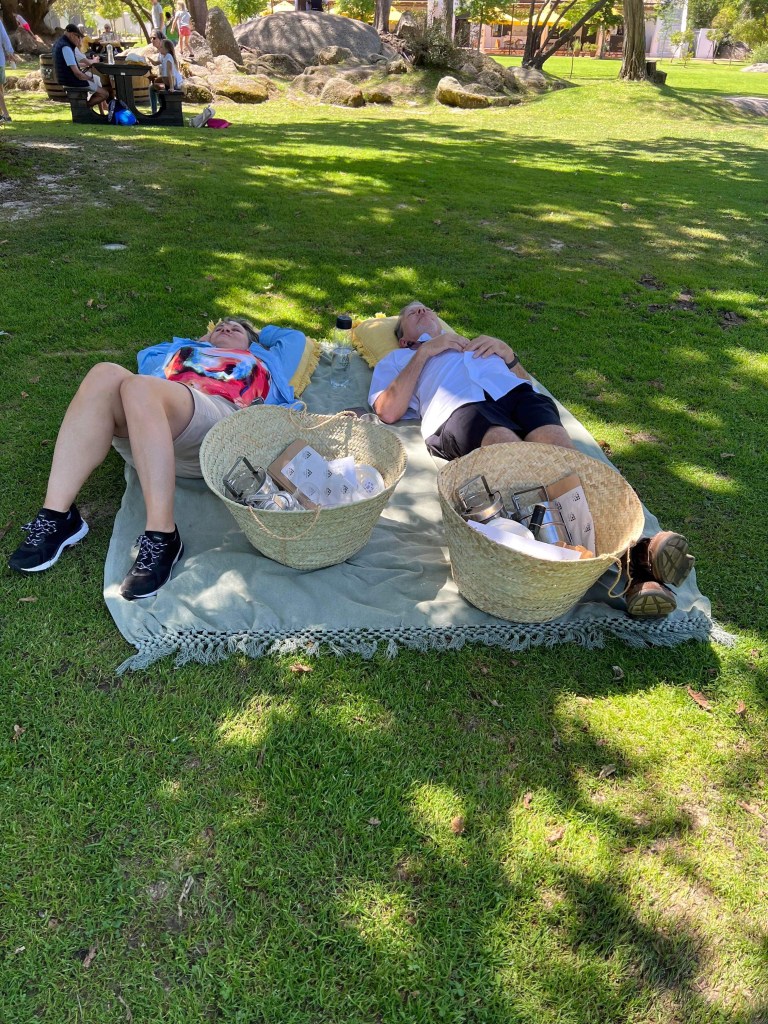
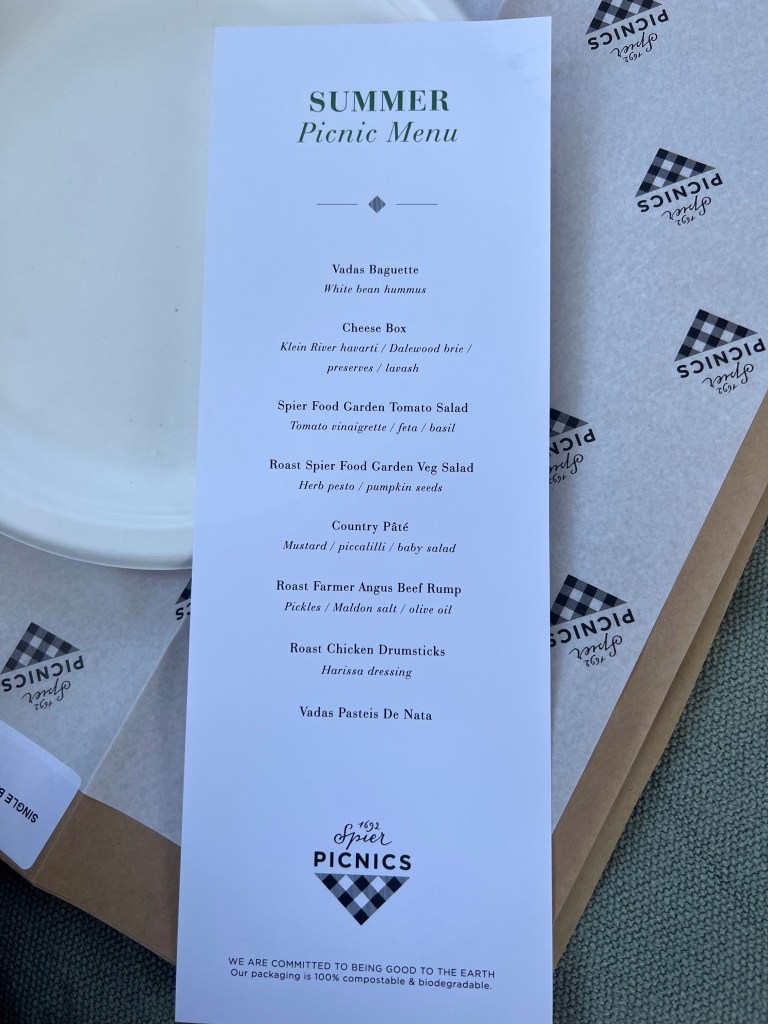
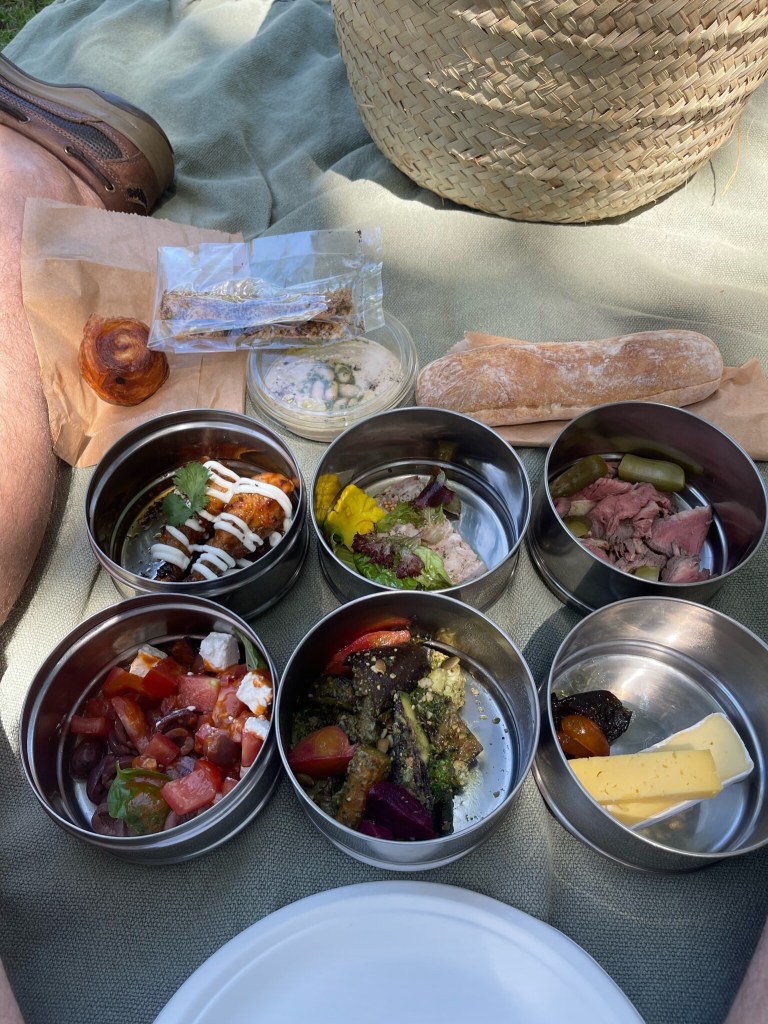
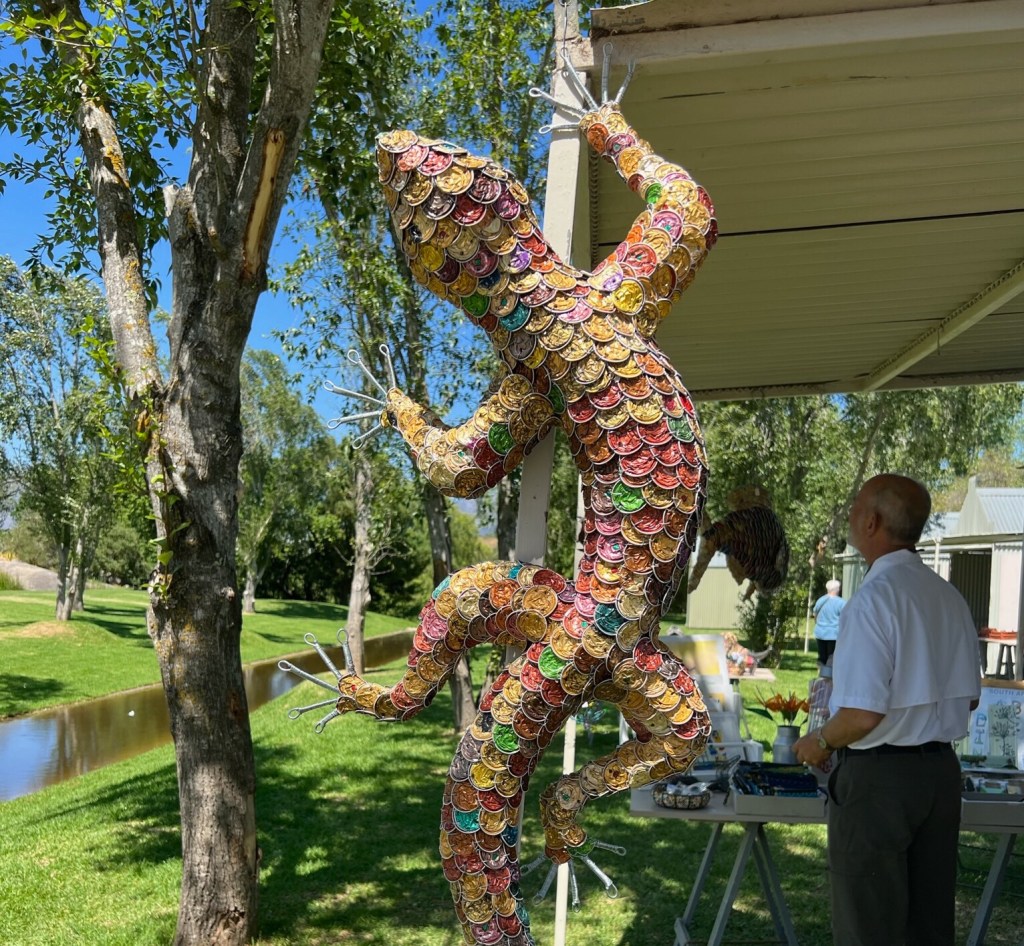
After the Zevenwacht tasting, we headed to the Spier winery for a picnic lunch under the trees. They had local artists displaying on the grounds and we were able to pick up a few souvenirs.

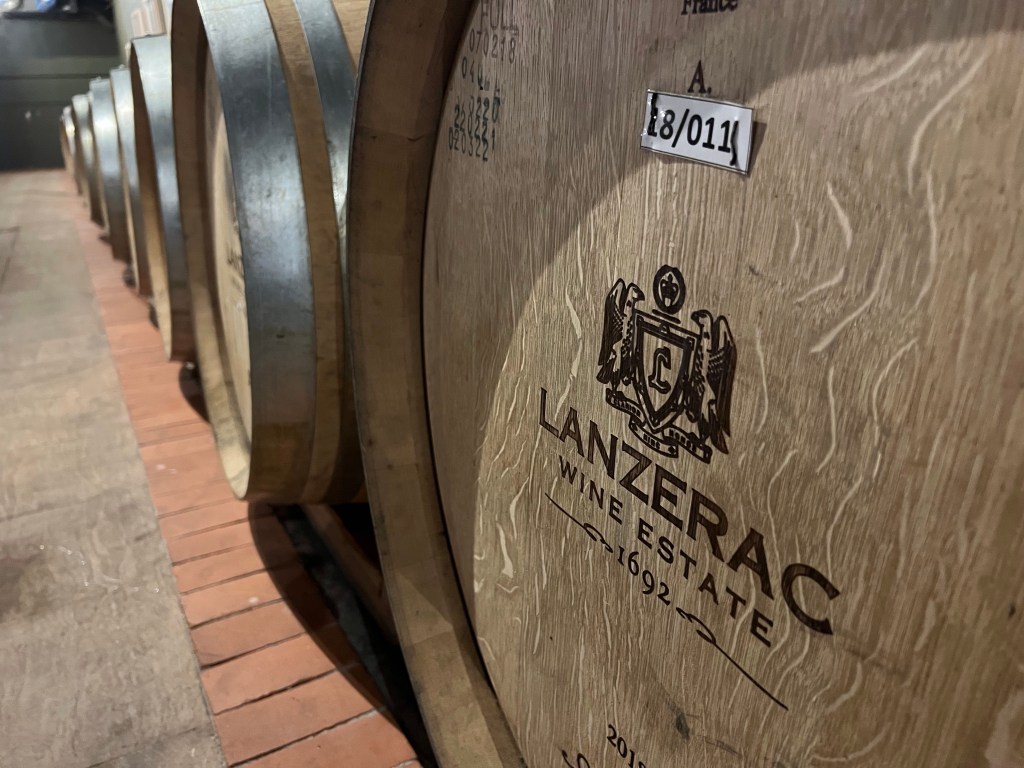
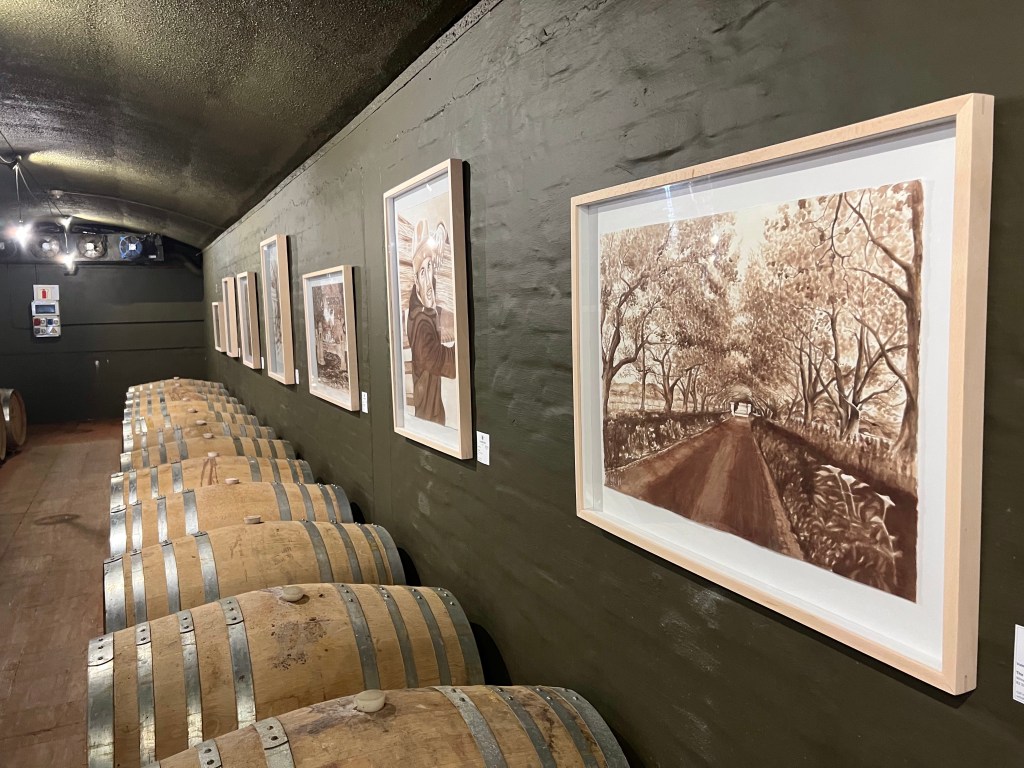
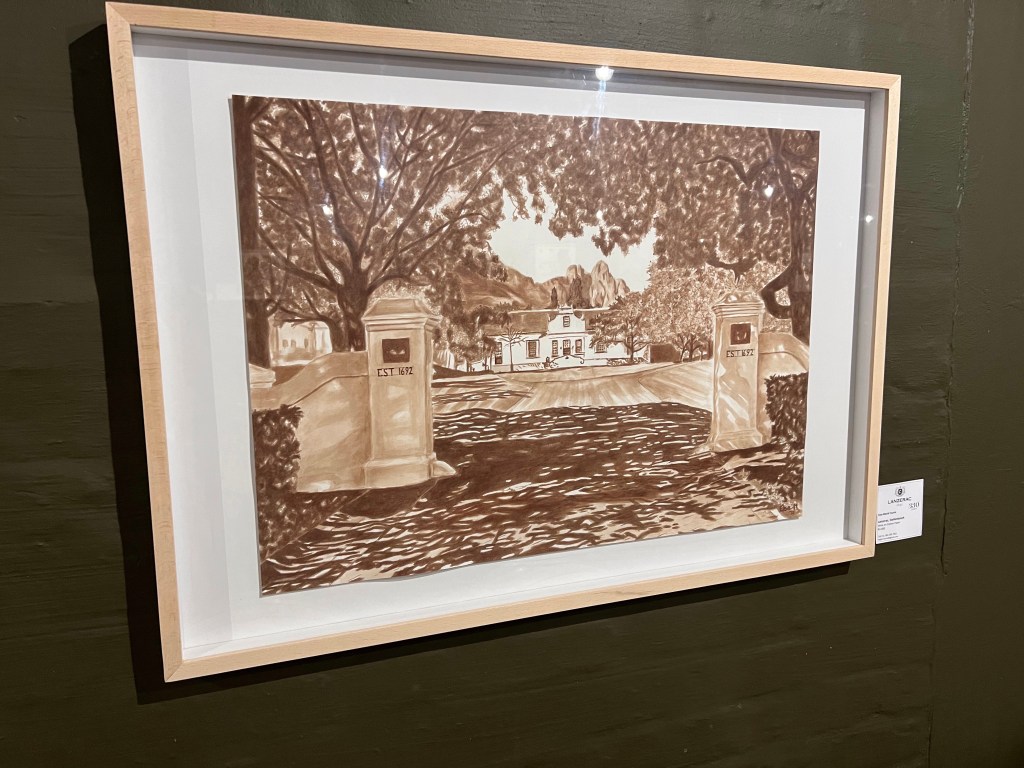
Our next stop was the Lanzerac wine estate where we had a wine and chocolate tasting. It was where the first bottle of Pinotage was bottled and we purchased a couple bottles to take home. In addition to the fine wine, they had an art exhibit in the cellar where local artists used wine as the medium rather than paints. There were several very nice works.

We finished the day with a wonderful steak dinner cooked over the open fire with a bit more wine and some wonderful discussion and story telling. The steaks were topped with Monkey Gland Sauce – a local favorite that is traditionally served over all types of meat dishes.

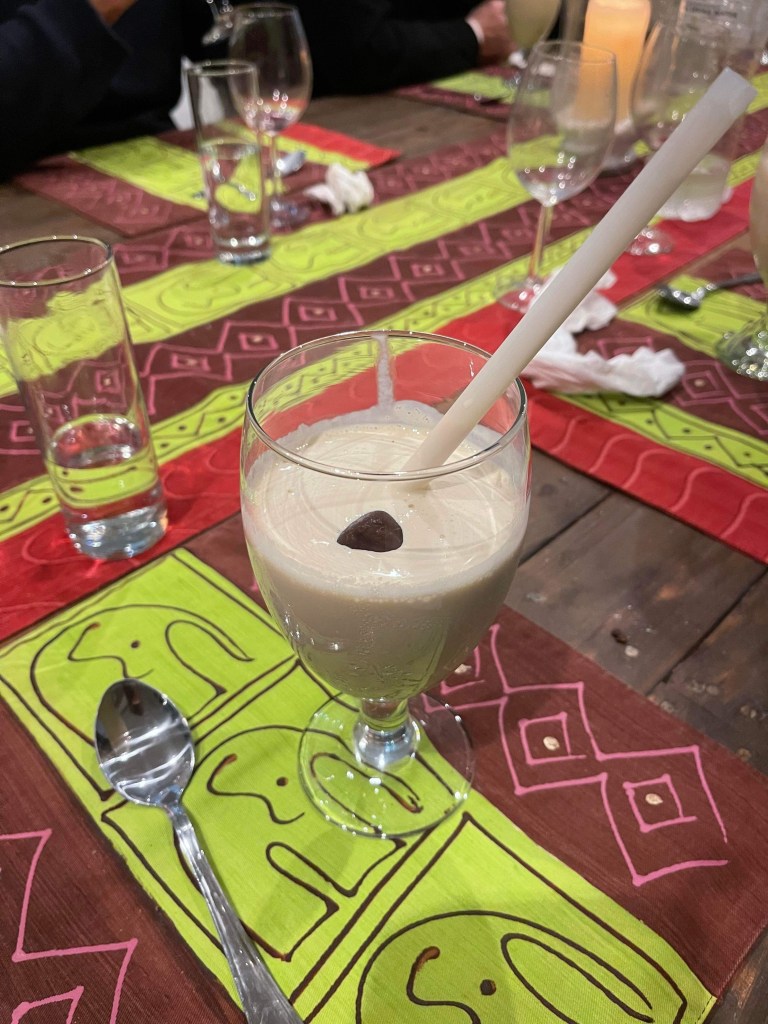
For dessert we had Dom Pedros which are alcoholic milkshakes made with amarula. Here is a recipe: link. They are very good.

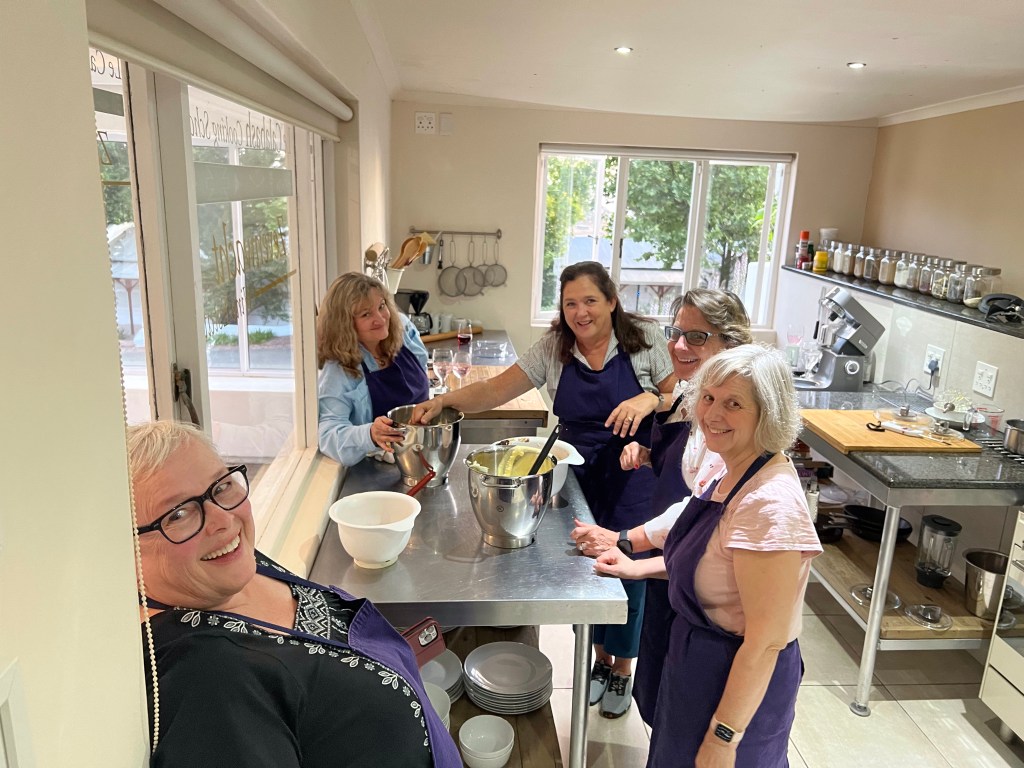
And the ladies prepped our desert for tomorrow night.

But to get the full understanding of the effort involved, click the video link.